
De customer journey is het complete verhaal van de relatie tussen een klant en jouw bedrijf. Het begint bij het allereerste contact en eindigt—idealiter—wanneer ze een trouwe ambassadeur worden. Dit pad begrijpen is cruciaal om te ontdekken waar je kansen laat liggen en waar je juist kunt uitblinken.
Waarom Je de Customer Journey Moet Begrijpen
Heb je ooit het gevoel gehad dat je een fantastisch product hebt, maar dat de resultaten—weinig websiteverkeer, lage conversie, onduidelijke ROI—gewoon achterblijven? Vaak ligt het probleem niet bij wat je aanbiedt, maar bij hoe je het aanbiedt. Je kijkt misschien vanuit je eigen bedrijf naar buiten, terwijl de sleutel tot succes ligt in het kijken door de ogen van je klant.

De customer journey, oftewel de klantreis, is de route die een potentiële klant aflegt. Het is een reeks van interacties—de zogenaamde touchpoints—die samen de volledige klantervaring vormen. Denk aan het zien van een advertentie via geo-targeting, het bezoeken van je website, het contact met de klantenservice en zelfs de ervaring na de aankoop.
Zie Je Bedrijf Vanuit het Perspectief van de Klant
Het in kaart brengen van deze reis dwingt je om je eigen perspectief los te laten en te focussen op wat de klant daadwerkelijk meemaakt. Dit proces legt de vinger op de zere plek: de momenten waarop je een klant kunt winnen, of juist voorgoed kunt verliezen.
"De grootste fout die bedrijven maken, is aannemen dat ze hun klanten kennen. Een customer journey map is geen aanname; het is een spiegel die de realiteit van de klantervaring laat zien."
Zonder dit inzicht pompen bedrijven vaak geld in marketing die op het verkeerde moment komt of de verkeerde boodschap brengt. Misschien optimaliseer je je website wel voor conversie, terwijl je bezoekers nog in de ontdekkingsfase zitten en behoefte hebben aan informatie, niet aan een harde verkooppitch.
De Impact van de Digitale Marktplaats
In de Nederlandse markt is dit inzicht belangrijker dan ooit. Met een verwachte 17.5 miljoen online shoppers in 2025, vindt een enorm deel van de customer journey online plaats. De digitale touchpoints zijn dominant en bepalen grotendeels de perceptie van je merk. Leer meer over het Nederlandse e-commerce landschap en ontdek hoe cruciaal die online ervaring is.
Door de customer journey te begrijpen, kun je:
- Pijnpunten identificeren: Ontdek waar klanten vastlopen, afhaken of frustratie ervaren en los deze problemen gericht op.
- Kansen ontdekken: Vind nieuwe mogelijkheden om klanten te verrassen en een positieve, blijvende indruk achter te laten voor effectieve leadgeneratie.
- Marketing personaliseren: Stem je boodschap en content af op de specifieke fase waarin een klant zich bevindt. Dit leidt tot veel hogere relevantie en betere conversie.
- Teamalignment verbeteren: Zorg ervoor dat marketing, sales en klantenservice niet langs elkaar heen werken, maar samen bouwen aan een naadloze klantervaring.
Kortom, het doorgronden van de customer journey is het fundament van elke succesvolle marketingstrategie. Het stelt je in staat om niet alleen je boodschap te zenden, maar om een gesprek te beginnen dat perfect aansluit bij de behoeften van je klant, op elk punt van hun reis.
De Vijf Fasen van de Customer Journey Navigeren
Weten dat een customer journey bestaat is één ding. Echt begrijpen welk pad een klant aflegt, is waar de magie gebeurt. Laten we dat pad opdelen in vijf duidelijke fasen. Wanneer je weet wat je klant denkt, voelt en doet in elke fase, kun je jouw marketing nuttig en relevant maken, in plaats van slechts een van de vele reclames.

Het is verleidelijk om dit als een rechte lijn te zien, maar zo simpel is het zelden. Een klant kan tussen fasen heen en weer springen voordat hij een beslissing neemt. Jouw taak is om hun betrouwbare gids te zijn, waar ze zich ook op hun pad bevinden.
Fase 1: Awareness (Bewustwording)
Dit is het beginpunt. Het moment waarop een potentiële klant zich realiseert dat hij een probleem of een behoefte heeft. Ze zijn nog niet op zoek naar jouw product; ze zoeken simpelweg naar antwoorden en informatie over de uitdaging waar ze voor staan.
Op dit punt is hun hoofdvraag: "Hoe los ik dit probleem op?" Ze voeren brede zoekopdrachten in op Google, lezen blogposts en bekijken alle content die hen helpt hun situatie beter te begrijpen.
Jouw marketingdoel hier is simpel: wees vindbaar. Je moet verschijnen waar zij zoeken.
Effectieve Tactieken:
- SEO (Search Engine Optimization): Richt de zoekwoorden op je website op de problemen van de klant, niet alleen op je productnamen. Zo kom je naar voren in die vroege, verkennende zoekopdrachten.
- Content Marketing: Creëer oprecht nuttige blogposts, handleidingen en video's die hun pijnpunten aanpakken. De harde verkoop kan wachten.
- Social Media: Wees actief op de platforms waar jouw doelgroep zich bevindt. Deel waardevolle content om die o zo belangrijke merkherkenning op te bouwen.
Fase 2: Consideration (Overweging)
Oké, de klant begrijpt nu zijn probleem. Welkom in de overwegingsfase. Ze zijn nu actief op zoek naar en vergelijken verschillende oplossingen en aanbieders—en ja, dat geldt ook voor je concurrenten.
Hun denkwijze is verschoven naar evaluatie. Ze wegen de voor- en nadelen af, duiken in recensies en zoeken naar details die hen helpen de beste keuze te maken. Nu vragen ze zich af: "Welke van deze opties is de juiste voor mij?"
Jouw missie is om vertrouwen op te bouwen en je waarde te tonen. Bewijs dat jouw oplossing de superieure keuze is.
Zie de klant in deze fase als een onderzoeker. Ze zoeken naar bewijs, niet alleen naar beloftes. Door duidelijke, gedetailleerde en eerlijke informatie te geven, word je al snel hun topkandidaat.
Effectieve Tactieken:
- Gedetailleerde Product-/Dienstpagina's: Ga verder dan basisbeschrijvingen. Gebruik hoogwaardige afbeeldingen, video's en glasheldere lijsten met functies om je aanbod tot leven te brengen.
- Casestudies & Testimonials: Laat zien hoe je anderen met precies dezelfde problemen hebt geholpen. Sociaal bewijs is hier ongelooflijk overtuigend.
- Vergelijkingsgidsen: Wees niet bang om content te maken die jouw aanbod eerlijk vergelijkt met dat van anderen. Dit positioneert je als een transparante, betrouwbare expert.
Fase 3: Conversion (Conversie)
Dit is het moment van de waarheid. De klant heeft zijn huiswerk gedaan en is klaar om te kopen, zich aan te melden of die laatste stap te zetten. Hun focus vernauwt zich tot de praktische details van de transactie zelf.
Vragen als: "Wordt dit proces een gedoe?" en "Krijg ik een goede deal?" spoken door hun hoofd. Elke frictie of twijfel op dit punt kan hen wegjagen. Als je in de B2B-sector zit, vind je onze gids over de B2B customer journey misschien bijzonder nuttig.
Jouw doel? Maak het koopproces zo soepel en gemakkelijk mogelijk.
Effectieve Tactieken:
- Duidelijke Calls-to-Action (CTA's): Gebruik directe en overtuigende knoppen zoals "Koop nu" of "Vraag je gratis offerte aan". Laat geen ruimte voor verwarring.
- Vereenvoudigde Checkouts/Formulieren: Vraag alleen wat je absoluut nodig hebt. Een lang, ingewikkeld formulier is een beruchte conversiekiller.
- Gerichte Aanbiedingen: Gebruik retargeting-advertenties of een goed getimede, beperkte aanbieding om die laatste duw te geven aan iemand die twijfelt.
Fase 4: Retention (Behoud)
De reis is nog lang niet voorbij als de verkoop is gesloten. De retentiefase draait om het behouden van de klanten waar je zo hard voor hebt gewerkt. Een fantastische ervaring na de aankoop is de sleutel tot succes op de lange termijn.
Direct na de aankoop hoopt je klant stiekem dat hij de juiste keuze heeft gemaakt. Ze zoeken naar bevestiging en een beetje ondersteuning.
Hier is je doel om een uitstekende klantervaring te bieden die eenmalige kopers omzet in terugkerende klanten.
Effectieve Tactieken:
- Onboarding E-mails: Stuur een warm welkom en geef nuttige tips om nieuwe klanten te helpen het maximale uit hun aankoop te halen.
- E-mailmarketing: Onderhoud de relatie met gepersonaliseerde nieuwsbrieven die waardevolle content, exclusieve deals en bedrijfsnieuws bieden.
- Uitstekende Klantenservice: Wees snel, vriendelijk en oprecht behulpzaam wanneer ze een vraag hebben of een probleem tegenkomen.
Fase 5: Advocacy (Ambassadeurschap)
Dit is de laatste—en meest waardevolle—fase van de reis: ambassadeurschap. Hier verandert een tevreden klant in een loyale fan die jouw merk actief promoot bij zijn eigen netwerk. Ze worden in feite een gratis verlengstuk van je marketingteam.
Een ambassadeur is oprecht enthousiast over je product en service en wil dit van de daken schreeuwen.
Jouw doel is om deze merkambassadeurs te motiveren en aan te moedigen.
Effectieve Tactieken:
- Loyaliteitsprogramma's: Beloon je vaste klanten met exclusieve kortingen of speciale voordelen. Laat ze zich VIP voelen.
- Verwijzingsprogramma's: Geef klanten een goede reden om het woord te verspreiden door hen incentives aan te bieden voor succesvolle verwijzingen.
- Vragen om Recensies: Wees niet verlegen! Vraag je tevreden klanten actief om recensies achter te laten op platforms als Google of andere branchespecifieke sites.
Hoe Je Jouw Eerste Customer Journey Map Bouwt
De fasen van de customer journey kennen is één ding, maar deze daadwerkelijk visualiseren is waar de magie gebeurt. Een customer journey map is in wezen een visueel verhaal van de ervaring van je klant, volledig verteld vanuit hun perspectief. Het is het beste hulpmiddel dat je hebt om uit je eigen bedrijfsbubbel te stappen en de dingen door hun ogen te bekijken.
Het maken van deze kaart is veel meer dan een creatieve oefening; het is een diepe duik in je strategie. Het dwingt je om elke interactie—van een snelle Google-zoekopdracht tot een opvolgmail van de klantenservice—met elkaar te verbinden en de echte emoties te begrijpen die de keuzes van je klant sturen.
Laten we stap voor stap doornemen hoe je jouw eerste kaart kunt bouwen.
Start met een Duidelijk Doel
Voordat je zelfs maar aan het mappen denkt, stel jezelf één simpele vraag: wat is het doel hier? Probeer je te achterhalen waarom mensen hun winkelwagentje verlaten? Of wil je de onboarding-ervaring voor nieuwe klanten soepeler maken? Een scherp, duidelijk doel houdt je kaart gefocust en, belangrijker nog, actiegericht.
Proberen om elke mogelijke klantinteractie in één keer in kaart te brengen is een klassieke beginnersfout en een snelle weg naar overweldiging. Kies gewoon één specifieke reis om mee te beginnen. Volg bijvoorbeeld het pad van een nieuwe lead die via je website binnenkomt. Die focus maakt het hele proces beheersbaar en levert veel scherpere inzichten op.
Ontwikkel je Klantpersona
Je kunt geen reis in kaart brengen als je niet weet wie er onderweg is. Een klantpersona is je referentiepunt—een semi-fictief personage dat je opbouwt uit echte data en onderzoek om je ideale klant te vertegenwoordigen. Dit gaat veel verder dan simpele demografische gegevens zoals leeftijd of locatie. Je moet in hun hoofd kruipen en hun doelen, drijfveren en zorgen begrijpen.
Geef je persona een naam, een baan, zelfs een achtergrondverhaal. Welke problemen proberen ze in hun dagelijks leven op te lossen? Wat hopen ze te bereiken? Het beantwoorden van deze vragen brengt je klant tot leven en zorgt ervoor dat je kaart is gebouwd rond de behoeften van een echt persoon, niet zomaar een stapel abstracte data.
Een solide persona wordt je Noordster voor het hele mappingproces.
Elke beslissing, elk touchpoint, elk emotioneel moment moet worden gefilterd door één vraag: "Wat zou [Naam Persona] nu denken, voelen of doen?" Deze simpele controle houdt je kaart gegrond in de realiteit.
Lijst Alle Klantcontactpunten (Touchpoints) op
Touchpoints zijn alle momenten waarop een klant interactie heeft met jouw merk. Tijd om gedetailleerd te worden. Brainstorm over elke mogelijke interactie, hoe groot of klein ook, die een klant tijdens zijn reis met jou zou kunnen hebben.
Denk aan de hele levenscyclus:
- Vóór de aankoop: Hoe ontdekken ze überhaupt dat je bestaat? Dit kan een Google-zoekopdracht zijn, een social media-advertentie, een blogpost waar ze toevallig op stuitten, of een aanbeveling van een vriend.
- Tijdens de aankoop: Wat gebeurt er als ze op je site landen? Denk aan de productpagina's, het afrekenproces, bevestigingsmails en eventuele chats of telefoontjes met je salesteam.
- Na de aankoop: Hoe onderhoud je de relatie? Dit omvat zaken als onboarding-gidsen, telefoontjes met de klantenservice, nieuwsbrieven en zelfs het vragen om een recensie.
Het in kaart brengen van al deze touchpoints onthult vaak hoe complex de klantervaring werkelijk is. Je zult waarschijnlijk interacties ontdekken waar je nog nooit aan had gedacht, en elk daarvan is een kans om indruk te maken of te frustreren.
Breng de Acties, Gedachten en Emoties in Kaart
Nu je je persona en touchpoints hebt, is het tijd om wat kleur aan de kaart toe te voegen. Documenteer voor elk touchpoint wat de klant doet, denkt en voelt. Deze emotionele laag is wat een basisstroomdiagram omzet in een krachtig strategisch hulpmiddel.
- Acties: Wat doet de klant fysiek in deze fase? (bijv. "Klikt op een Google Advertentie", "Vult een contactformulier in", "Opent een welkomstmail").
- Gedachten: Welke vragen of ideeën gaan er door hun hoofd? (bijv. "Lost dit echt mijn probleem op?", "Is de prijs duidelijk?", "Ik hoop echt dat dit geen gedoe is om op te zetten.").
- Emoties: Hoe voelen ze zich? Gebruik simpele woorden als opgewonden, verward, gefrustreerd, zelfverzekerd of opgelucht. Wees hier meedogenloos eerlijk—vooral over de negatieve dingen.
Deze infographic laat zien waar klanten op focussen tijdens de overwegingsfase, waarbij ze hun eigen onderzoek combineren met directe interactie.
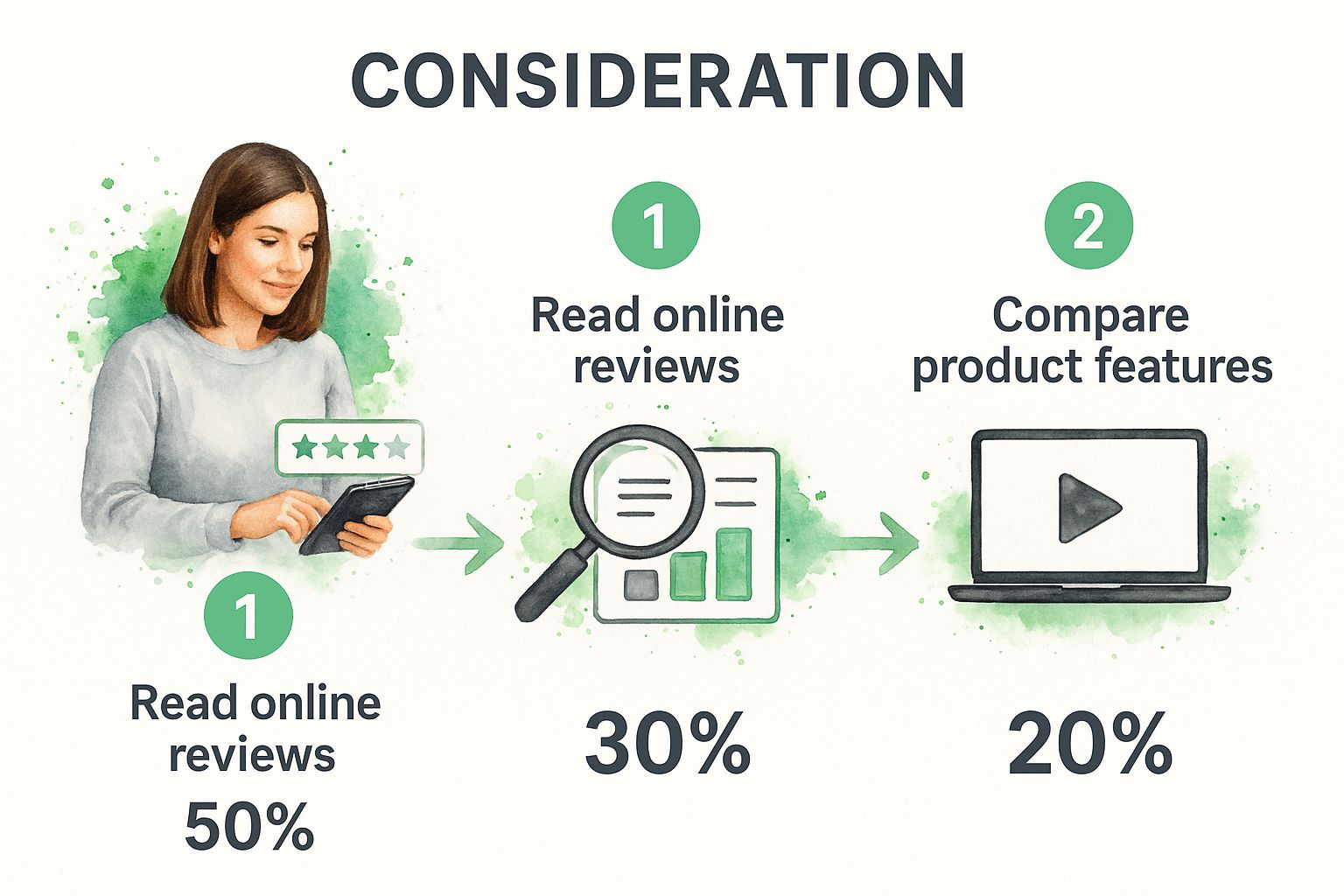
De data maakt het glashelder: validatie door peers via recensies is een enorme factor en stuurt de helft van het besluitvormingsproces van een klant op dit cruciale punt.
Identificeer Pijnpunten en Kansen
Dit is waar de echte waarde ligt. Terwijl je een stap terug doet en naar je voltooide kaart kijkt, ga je op zoek naar de momenten van frictie—de pijnpunten. Waar duiken frustratie, verwarring of ergernis op? Dit zijn de lekken in je klantervaring, de plekken waar je sales en goodwill verliest.
Een pijnpunt kan een onhandig afrekenproces zijn, een trage reactie van je supportteam of verwarrende informatie op je website. Zodra je ze hebt gespot, worden ze je topprioriteiten voor verbetering.
Zoek tegelijkertijd naar kansen om 'wow'-momenten te creëren. Waar kun je een stap extra zetten? Misschien kun je een proactieve supportchat toevoegen op een bijzonder complexe pagina of een gepersonaliseerde bedankvideo sturen nadat iemand een aankoop heeft gedaan. Dit zijn de momenten van vreugde die loyaliteit opbouwen en van gewone klanten je grootste fans maken. Uiteindelijk draait dit hele proces om het omzetten van empathie in actie.
Verander Inzichten uit de Klantreis in Marketingoverwinningen
Een customer journey map is zoveel meer dan een mooi diagram; het is een strategisch wapen voor je digitale marketing. Wanneer je dit heldere beeld van de ervaring van je klant hebt, kun je eindelijk stoppen met gokken en beginnen met beslissingen nemen op basis van echte data. Hier verbinden we de punten tussen je kaart en concrete acties die websiteverkeer, leadgeneratie en sales stimuleren.

De inzichten die je hebt verzameld, vormen de basis voor een slimmere, meer gerichte marketingaanpak. Vergeet de one-size-fits-all strategie. Nu kun je specifieke tactieken ontwikkelen die klanten precies daar ontmoeten waar ze zich in hun reis bevinden. Laten we uiteenzetten hoe je dit krachtige inzicht omzet in meetbare ROI voor je bedrijf.
Geef je SEO en Contentstrategie een Boost
Je journey map is een absolute goudmijn voor SEO en contentcreatie. Door te begrijpen wat je klanten in elke fase denken en voelen, kun je je richten op de precieze zoekwoorden die ze gebruiken en content creëren die hun problemen echt oplost.
Bijvoorbeeld, in de Awareness-fase zoekt een potentiële klant niet naar "projectmanagementsoftware". Ze typen waarschijnlijk "symptomen van een inefficiënte workflow" in Google. Je kaart vertelt je dat je blogposts en gidsen moet maken rond deze probleemgerichte zoekwoorden, waardoor je je positioneert als een behulpzame expert lang voordat ze zelfs maar aan een aankoop denken.
Naarmate ze naar de Consideration-fase gaan, worden hun zoekopdrachten specifieker en moet je content daarop aansluiten. Dit is het perfecte moment voor:
- Gedetailleerde vergelijkingsgidsen die jouw oplossing eerlijk vergelijken met de concurrentie.
- Diepgaande casestudies die resultaten uit de praktijk laten zien en cruciaal vertrouwen opbouwen.
- Productdemovideo's die specifieke vragen over functies en functionaliteit beantwoorden.
Deze gerichte aanpak zorgt ervoor dat je content direct inspeelt op hun veranderende vragen, waardoor jij de meest relevante en behulpzame bron bent die ze kunnen vinden. Als je wilt zien hoe dit in de praktijk werkt, verken dan onze digital marketing and content marketing services om te zien hoe wij deze strategieën bouwen.
Zet Precisiegerichte Advertenties in
Zonder een duidelijke strategie kan betaald adverteren aanvoelen alsof je geld in een zwart gat gooit. Maar met inzichten uit je journey map kun je advertenties met chirurgische precisie inzetten, waardoor je elke euro van je budget maximaliseert. Je kaart onthult de perfecte momenten en platforms om betaalde campagnes in te zetten.
Tijdens de Consideration-fase kun je bijvoorbeeld retargeting gebruiken om zeer relevante advertenties te tonen aan gebruikers die al specifieke productpagina's op je site hebben bezocht. Zodra ze de Conversion-fase bereiken, kan een advertentie met een tijdelijke korting dat laatste zetje geven dat een aarzelende koper nodig heeft. Het draait allemaal om het tonen van de juiste boodschap aan de juiste persoon op het juiste moment.
Een journey map transformeert je advertenties van een uitzending in een gesprek. Je schreeuwt niet langer in het luchtledige; je fluistert de juiste suggestie op het perfecte moment.
Natuurlijk moeten je marketingtactieken op elke fase zijn afgestemd voor maximaal effect. Hier is een snel overzicht van welke kanalen en tactieken aansluiten bij elke fase van de customer journey.
Marketingtactieken Gekoppeld aan de Fasen van de Customer Journey
| Fase van de Reis | Primaire Tactiek | Ondersteunende Tactiek | Belangrijkste KPI |
|---|---|---|---|
| Awareness | SEO, Content Marketing | Social Media Ads | Organisch Verkeer, Sociaal Bereik |
| Consideration | Vergelijkingsgidsen | Retargeting Ads | Downloads van Leadmagnets |
| Conversion | Optimalisatie van Landingspagina's | E-mailmarketing | Conversieratio, Winkelwagenwaarde |
| Retention | E-mailautomatisering | Loyaliteitsprogramma's | Herhaalaankopen |
| Advocacy | User-Generated Content | Verwijzingsprogramma's | Klantrecensies, Verwijzingen |
Door je inspanningen op deze manier af te stemmen, zorg je ervoor dat elke marketingactiviteit een specifiek doel dient en de klant soepel van de ene naar de andere fase leidt.
Optimaliseer je Website voor Naadloze Conversies
Je website is vaak het meest kritieke touchpoint in de hele customer journey. Je kaart zal de "pijnpunten" belichten—die momenten van frictie waar potentiële klanten gefrustreerd, verward en uiteindelijk vertrekken. Dit zijn je topprioriteiten voor optimalisatie.
Is het afrekenproces te lang en ingewikkeld? Vereenvoudig het door onnodige velden te schrappen. Is je prijspagina verwarrend? Herontwerp deze voor absolute duidelijkheid. Elke verbetering, hoe klein ook, verwijdert een barrière voor conversie en draagt direct bij aan meer sales.
Deze focus is vooral cruciaal in Nederland, waar de digitale betrokkenheid ongelooflijk hoog is. Sterker nog, onderzoek toont aan dat meer dan 95% van de Nederlandse consumenten tussen 25 en 54 jaar regelmatig online winkelt, wat een soepele, intuïtieve digitale ervaring absoluut onmisbaar maakt.
Bouw Duurzame Loyaliteit met Automatisering
De reis stopt niet zodra een aankoop is gedaan. In feite is dat waar de echte kans op loyaliteit begint. De Retention-fase is de perfecte plek om marketingautomatisering te implementeren. Met je journey map als leidraad kun je geautomatiseerde e-mailreeksen maken die nieuwe klanten verwelkomen, nuttige tips bieden voor het gebruik van hun nieuwe product en informeren naar hun ervaring.
Dit soort proactieve communicatie geeft klanten het gevoel dat ze gewaardeerd en ondersteund worden, wat de kans drastisch vergroot dat ze terugkomen. Het transformeert een eenmalige transactie in een langetermijnrelatie, wat de hoeksteen is van elk duurzaam, groeiend bedrijf. Door inzichten om te zetten in actie, wordt je customer journey map de ware blauwdruk voor je marketingsucces.
Gebruik AI om de Customer Journey te Verbeteren
Technologie evolueert niet alleen; het verandert fundamenteel wat je klanten van je verwachten. Artificial Intelligence (AI) is verschoven van een sciencefictionconcept naar een praktisch hulpmiddel dat de moderne customer journey aanzienlijk kan verbeteren. Voor bedrijven hier in Nederland gaat dit niet over het vervangen van de menselijke maat. Het gaat erom deze beter te maken—slimmer, sneller en veel persoonlijker.
AI geeft je krachtige manieren om je klanten in elke fase te begrijpen en met hen in contact te komen. Zie het als een superintelligente assistent die je helpt behoeften te voorspellen, ervaringen direct te personaliseren en onmiddellijke ondersteuning te bieden. En dit is niet langer alleen voor de grote spelers; toegankelijke AI-tools maken een responsievere en efficiëntere klantervaring bereikbaar voor bedrijven van elke omvang.
Personalisatie op Schaal met AI
Een van de moeilijkste noten om te kraken in marketing is elke klant het gevoel geven dat hij gezien en begrepen wordt. Dit is waar AI echt uitblinkt. Een perfect voorbeeld is de aanbevelingsmotor op een e-commercesite; deze analyseert de browsegeschiedenis van een gebruiker, eerdere aankopen en zelfs wat vergelijkbare shoppers kochten om producten voor te stellen waar ze oprecht van zullen houden.
Maar het gaat veel verder dan alleen het volgende product voorstellen. AI kan ook personaliseren:
- Website Content: Verschillende homepagebanners of aanbiedingen tonen op basis van de locatie van een bezoeker of hun eerdere gedrag op je site.
- E-mailmarketing: Geautomatiseerde e-mails sturen vol met content en promoties die aansluiten bij individuele interesses, en de oude one-size-fits-all nieuwsbrief achterwege laten.
- Dynamische Prijzen: Prijzen in realtime aanpassen op basis van vraag en klantgegevens om scherp en concurrerend te blijven.
AI-gestuurde Ondersteuning en Betrokkenheid
Je klanten hebben vragen, en ze willen nu antwoorden. AI-gestuurde chatbots zijn een briljant voorbeeld van hoe je de customer journey kunt verbeteren door onmiddellijke, 24/7 ondersteuning te bieden. Ze kunnen veelvoorkomende vragen in een oogwenk afhandelen, waardoor je menselijke supportteam zich kan richten op de complexere problemen die echt een persoonlijke aanpak vereisen.
Maar de rol van AI in betrokkenheid eindigt niet bij chatbots. Generatieve AI wordt snel overgenomen door Nederlandse consumenten om hen te helpen bij hun eigen aankoopbeslissingen. Het gebruik ervan onder shoppers is zelfs gestegen van 13% in 2023 tot 27% in 2024, waarbij jongere generaties vooroplopen. Dit betekent dat klanten AI al gebruiken om te onderzoeken en te vergelijken, wat het voor bedrijven cruciaal maakt om een sterke, AI-vriendelijke digitale aanwezigheid te hebben.
AI gaat niet over het robotiseren van de klantervaring. Het gaat erom technologie te gebruiken om beter te luisteren en intelligenter te reageren, zodat je menselijke interacties nog betekenisvoller worden.
Voorspellende Analyses voor Proactieve Marketing
Misschien wel het krachtigste gebruik van AI in de customer journey is het vermogen om te voorspellen wat er gaat gebeuren. Voorspellende analysetools doorzoeken enorme hoeveelheden klantgegevens om patronen te herkennen en te voorspellen wat klanten waarschijnlijk zullen doen.
Dit stelt je in staat om proactief te zijn in plaats van alleen reactief. AI kan bijvoorbeeld:
- Risicoklanten Identificeren: Het kan klanten signaleren die tekenen van vertrek vertonen, waardoor je de kans krijgt om in te grijpen met een speciale aanbieding of gepersonaliseerde ondersteuning om hen terug te winnen.
- Toekomstige Behoeften Anticiperen: Het kan voorspellen wanneer een klant klaar is om een product opnieuw te bestellen of geïnteresseerd zou kunnen zijn in een upgrade.
- Marketinguitgaven Optimaliseren: Het helpt bepalen welke leads het meest waarschijnlijk converteren, zodat je je advertentiebudget kunt richten op waar het de grootste impact heeft.
Door deze tools in je strategie op te nemen, verschuif je van simpelweg reageren op wat klanten doen naar het actief anticiperen op hun behoeften. Dat soort vooruitziendheid is een echte gamechanger voor het opbouwen van loyaliteit. Om te zien hoe deze technologieën in de praktijk werken, bekijk onze oplossingen voor digital marketing and marketing automation. Het is een belangrijke stap naar het bouwen van een slimmere, effectievere customer journey die echte, duurzame groei stimuleert.
Jouw Actieplan voor Succes met Journey Mapping
Oké, je begrijpt de theorie achter de customer journey. Dat is het makkelijke deel. De echte groei komt van het nemen van wat je hebt geleerd en er daadwerkelijk iets mee doen. Het is veel te gemakkelijk om een prachtige kaart te bouwen, om die vervolgens digitaal stof te laten verzamelen in een vergeten map.
Dit is jouw actieplan. Laten we die inzichten omzetten in resultaten die ertoe doen. Je hoeft je hele bedrijf niet van de ene op de andere dag op zijn kop te zetten. De truc is om klein te beginnen, te streven naar een paar snelle overwinningen en van daaruit momentum op te bouwen.
Jouw Snelstart Checklist
Beginnen kan als een enorme taak voelen, maar het komt neer op een paar praktische stappen. Onthoud: vooruitgang is beter dan perfectie, elke keer weer.
- Kies Eén Doel: Probeer niet elke klantinteractie in één keer in kaart te brengen. Je raakt overweldigd. Focus in plaats daarvan op één specifiek doel. Denk aan: "Waarom worden nieuwe leads koud na een demo?" of "Hoe kunnen we de eerste week beter maken voor nieuwe klanten?"
- Praat met Mensen (Echt Waar): Een kaart gebaseerd op giswerk is een fantasieroman, geen bedrijfstool. Plan korte gesprekken met een handvol recente klanten. Net zo belangrijk: praat met je sales- en supportteams. Zij staan elke dag in de frontlinie en weten precies waar klanten vastlopen.
- Schets een 'Minimum Viable Map': Pak een whiteboard of open een eenvoudige digitale tool. Streef niet naar een meesterwerk. Zet gewoon de basisstappen, de belangrijkste touchpoints en de meest opvallende pijnpunten op papier. Het hoeft alleen maar te bestaan.
- Vind Eén 'Snelle Overwinning': Kijk naar je eenvoudige kaart. Wat is het ene frustrerende knelpunt dat je nu met minimale inspanning kunt oplossen? Is het een verwarrend formulier op je website? Een pijnlijk trage reactie op de eerste vragen? Los dat ene ding eerst op.
Krijg Je Team aan Boord
Een journey map is het krachtigst wanneer het een gedeeld referentiepunt is voor iedereen, niet alleen een document dat in de marketingmap leeft. Het uiteindelijke doel is om een echt klantgerichte cultuur op te bouwen.
Een journey map is geen taak voor één afdeling. Het is een lens waardoor de hele organisatie haar werk kan bekijken, waardoor iedereen—van sales tot support—op één lijn komt rond de ervaring van de klant.
Om dat te laten gebeuren, moet je mensen meekrijgen. Deel je eerste concept van de kaart en de inzichten die je hebt ontdekt. Kader pijnpunten niet als mislukkingen; presenteer ze als spannende kansen voor iedereen om bij te dragen en dingen beter te maken.
Wanneer je hele team begint na te denken over hun rol in de grotere customer journey, dan ontgrendel je echte, duurzame groei. Klaar om te beginnen? Je hebt nu alles wat je nodig hebt om niet alleen het pad van je klant te zien, maar het ook actief te verbeteren. Laten we die eerste stap zetten.
Veelgestelde Vragen
Heb je na het lezen nog vragen over de customer journey? Dat is heel normaal. Hier beantwoorden we enkele van de meest voorkomende vragen die we van Nederlandse ondernemers en marketingmanagers horen.
Hoe Vaak Moet ik Mijn Customer Journey Map Bijwerken?
Zie je customer journey map als een levend document, niet als een project dat je eenmalig afrondt. We adviseren om de kaart minstens één keer per jaar te herzien. Een update is ook cruciaal wanneer je een grote zakelijke verandering doorvoert.
Denk hierbij aan situaties zoals:
- De lancering van een nieuw product of dienst.
- Een volledige herinrichting van je website.
- Veranderingen in je doelgroep of markt.
Klantgedrag evolueert constant, en regelmatige updates op basis van nieuwe data en feedback zorgen ervoor dat je kaart accuraat en effectief blijft.
Wat is de Grootste Fout bij Journey Mapping?
De meest gemaakte fout is het opstellen van een kaart op basis van interne aannames in plaats van echte klantdata. Een kaart is alleen waardevol als het de daadwerkelijke ervaring van de klant weerspiegelt, inclusief hun frustraties en twijfels.
Een customer journey map gebouwd op aannames is een fantasieverhaal. Eentje gebouwd op data is een strategische routekaart naar groei.
Zorg ervoor dat je altijd echte inzichten gebruikt. Baseer je kaart op klantinterviews, enquêtes, website-analytics en feedback uit support-tickets om de reis vanuit hun perspectief in kaart te brengen, niet vanuit dat van jou.
Is Journey Mapping Relevant voor een Klein Bedrijf?
Absoluut. Je zou zelfs kunnen stellen dat het voor een klein bedrijf nog belangrijker is. Je hebt geen dure software nodig; een simpel whiteboard of een digitaal document volstaat prima.
Het in kaart brengen van de customer journey helpt je om je beperkte middelen—tijd, geld en mankracht—te focussen op de marketingactiviteiten die de grootste impact hebben. Het voorkomt dat je investeert in strategieën die niet aansluiten bij je publiek, waardoor elke euro en elk uur beter wordt besteed.
Hoe Verschilt een Journey Map van een Sales Funnel?
Dit is een belangrijke vraag. Een sales funnel is een lineair model vanuit het perspectief van jouw bedrijf. Het volgt potentiële klanten terwijl ze richting een aankoop bewegen, met een focus op conversiepercentages.
Een customer journey map is veel breder en wordt verteld vanuit het perspectief van de klant.
- Focus: De funnel focust op verkoop; de kaart focust op de klantervaring.
- Perspectief: De funnel is intern gericht (ons proces); de kaart is extern gericht (hun ervaring).
- Structuur: De funnel is lineair; de kaart is vaak niet-lineair en omvat emoties, gedachten en alle touchpoints, ook na de aankoop.
De kaart helpt je de ervaring van je klant te verbeteren, terwijl de funnel zich richt op het optimaliseren van transacties.
Begrijpen hoe jouw klanten de reis met jouw bedrijf ervaren is de eerste stap naar duurzame groei. Bij Digitalique.nl helpen we je om deze inzichten om te zetten in concrete marketingacties die resultaat opleveren. Ben je klaar om je marketing naar een hoger niveau te tillen? Neem vandaag nog contact met ons op via https://www.digitalique.nl of laat je commentaar hieronder achter.