
In de kern is e-commerce simpelweg het online kopen en verkopen van goederen of diensten. Maar die simpele definitie doet het geen recht. Zie je e-commerce website als je allerbeste verkoper: iemand die 24/7 werkt om verkopen binnen te halen, leads te genereren en echte klantrelaties op te bouwen, en dat op wereldwijde schaal.
Worstel je met tegenvallend websiteverkeer of lage conversies? Vraag je je af hoe je de ROI van je online inspanningen kunt meten? In deze gids geven we je praktische, betrouwbare adviezen om je bedrijf te laten groeien.
Ontgrendel Groei met E-commerce
Heb je je ooit afgevraagd waarom sommige bedrijven exponentieel lijken te groeien terwijl andere stil blijven staan? Het geheim zit hem vaak in hun vermogen om aan te sluiten bij hoe mensen vandaag de dag winkelen. Klanten verwachten dat ze alles kunnen vinden, vergelijken en kopen wat ze willen, waar en wanneer dan ook. E-commerce is de brug die jouw bedrijf direct met hen verbindt.
Het is een fundamentele verschuiving die geografische barrières doorbreekt. Je fysieke winkel bedient misschien de lokale gemeenschap uitstekend, maar een online winkel opent de deuren naar de hele wereld. Dit gaat niet alleen over het bereiken van meer mensen; het gaat over het transformeren van je hele bedrijfsvoering.
De Concrete Bedrijfsvoordelen
De stap naar online ondernemen levert een reeks krachtige voordelen op die direct je winst verhogen en je operatie stroomlijnen. Voor ondernemers in Nederland kan deze digitale sprong een serieuze voorsprong op de concurrentie betekenen.
Dit is wat je kunt winnen:
- Lagere Operationele Kosten: Een webshop betekent dat je de hoge kosten van een fysieke winkelruimte kunt overslaan. Dit bespaart enorm op huur, nutsvoorzieningen en personeel, waardoor je kapitaal vrijmaakt voor marketing en productontwikkeling.
- Toegang tot een Wereldwijd Publiek: Een fysieke winkel is beperkt tot lokaal winkelend publiek. Een e-commerce website daarentegen is toegankelijk voor iedereen met een internetverbinding, wat je potentiële markt gigantisch uitbreidt.
- Waardevolle Klantdata: Elke klik, zoekopdracht en aankoop op je site vertelt een verhaal. Deze data is een goudmijn om te begrijpen wat je klanten willen, je marketing te personaliseren en slimme beslissingen te nemen die de verkoop echt stimuleren.
Een Bloeiende Digitale Marktplaats
De kansen in Nederland zijn momenteel bijzonder groot. De Nederlandse e-commerce markt is niet alleen groot; hij groeit in een ongelooflijk tempo. Prognoses tonen aan dat de markt zal groeien van een geschatte €36,54 miljard in 2025 naar ongeveer €57,03 miljard in 2030. Deze groei wordt aangejaagd door een hoge internetpenetratie en uitstekende logistiek, wat de perfecte omstandigheden creëert voor online bedrijven om te floreren. Ontdek meer inzichten in de Nederlandse e-commerce marktaandeelanalyse.
Door e-commerce te omarmen, creëer je niet zomaar een website; je bouwt aan een schaalbaar, datagedreven bedrijf dat klaar is voor duurzame, lange termijn groei in een bloeiende digitale economie.
Uiteindelijk transformeert een solide e-commerce strategie je website van een simpele digitale folder naar je krachtigste groeimotor. Het helpt je om met meer klanten in contact te komen, hun behoeften te begrijpen en een veerkrachtig bedrijf op te bouwen dat klaar is voor de toekomst.
Het Kiezen van je E-commerce Businessmodel
Een geweldig product is slechts het halve werk. De echte basis van een succesvol e-commerce bedrijf is het kiezen van de juiste verkoopmethode. Je businessmodel vormt alles — van je dagelijkse werkzaamheden en marketingfocus tot de manier waarop je met je klanten communiceert. Als je dit vanaf het begin goed aanpakt, bespaar je jezelf later een hoop hoofdpijn.
Zie het als het kiezen van een auto voor een reis. Een snelle sportwagen is fantastisch, maar volstrekt onpraktisch voor een kampeertrip met het gezin. Met een minivan win je ook geen race. Op dezelfde manier moet je businessmodel perfect passen bij wat je verkoopt, aan wie je verkoopt en waar je naartoe wilt.
Business-to-Consumer (B2C)
Dit is het model dat iedereen kent. Met B2C verkoop je producten of diensten rechtstreeks aan individuele klanten voor persoonlijk gebruik. Het is het digitale equivalent van een winkel in de hoofdstraat, zoals het kopen van een nieuw paar sneakers direct van de website van je favoriete merk.
Bij B2C draait alles om volume en het opbouwen van een sterke merkverbinding. Marketinginspanningen richten zich meestal op emotionele aantrekkingskracht, het kweken van merkloyaliteit en het creëren van een zo soepel en plezierig mogelijke winkelervaring. Succes hangt hier af van een grondige kennis van consumententrends en het leveren van uitmuntende klantenservice.
Business-to-Business (B2B)
In de B2B-wereld zijn je klanten andere bedrijven. In plaats van één paar sneakers te verkopen, lever je misschien een bulkorder veiligheidsuitrusting aan een bouwbedrijf. De verkoopcyclus is hier vaak veel langer, met meerdere beslissers, en wordt gedreven door pure logica: efficiëntie, waarde en return on investment (ROI).
Winnende strategieën in B2B e-commerce zijn:
- Relaties Opbouwen: Vertrouwen en langetermijnpartnerschappen zijn cruciaal.
- Waarde Aantonen: Je moet duidelijk laten zien hoe jouw product een concreet bedrijfsprobleem oplost of hun winst verhoogt.
- Aankoopproces Stroomlijnen: Maak het leven van zakelijke klanten makkelijker met functies als bulkbestellingen, aangepaste prijzen en eenvoudige herbestellingen.
Direct-to-Consumer (D2C)
Het D2C-model houdt in dat een fabrikant of merk besluit om zijn producten rechtstreeks aan de eindklant te verkopen, zonder traditionele tussenpersonen zoals groothandels en retailers. Dit geeft je volledige controle over je merk, je boodschap en de gehele klantervaring.
Door D2C te gaan, krijg je ongefilterde toegang tot onbetaalbare klantdata. Hiermee kun je snel inspelen op marktfeedback en een echte community rond je merk bouwen. Het is een krachtige manier om de klantreis van de eerste klik tot de uiteindelijke levering volledig in eigen hand te hebben.
Deze infographic laat zien hoe e-commerce voordelen zoals wereldwijd bereik worden ondersteund door kostenbesparingen en datagedreven inzichten, die centraal staan in het D2C-model.
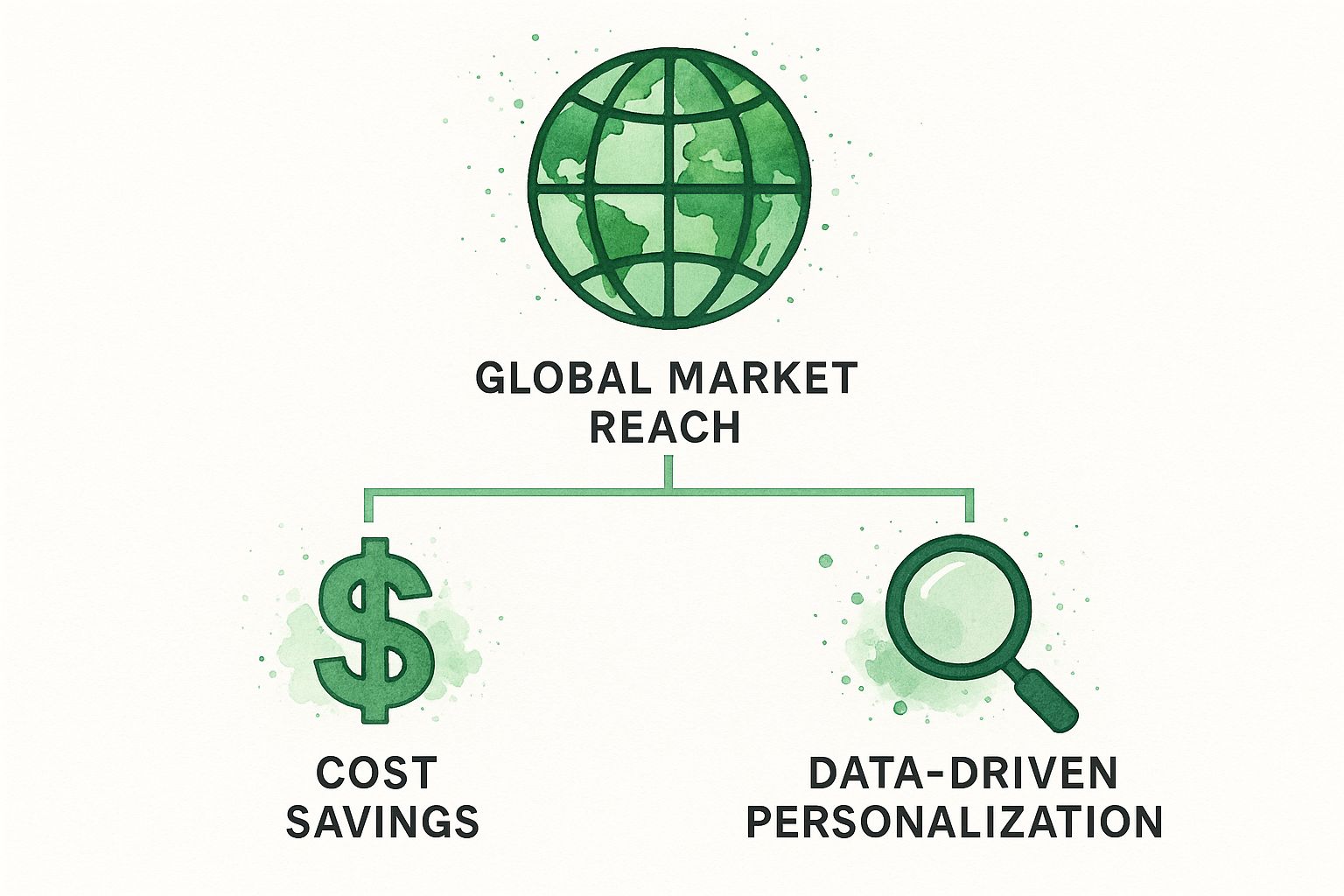
Zoals het diagram laat zien, wordt het bereiken van een breder publiek veel winstgevender en effectiever als je operationele kosten kunt verlagen en klantdata kunt gebruiken om de ervaring persoonlijk te maken.
Verkopen via Marktplaatsen
Een andere enorm populaire route is verkopen via gevestigde online marktplaatsen zoals www.bol.com of Amazon. In plaats van je eigen webshop van de grond af op te bouwen, maak je gebruik van hun enorme, bestaande klantenbestand en vertrouwde platform. Dit kan je initiële marketingkosten drastisch verlagen en je producten vrijwel direct onder de aandacht brengen van miljoenen potentiële kopers.
Verkopen op een marktplaats geeft je direct toegang tot een enorm publiek, maar betekent ook dat je volgens andermans regels speelt en directe concurrentie op dezelfde pagina hebt.
Hoewel marktplaatsen een ongelooflijk bereik bieden, lever je controle in over je branding, betaal je flinke commissies en moet je constant vechten om op te vallen in een extreem druk veld. Het is vaak een fantastisch startpunt voor nieuwe bedrijven of een slim aanvullend kanaal naast je eigen D2C-webshop.
E-commerce Businessmodellen Vergeleken
Het kiezen van het juiste businessmodel is een cruciale eerste stap. Deze tabel zet de belangrijkste verschillen tussen de primaire e-commerce modellen op een rij om je te helpen bepalen welke het beste past bij de doelen en producten van jouw bedrijf.
| Model | Primaire Klant | Belangrijkste Voordeel | Veelvoorkomende Uitdaging |
|---|---|---|---|
| B2C | Individuele Consumenten | Grote markt, merkopbouw | Hoge concurrentie, kosten voor klantenwerving |
| B2B | Andere Bedrijven | Hogere orderwaarde, langetermijnklanten | Langere verkoopcyclus, complexe behoeften |
| D2C | Individuele Consumenten | Volledige merkcontrole, directe klantdata | Hoge marketing- & logistieke kosten |
| Marktplaats | Individuele Consumenten | Directe toegang tot een enorm publiek | Commissiekosten, gebrek aan merkcontrole |
Uiteindelijk heeft elk model zijn unieke sterke en zwakke punten. De beste keuze voor jou hangt echt af van wat je verkoopt, aan wie je verkoopt en hoe je je bedrijf wilt laten groeien.
Het Juiste E-commerce Platform Kiezen
Je e-commerce platform kiezen is een van de grootste beslissingen die je zult nemen. Het is de digitale fundering van je hele online bedrijf. Zie het als het kiezen van de perfecte locatie voor een fysieke winkel: de plek en het pand bepalen wat je kunt verkopen, hoe je het kunt inrichten en hoe makkelijk je kunt uitbreiden als de zaken goed gaan.
Het is cruciaal om dit vanaf het begin goed te doen. Het juiste platform voelt als een natuurlijk verlengstuk van je bedrijf en maakt dagelijkse taken eenvoudig. Het verkeerde platform? Dat kan een constante bron van technische hoofdpijn en beperkingen worden. Laten we de ruis doorbreken en bepalen wat écht belangrijk is voor jouw bedrijf.

SaaS Platforms vs Open-Source Oplossingen
De eerste splitsing op de weg is de keuze tussen een "Software as a Service" (SaaS) platform en een "open-source" oplossing. Dit zijn twee fundamenteel verschillende manieren om je webshop te bouwen en te beheren.
Een SaaS-platform zoals Shopify is als het huren van een volledig ingerichte winkelruimte in een premium winkelcentrum. Je betaalt een maandelijks bedrag en krijgt daarvoor alles wat je nodig hebt: hosting, beveiliging, betalingsverwerking en klantenservice zijn allemaal inbegrepen. Het is ontworpen om gebruiksvriendelijk te zijn, zodat je snel van start kunt.
Een open-source platform zoals WooCommerce is meer als het bezitten van de grond en je winkel vanaf de basis opbouwen. De kernsoftware is gratis, maar jij bent verantwoordelijk voor al het andere: je eigen webhosting vinden, beveiligingsmaatregelen installeren en al het technische onderhoud uitvoeren. Deze route biedt ongelooflijke flexibiliteit, maar vereist veel meer technische kennis (of het budget om een ontwikkelaar in te huren).
Je platformkeuze heeft direct invloed op de technische SEO, wat je zichtbaarheid in Google vanaf dag één beïnvloedt. Een goed gecodeerd platform met sterke SEO-functies geeft je een voorsprong, terwijl een slecht gestructureerd platform je kan tegenhouden.
Belangrijke Factoren om te Overwegen
Om de juiste match te vinden, moet je verder kijken dan de flitsende features en nadenken over wat jouw e-commerce bedrijf écht nodig heeft. Het gaat niet alleen om de prijs, maar om de totale waarde en hoe het platform je langetermijnvisie ondersteunt.
Dit zijn de essentiële punten om te evalueren:
- Kosten: Kijk verder dan het maandelijkse abonnement. Hoe zit het met transactiekosten? Hoeveel moet je uitgeven aan essentiële apps of plugins? Als je maatwerk nodig hebt, wat kost de ontwikkeling dan? Een "alles-in-één" pakket zoals wij aanbieden, kan in eerste instantie duurder lijken, maar je op de lange termijn een fortuin besparen aan add-ons.
- Gebruiksgemak: Hoe technisch onderlegd ben je? Een eenvoudige, intuïtieve interface voor het toevoegen van producten, beheren van bestellingen en uitvoeren van verkoopcampagnes bespaart je talloze uren frustratie. Je wilt je tijd besteden aan verkopen, niet aan worstelen met je website.
- Schaalbaarheid: Het platform dat je vandaag kiest, moet je succes van morgen aankunnen. Kan het een enorme piek in verkeer door een virale social media post aan? Heeft het de functies die je over twee jaar nodig hebt, zoals internationaal verkopen of duizenden producten beheren?
- Integraties: Je webshop opereert niet op een eiland. Het moet soepel kunnen verbinden met je andere zakelijke tools — van je e-mailmarketingsoftware en boekhoudsysteem tot je favoriete verzendpartners. Controleer op sterke, betrouwbare integraties om zoveel mogelijk te automatiseren.
De Definitieve Beslissing Nemen
De discussie tussen platforms als Shopify en WooCommerce gaat niet over welke "beter" is, maar welke het beste is voor jou.
Shopify is vaak de beste keuze voor bedrijven die snelheid, eenvoud en ijzersterke beveiliging prioriteren. Het geeft je de vrijheid om je te concentreren op waar je goed in bent: het marketen en verkopen van producten.
WooCommerce is daarentegen de krachtpatser voor bedrijven met unieke behoeften die diepgaand maatwerk en volledige controle over elk aspect van hun online aanwezigheid vereisen.
Uiteindelijk stelt het juiste platform je in staat om je bedrijf vandaag efficiënt te runnen en geeft het je een duidelijk pad om in de toekomst te groeien. De juiste keuze maken is een fundamentele stap. Als je hulp nodig hebt, kunnen onze experts je helpen een alles-in-één webshop te bouwen die is afgestemd op jouw specifieke doelen.
Verkeer en Verkoop Stimuleren met Digitale Marketing
Een prachtige e-commerce winkel is een fantastisch begin, maar zonder bezoekers is het slechts een mooie etalage in een verlaten steegje. Hier komt digitale marketing om de hoek kijken; het verandert jouw stille hoekje van het internet in een bruisende marktplaats. Het is de motor die kwalitatief verkeer naar je producten trekt en nieuwsgierige bezoekers omzet in trouwe klanten.
Laten we duiken in de bewezen methoden om je webshop zichtbaar te maken en die aandacht om te zetten in echte, meetbare omzet. Dit is jouw strategie om marketinguitgaven om te zetten in duurzame groei.
Beheers Zoekmachineoptimalisatie (SEO)
Zoekmachineoptimalisatie (SEO) is de kunst om je webshop aantrekkelijker te maken voor zoekmachines zoals Google. Zie het zo: Google is een enorme bibliotheek en jouw website is een boek. Goede SEO helpt de bibliothecaris (het algoritme van Google) te begrijpen waar jouw boek over gaat en het aan de juiste mensen aan te bevelen.
Wanneer iemand in Nederland zoekt naar een product dat jij verkoopt, moet je op die eerste pagina staan. Waarom? Omdat meer dan 75% van de gebruikers nooit verder klikt dan de eerste pagina, wat hoge zichtbaarheid onmisbaar maakt. Het gaat er niet om Google te slim af te zijn, maar om een kwalitatieve, betrouwbare site te bouwen die mensen écht helpt te vinden wat ze zoeken.
Effectieve e-commerce SEO rust op een paar belangrijke pijlers:
- Zoekwoordonderzoek: Het identificeren van de exacte termen die jouw ideale klanten in Google typen.
- On-Page SEO: Het optimaliseren van je productpagina's, categorieën en blogposts met de juiste zoekwoorden, overtuigende beschrijvingen en hoogwaardige afbeeldingen.
- Technische SEO: Zorgen dat je site snel, mobielvriendelijk en makkelijk te 'lezen' is voor Google. Dit omvat basisprincipes zoals een beveiligde site (HTTPS) en een schone structuur.
Verbind met Klanten via Geo-Targeting en Lokale SEO
Voor bedrijven met een fysieke winkel of die zich op specifieke regio's richten, is geo-targeting ongelooflijk krachtig. Het stelt je in staat om je marketinginspanningen te richten op klanten binnen een bepaalde stad, provincie of zelfs buurt, zodat je budget wordt besteed aan mensen die daadwerkelijk bij jou kunnen kopen.
Stel je voor dat je een fietsenwinkel in Amsterdam hebt. Met geo-targeting kun je advertenties specifiek tonen aan mensen in en rond de stad die op zoek zijn naar nieuwe fietsen. Dit is veel efficiënter dan dezelfde advertenties aan iemand in Maastricht te laten zien. Lokale SEO sluit hier naadloos op aan, door je online aanwezigheid te optimaliseren om te scoren op zoekopdrachten als "fietsenwinkel Amsterdam".
Gebruik AI voor Gepersonaliseerde Winkelervaringen
Artificiële Intelligentie (AI) is geen toekomstmuziek meer; het is een praktisch hulpmiddel dat je verkoop aanzienlijk kan verhogen. AI-algoritmes analyseren klantgedrag — waar ze naar kijken, wat ze hebben gekocht en waar ze op hebben gezocht — om een unieke winkelervaring voor elke bezoeker te creëren.
Een goed voorbeeld is een productaanbevelingssysteem. Door een klant items te tonen die gerelateerd zijn aan hun recente aankoop, kun je de gemiddelde orderwaarde verhogen en loyaliteit opbouwen. Het laat zien dat je hen begrijpt.
AI helpt je om verder te gaan dan 'one-size-fits-all' marketing. Het gaat erom het juiste product op het juiste moment aan de juiste persoon te presenteren, wat winkelen relevanter en aangenamer maakt. Dit niveau van personalisatie was ooit alleen mogelijk voor grote retailgiganten, maar is nu toegankelijk voor bedrijven van elke omvang. Voor wie net begint, kan ons e-commerce SEO starterspakket helpen om de essentiële basis te leggen voor het aantrekken van gericht verkeer.
Benut de Kracht van Social Commerce
De grens tussen social media en winkelen vervaagt snel, wat een enorme kans creëert die bekend staat als social commerce. Platforms zoals Instagram, Facebook en Pinterest zijn geëvolueerd van plekken om foto's te delen naar krachtige verkoopkanalen. Met functies als Instagram Shopping en Facebook Shops kunnen klanten producten ontdekken en kopen direct in de app.
Deze trend groeit explosief in Nederland. Social commerce zal naar verwachting jaarlijks met 20,6% groeien en in 2025 een marktwaarde van ongeveer €7,39 miljard bereiken. Deze enorme verschuiving laat zien hoe diep e-commerce verweven raakt met sociale platforms, gedreven door onze vraag naar naadloze en authentieke winkelervaringen.
Uiteindelijk gaat een winnende digitale marketingstrategie voor je e-commerce bedrijf niet over het kiezen van slechts één van deze methoden. Het gaat om het creëren van een geïntegreerde aanpak waarin SEO, gerichte advertenties en sociale betrokkenheid samenwerken, en zo een krachtige verkooptrechter bouwen die consistent klanten aantrekt, boeit en converteert.
Optimaliseer je Webshop voor Hogere Conversies
Bezoekers naar je e-commerce site trekken is een geweldige start, maar dat is slechts het halve werk. De echte magie gebeurt wanneer je die bezoekers omzet in trouwe klanten. Dit proces heet Conversie Optimalisatie (CRO), en het draait allemaal om het maken van slimme, kleine aanpassingen aan je website die kunnen leiden tot een grote sprong in je verkoop.
Stel je voor dat je website een fysieke winkel is. CRO is dan zorgen dat de gangpaden vrij zijn, de producten prachtig zijn uitgestald en de kassa makkelijk te vinden en te gebruiken is. Het is de kunst en wetenschap om het voor een klant zo eenvoudig en plezierig mogelijk te maken om een aankoop af te ronden.
Creëer een Vlekkeloos Afrekenproces
Heb je ooit een online aankoop afgebroken uit pure frustratie? Een onhandig of verwarrend afrekenproces is een van de snelste manieren om een verkoop te verliezen. Sterker nog, bijna 70% van de online winkelwagentjes wordt verlaten, met een moeilijk afrekenproces als een van de hoofdoorzaken.
Jouw missie is om elk obstakel te verwijderen. Elke onnodige klik of invulveld is een kans voor een klant om te twijfelen.
Zo maak je de ervaring soepel en naadloos:
- Bied Gast-afrekenen aan: Mensen dwingen een account aan te maken voordat ze kunnen kopen, is een enorme barrière. Laat ze als gast afrekenen om het proces te versnellen.
- Houd het Simpel: Vraag alleen om de informatie die je absoluut nodig hebt. Heb je echt hun telefoonnummer of geboortedatum nodig? Zo niet, schrap dat veld.
- Toon Voortgang: Een simpele voortgangsbalk (bijv. Verzending > Betaling > Bevestiging) doet wonderen. Het vertelt klanten precies waar ze zijn in het proces, wat onzekerheid vermindert.
- Bied Meerdere Betaalopties: Speel in op ieders voorkeur door populaire betaalmethoden in Nederland aan te bieden, zoals iDEAL, creditcards en PayPal.
Schrijf Productomschrijvingen die Echt Verkopen
Zie je productomschrijvingen als je digitale verkoopteam. Hun taak is niet alleen om functies op te sommen, maar om een beeld te schetsen en aan te sluiten bij wat de klant écht wil en nodig heeft. Een fantastische omschrijving overbrugt de kloof tussen een product online zien en begrijpen hoe het in het echt zal zijn.
Laat de generieke, door de fabrikant aangeleverde teksten links liggen. Focus op de voordelen. Zeg niet alleen dat een jas "waterdicht" is, maar leg uit dat hij je "volledig droog en comfortabel houdt tijdens een onverwachte plensbui." Gebruik taal die de zintuigen prikkelt en de klant helpt zich voor te stellen hoe ze het product gebruiken en ervan genieten.
Een overtuigende productomschrijving beschrijft niet alleen wat het product is, maar legt uit wat het product doet voor de klant. Het lost hun probleem op of vervult hun verlangen.
Gebruik Hoogwaardige Beelden om Verlangen op te Wekken
Mensen kopen met hun ogen, zeker online. Omdat klanten je producten niet fysiek kunnen aanraken of uitproberen, zijn verbluffende foto's en video's onmisbaar om vertrouwen te wekken en verlangen aan te wakkeren. Korrelige, slecht belichte afbeeldingen zien er niet alleen slecht uit, ze schreeuwen onprofessionalisme en kunnen kopers doen twijfelen aan de kwaliteit van wat je verkoopt.
Investeer in professioneel ogende beelden die je producten vanuit elke hoek laten zien. Voeg lifestyle-foto's toe die het product in gebruik tonen; dit helpt klanten het in hun eigen leven te visualiseren. Een korte video die de belangrijkste functies van een product demonstreert, kan nog krachtiger zijn en staat erom bekend de conversieratio's aanzienlijk te verhogen.
Benut Klantreviews om Vertrouwen te Bouwen
In de digitale wereld is vertrouwen je meest waardevolle bezit. Omdat meer dan 90% van de consumenten reviews leest voordat ze een aankoop doen, zijn deze getuigenissen net zo krachtig als een persoonlijke aanbeveling van een vriend. Positieve reviews bieden cruciaal sociaal bewijs en stellen nieuwe bezoekers gerust dat ze een slimme keuze maken.
Maak er een gewoonte van om klanten om een review te vragen nadat ze hun bestelling hebben ontvangen. Plaats deze reviews prominent op je productpagina's waar ze makkelijk te vinden zijn. En maak je geen zorgen over een enkele negatieve review; door er professioneel op te reageren en een oplossing te bieden, kun je zelfs meer vertrouwen opbouwen dan met een pagina vol louter vijfsterrenbeoordelingen.
Zorg voor een Vlekkeloze Mobiele Ervaring
Een matige mobiele ervaring is simpelweg geen optie meer. Een enorm deel van het online verkeer en de verkopen komt nu rechtstreeks van smartphones, dus je winkel moet perfect zijn afgestemd op kleinere schermen. Als je site moeilijk te navigeren is op een telefoon, jaag je actief klanten weg.
Dit gaat verder dan alleen een site die zich aanpast aan een mobiel scherm. Het betekent een "mobile-first" ontwerpfilosofie omarmen: denk aan grote, makkelijk aan te tikken knoppen, gestroomlijnde navigatie en een afrekenproces dat met minimaal typen kan worden voltooid. Test je site op verschillende apparaten om een soepele en plezierige ervaring voor iedereen te garanderen, waar ze ook winkelen.
Navigeren door de Toekomst van E-commerce
De e-commerce wereld staat nooit stil. Op de hoogte blijven van wat er komen gaat, is niet alleen slim, het is essentieel als je op de lange termijn wilt blijven bestaan. Laten we kijken naar de belangrijkste verschuivingen die de online retail vormgeven en hoe jij je bedrijf kunt voorbereiden op de toekomst.
Deze vooruitstrevende aanpak is cruciaal in een competitieve markt. Het Nederlandse e-commerce landschap is ongelooflijk divers, met ongeveer 129.000 webwinkels in 2025. De categorie Eten & Drinken leidt met bijna 24% van alle winkels, gevolgd door Kleding met 18%. Om op te vallen in zo'n druk speelveld, is het omarmen van de toekomst je beste strategie. Je kunt meer ontdekken over de Nederlandse e-commerce markt.
De Opkomst van AI-Personalisatie
Artificiële Intelligentie (AI) verandert de winkelervaring volledig. Het gaat veel verder dan eenvoudige productaanbevelingen en creëert diep persoonlijke ervaringen voor elke bezoeker. Zie AI als je slimste winkelmedewerker — iemand die de smaak van elke klant kent en kan voorspellen wat ze hierna misschien willen.
AI-gedreven tools kunnen:
- Toekomstige Aankopen Voorspellen: Door gedrag uit het verleden te analyseren, kan AI producten voorstellen die een klant waarschijnlijk in de toekomst zal kopen, wat geweldig is voor verkoop en loyaliteit.
- Intelligente Chatbots Aansturen: Geavanceerde chatbots bieden nu 24/7 klantenservice, beantwoorden complexe vragen en begeleiden mensen feilloos naar de juiste producten.
- Prijzen Realtime Optimaliseren: AI kan prijzen aanpassen op basis van vraag, concurrentie en voorraadniveaus om je te helpen het maximale uit elke verkoop te halen.
Dit niveau van personalisatie geeft klanten het gevoel dat ze gezien en begrepen worden, wat een simpele transactie verandert in een echte relatie.
Augmented Reality Vervaagt de Grenzen
Hoe vaak heeft een klant geaarzeld om iets te kopen omdat ze zich niet konden voorstellen hoe het er in hun huis of op henzelf uit zou zien? Augmented Reality (AR) lost dit probleem op door mensen virtueel te laten "passen voordat ze kopen".
Met alleen hun smartphonecamera kan een klant zien hoe een nieuwe bank in hun woonkamer past of hoe een zonnebril op hun gezicht staat. Deze meeslepende ervaring vermindert niet alleen het aantal retouren, maar bouwt ook het vertrouwen van de koper op en maakt winkelen leuker en interactiever. AR overbrugt de kloof tussen de digitale en fysieke wereld en biedt een krachtige nieuwe manier om met je publiek in contact te komen.
Door AR te integreren, verkoop je niet alleen een product; je biedt een ervaring. Deze technologie helpt klanten beter geïnformeerde beslissingen te nemen, wat leidt tot hogere tevredenheid en minder retouren.
Duurzaamheid als Beslissende Factor
De consument van vandaag is zich meer dan ooit bewust van de ecologische en ethische impact van hun aankopen. Duurzaamheid is niet langer een niche-interesse, maar een kernwaarde die aankoopbeslissingen serieus kan beïnvloeden. Transparant zijn over je toeleveringsketen, milieuvriendelijke verpakkingen gebruiken en CO2-neutrale verzending aanbieden, worden krachtige manieren om je te onderscheiden.
Het communiceren van je inzet voor duurzaamheid bouwt vertrouwen op en spreekt een groeiend aantal shoppers aan die willen dat hun uitgaven in lijn zijn met hun waarden. Het benadrukken van deze inspanningen op je productpagina's en door je hele site heen kan een overtuigende reden zijn voor een klant om voor jou te kiezen boven een concurrent. De juiste technologische keuzes vanaf het begin maken is essentieel. Lees er meer over in onze gids over welk e-commerce platform het beste past bij kleine tot middelgrote webshops.
Vragen over E-commerce? Wij Hebben de Antwoorden.
De wereld van e-commerce betreden, of je nu net begint of wilt groeien, roept altijd vragen op. Als digitaal marketingbureau spreken we dagelijks met Nederlandse ondernemers en horen we dezelfde zorgen en onzekerheden. Daarom hebben we antwoorden op de meest gestelde vragen verzameld, om je de duidelijkheid te geven die je nodig hebt om vooruit te komen.
Hoeveel Kost het Echt om een Webshop te Starten?
Dit is de hamvraag, nietwaar? En het eerlijke antwoord is: dat hangt er helemaal vanaf. De kosten zijn direct gekoppeld aan wat je wilt bereiken.
Zie het als het bouwen van een huis. Je kunt kiezen voor een eenvoudig, effectief prefab model, of je kunt een op maat gemaakte villa vanaf de grond ontwerpen. In de e-commerce wereld kun je een degelijke winkel lanceren op een platform als Shopify voor een redelijk maandelijks bedrag plus transactiekosten. Maar als je op zoek bent naar maatwerk, professionele branding en een serieuze marketingpush vanaf dag één, zal je initiële investering vanzelfsprekend hoger zijn.
Een realistisch startbudget moet een paar belangrijke posten dekken:
- Platformkosten: Het maandelijkse abonnement voor je e-commerce platform.
- Ontwerp en Ontwikkeling: De kosten voor een thema of het inhuren van een webdesigner.
- Essentiële Apps/Plugins: Vergeet de tools voor zaken als e-mailmarketing, SEO en klantreviews niet.
- Initieel Marketingbudget: Een budget dat specifiek is gereserveerd om die cruciale eerste golf van verkeer en verkopen te genereren.
Hoe Weet Ik of Mijn Digitale Marketing Echt Werkt?
Je moet absoluut de Return on Investment (ROI) van je marketing meten. Elke euro die je uitgeeft, moet waarde terugbrengen naar je bedrijf, zo simpel is het. Het is makkelijk om afgeleid te worden door "likes" of "volgers", maar die 'vanity metrics' betalen de rekeningen niet. Je moet je focussen op de data die direct invloed heeft op je bedrijfsresultaat.
Het geheim is het bijhouden van de juiste cijfers. Verdwaal niet in 'vanity metrics'. Focus op de data die een duidelijke lijn laat zien tussen je marketingactiviteiten en daadwerkelijke verkopen.
Om een goed beeld te krijgen van je ROI, houd je deze Key Performance Indicators (KPI's) nauwlettend in de gaten:
- Conversieratio: Welk percentage van je websitebezoekers doet uiteindelijk een aankoop?
- Klantacquisitiekosten (CAC): Hoeveel geef je gemiddeld uit om één nieuwe klant te werven?
- Gemiddelde Orderwaarde (AOV): Hoeveel besteedt de gemiddelde klant in één transactie?
- Customer Lifetime Value (CLV): Wat is het totale bedrag dat je van een klant kunt verwachten gedurende de gehele relatie met je merk?
Door deze cijfers te volgen, zie je snel welke marketingkanalen hun werk doen en waar je je geld het beste kunt investeren voor de beste resultaten.
Moet Ik Verkopen op Mijn Eigen Website of een Marktplaats?
Dit is niet echt een "of/of"-situatie. Voor veel bedrijven is het slimste antwoord "beide". Elke optie heeft zijn eigen unieke krachten en speelt een andere rol in een solide e-commerce strategie.
Je eigen website geeft je volledige controle over je merk, de klantervaring en al je data. Het is je eigen digitale etalage waar je echte, directe relaties met je publiek opbouwt.
Verkopen op een marktplaats zoals Bol.com geeft je daarentegen directe toegang tot een enorm, ingebouwd publiek van shoppers. Het is een fantastische manier om je producten snel onder de aandacht van miljoenen potentiële kopers te brengen, vooral als je net begint.
Vaak is de beste strategie om marktplaatsen te gebruiken om nieuwe klanten te vinden en vervolgens je eigen website te gebruiken om die relaties te onderhouden, langetermijnloyaliteit op te bouwen en je winstmarges te maximaliseren.
De wereld van e-commerce kan overweldigend aanvoelen, maar je hoeft het niet alleen te doen. Bij Digitalique.nl bieden we de strategische begeleiding en digitale marketingexpertise om van jouw webshop een echte groeimotor te maken.
Klaar om een e-commerce bedrijf te bouwen dat bloeit? Start vandaag nog met groeien met ons. Andere opmerkingen, laat hieronder iets van je horen.