
Worstelt jouw bedrijf met lage website traffic, slechte online zichtbaarheid of tegenvallende conversiepercentages? Online video marketing is de oplossing die je zoekt. Zie het als jouw meest veelzijdige teamlid - een expert die tegelijkertijd klanten aantrekt, jouw verhaal vertelt en vertrouwen opbouwt. Het draait allemaal om het creëren van een menselijke connectie met je publiek.
Wat is Online Video Marketing?

Veel Nederlandse ondernemers zien video als een dure en ingewikkelde hoofdpijn. Maar wat als je er anders naar kijkt?
Stel je voor dat je website je digitale etalage is. In dat geval is online video marketing je deskundige verkoper die bij de deur staat, klaar om bezoekers te begroeten, producten te demonstreren en vragen met een persoonlijke touch te beantwoorden. Het is de tool die jouw statische online aanwezigheid omtovert in een dynamische, boeiende ervaring.
Deze aanpak pakt direct de problemen aan die wij dagelijks zien, zoals teleurstellende conversieratio's en een onduidelijk beeld van de ROI van digitale marketing. Met video zend je niet zomaar een boodschap uit; je start een gesprek. Het is het verschil tussen iemand een platte brochure geven en een persoonlijke rondleiding.
Waarom het Meer is dan een Trend
Video is geen vluchtige trend; het is een fundamenteel onderdeel van elke gezonde digitale strategie. De reden is simpel: het werkt.
Moderne consumenten kijken veel liever een video over een product dan dat ze een lap tekst lezen. Deze simpele voorkeur maakt video een ongelooflijk effectieve manier om complexe ideeën snel over te brengen en, nog belangrijker, een echte emotionele connectie met je publiek op te bouwen.
Die connectie bouwt vertrouwen op, de hoeksteen van elke duurzame klantrelatie. Een goed gemaakte video kan:
- Je merk menselijk maken: Laat de echte mensen achter je bedrijf zien. Dit creëert een gevoel van authenticiteit waar mensen zich in herkennen.
- Betrokkenheid verhogen: Video's op social media genereren aanzienlijk meer shares dan tekst en afbeeldingen samen. Dat is een feit.
- Je SEO verbeteren: Websites met video's scoren vaak hoger in zoekmachines omdat video voor Google een signaal is van hoogwaardige, boeiende content.
De Kerncomponenten die je Nodig Hebt
Om te beginnen heb je geen Hollywood-budget nodig. Wat je wél nodig hebt, is een glashelder begrip van de essentiële pijlers die een succesvolle videostrategie ondersteunen. Zie deze als de bouwstenen voor content die echte bedrijfsresultaten oplevert.
Een solide basis zorgt ervoor dat je inspanningen gefocust zijn en dat je investering – of dat nu tijd of geld is – daadwerkelijk loont. Hier is een snel overzicht van de essentiële pijlers om je video marketing fundament te bouwen.
Kerncomponenten van een Video Marketing Strategie
| Component | Beschrijving voor Jouw Bedrijf |
| Duidelijke Doelen | Bepaal wat je wilt bereiken, zoals het genereren van 20 nieuwe leads per maand of het verhogen van websiteconversies met 15%. |
| Doelgroep | Weet precies tegen wie je praat, zodat je content kunt maken die echt aansluit bij hun behoeften en uitdagingen. |
| Kernboodschap | Een beknopte en overtuigende boodschap die jouw unieke waarde communiceert en kijkers vertelt wat ze vervolgens moeten doen. |
| Distributieplan | Bepaal waar je video's te zien zullen zijn – op je website, YouTube, of socialmediakanalen zoals LinkedIn. |
Met deze vier componenten op hun plek, ga je verder dan alleen "video's maken" en bouw je een strategische troef voor je bedrijf.
Jouw Strategische Video Marketingplan Opbouwen
Een briljante video zonder een solide plan? Dat is slechts een schot in het duister. Voordat je er zelfs maar aan denkt om op 'record' te drukken, heb je een routekaart nodig. Dit is waar strategie om de hoek komt kijken, die jouw creatieve vonken omzet in daadwerkelijke, meetbare resultaten voor je online video marketing.
Direct in de productie duiken zonder een duidelijke strategie is een van de grootste redenen waarom videocampagnes mislukken. Het is een snelle route naar een leeg budget, verspilde tijd en content die de plank volledig misslaat. Een goed plan zorgt ervoor dat elke video die je maakt een doel heeft en een duidelijk pad om dat te bereiken.
Definieer Je Doelen met het SMART-framework
Wat wil je nu echt dat je video bereikt? "Meer views krijgen" is geen bedrijfsdoel; het is een oppervlakkige statistiek. Om echte groei te zien, moeten je doelstellingen direct gekoppeld zijn aan de bedrijfsresultaten.
Wij adviseren altijd om het SMART-framework te gebruiken om doelen te stellen die Specifiek, Meetbaar, Acceptabel, Realistisch en Tijdgebonden zijn. Het is een eenvoudige maar krachtige manier om vage hoop om te zetten in concrete doelen.
Zo ziet dat er in de praktijk uit:
- Specifiek: Richt je niet op "naamsbekendheid vergroten". Een beter doel is "merknaamvermeldingen op LinkedIn met 20% verhogen."
- Meetbaar: Hoe ga je succes meten? Bijvoorbeeld, "genereer 50 gekwalificeerde leads via ons webinar-aanmeldformulier."
- Acceptabel: Wees realistisch. Een miljoen views in een week is waarschijnlijk te hoog gegrepen, maar 10.000 views in drie maanden kan perfect haalbaar zijn.
- Realistisch: Ondersteunt dit videodoel een groter bedrijfsdoel, zoals het stimuleren van de kwartaalomzet? Dat zou het moeten doen.
- Tijdgebonden: Stel een deadline. Bijvoorbeeld, "verhoog productdemo-aanvragen met 15% tegen het einde van Q3."
Het stellen van SMART-doelen geeft je een duidelijke maatstaf voor succes. Hiermee kun je nauwkeurig je ROI meten en de waarde van je video marketing investering bewijzen.
Bepaal Jouw Ideale Klant
Met wie probeer je te praten? Als je antwoord "iedereen" is, zal je boodschap uiteindelijk bij niemand aanslaan. Het geheim van effectieve video is je publiek op een veel dieper niveau begrijpen dan alleen hun leeftijd of locatie.
Je moet in hun hoofd kruipen. Wat zijn hun grootste pijnpunten en uitdagingen? Waar liggen ze 's nachts wakker van? Welke vragen typen ze in Google? Wanneer je video direct inspeelt op deze specifieke behoeften, grijp je hun aandacht en bouw je een onmiddellijke connectie op. Dit soort precieze targeting is een hoeksteen van onze effectieve content marketing services.
Koppel Videocontent aan de Klantreis
Mensen besluiten zelden uit het niets om bij je te kopen. Ze doorlopen een reis, en je hebt verschillende soorten video's nodig om hen in elke fase te begeleiden.
Zie het als daten. Je zou toch ook niet op de eerste date een aanzoek doen? Op dezelfde manier kun je in je allereerste video niet direct aandringen op een verkoop. Je moet eerst de relatie opbouwen.
Hier is een eenvoudige manier om je video's te koppelen aan de klantreis:
- Bewustwordingsfase: Op dit punt realiseert je potentiële klant zich net dat hij een probleem heeft. Jouw taak is om hem aan te trekken en te informeren, niet om te verkopen.
- Soorten Video: Denk aan korte, pakkende social media clips, educatieve "how-to" video's, of uitlegvideo's die veelvoorkomende vragen beantwoorden. Dit positioneert jou als een behulpzame expert.
- Overwegingsfase: Nu is je prospect actief op zoek naar oplossingen. Hij weegt zijn opties af, inclusief die van je concurrenten.
- Soorten Video: Dit is het moment voor gedetailleerde productdemo's, klantgetuigenissen, diepgaande webinars of casestudy's die precies laten zien hoe je een vergelijkbaar probleem voor iemand anders hebt opgelost.
- Beslissingsfase: De prospect staat op het punt de knoop door te hakken. Je video moet hem dat laatste duwtje van vertrouwen geven om voor jou te kiezen.
- Soorten Video: Een gepersonaliseerde videoboodschap, een FAQ-video die last-minute twijfels wegneemt, of een kijkje achter de schermen bij je team kan wonderen doen om vertrouwen op te bouwen.
Door je videocontent af te stemmen op deze fasen, lever je altijd de juiste boodschap op precies het juiste moment. Deze strategische aanpak transformeert jouw online video marketing van een simpele tactiek in een krachtige motor voor het genereren van leads en het stimuleren van de verkoop.
De Juiste Platforms Kiezen voor Je Video's
Waar moeten je video's online staan? Het antwoord is niet zo simpel als "overal". Het kiezen van het juiste platform voor je online video marketing is als het kiezen van de perfecte locatie voor een fysieke winkel - je moet absoluut zijn waar je klanten al hun tijd doorbrengen.
Je video op het verkeerde platform plaatsen is als het opzetten van een high-end boetiek in een industriegebied. Je hebt misschien een fantastisch product, maar de juiste mensen zullen het simpelweg nooit zien. Voor Nederlandse bedrijven levert het focussen op een paar belangrijke kanalen altijd betere resultaten op dan jezelf te dun verspreiden.
De onderstaande infographic geeft een snel overzicht van de belangrijkste data van enkele grote spelers.
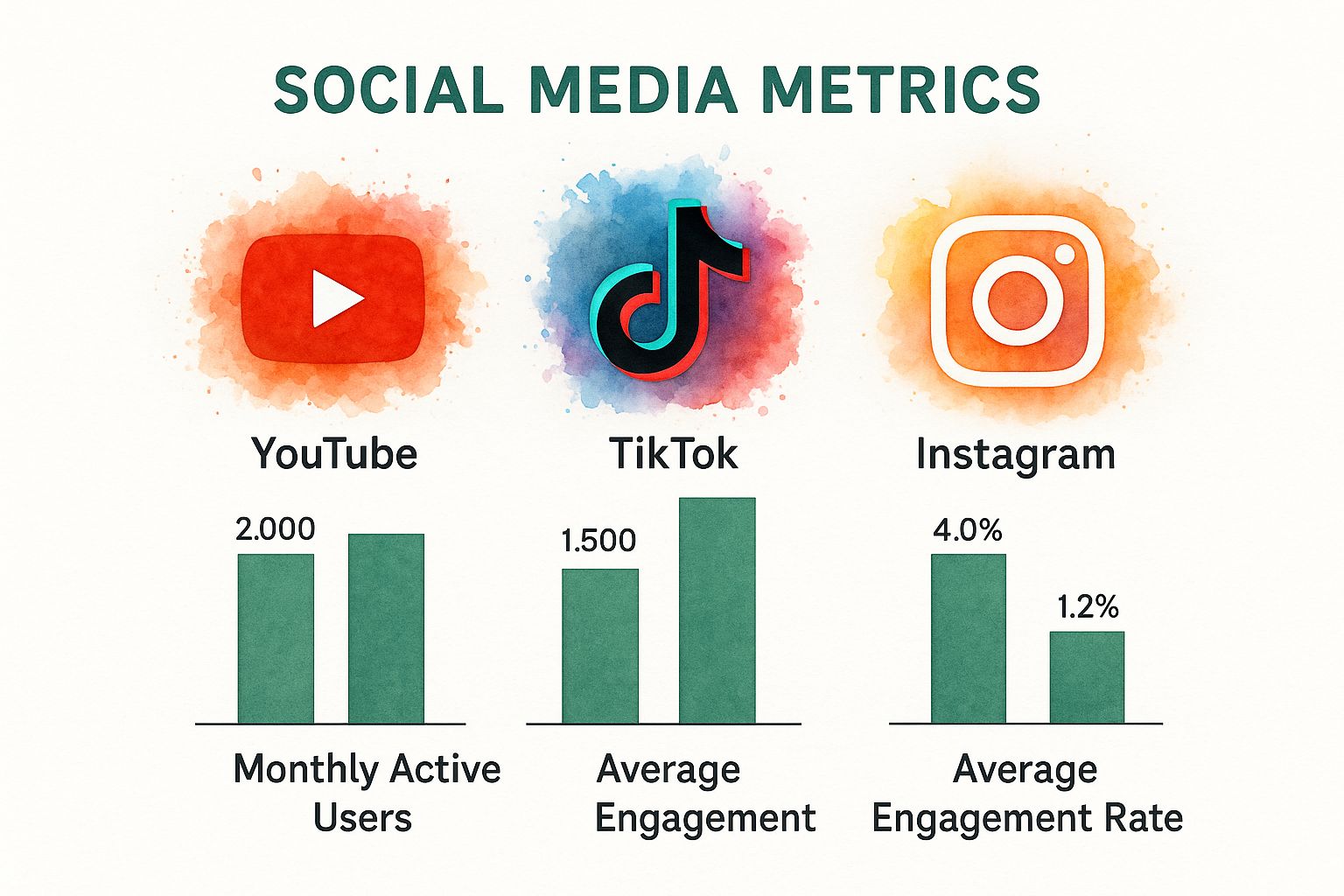
Zoals de cijfers laten zien, hoewel nieuwere platforms indrukwekkende betrokkenheid kunnen hebben, maakt de enorme gebruikersbasis van YouTube het een krachtpatser die je gewoon niet kunt negeren voor een breed bereik.
YouTube: De Onverslaanbare Zoekmachine
Het helpt om YouTube te zien als 's werelds tweede grootste zoekmachine, direct na moederbedrijf Google. Mensen gaan naar YouTube met een duidelijk doel: antwoorden vinden, een nieuwe vaardigheid leren of een product onderzoeken voordat ze kopen. Dit intentiegedreven gedrag is een goudmijn voor jouw bedrijf.
Het maken van "how-to" gidsen, gedetailleerde productdemonstraties of video's die veelvoorkomende branchevragen beantwoorden, kan hooggekwalificeerde kijkers aantrekken. Dit soort content krijgt niet alleen views; het bouwt je autoriteit op en biedt langetermijn SEO-waarde, aangezien je video's jarenlang in zowel YouTube- als Google-zoekresultaten zullen verschijnen.
De dominantie van het platform in Nederland is onmiskenbaar. Begin 2025 bereikte het advertentiebereik van YouTube ongeveer 80,9% van de totale bevolking van het land en 81,7% van alle internetgebruikers. Dat vertaalt zich naar ongeveer 14,8 miljoen potentiële klanten die je via videoadvertenties kunt bereiken, wat het een essentieel kanaal maakt voor elk Nederlands bedrijf dat serieuze zichtbaarheid nastreeft.
LinkedIn: De Professionele B2B Krachtpatser
Voor B2B-bedrijven is LinkedIn niet zomaar een optie - het is een noodzaak. Videocontent is hier perfect om thought leadership te vestigen, diepgaande branche-inzichten te delen en op professioneel niveau in contact te komen met besluitvormers.
In tegenstelling tot andere platforms, gedijt video op LinkedIn op inhoud. Je publiek hier is niet op zoek naar flitsende montages of virale trends; ze willen echte waarde en expertise.
Overweeg LinkedIn te gebruiken voor:
- Bedrijfscultuurvideo's: Laat de mensen achter je merk zien om toptalent aan te trekken en je bedrijf een menselijk gezicht te geven.
- Expertinterviews: Houd korte interviews met brancheleiders om je bedrijf te positioneren als een centraal knooppunt van kennis.
- Casestudy's: Presenteer succesverhalen van klanten die de tastbare, concrete resultaten van je diensten aantonen.
Instagram en TikTok: Voor Visuele Verhalen
Als je doelgroep jonger is, zijn Instagram en TikTok jouw platforms. Deze kanalen zijn gebouwd voor korte, boeiende en visueel aantrekkelijke content die binnen enkele seconden de aandacht moet trekken.
De sleutel hier is authenticiteit en creativiteit. Gepolijste, zakelijke video's vallen vaak plat. Richt je in plaats daarvan op het creëren van content die authentiek aanvoelt voor het platform, zoals:
- Een kijkje achter de schermen van je dagelijkse werkzaamheden.
- Snelle tips of "hacks" gerelateerd aan je producten of diensten.
- User-generated content campagnes die je volgers aanmoedigen om mee te doen.
Deze platforms zijn uitstekend voor het opbouwen van merkpersoonlijkheid en het creëren van een echte community rond je bedrijf. Een goed uitgevoerde strategie op deze kanalen is een kernonderdeel van onze social media marketing services.
Jouw Eigen Website: De Conversie Hub
Vergeet tot slot het meest waardevolle stukje digitale vastgoed dat je bezit niet: je website. Het direct insluiten van video's op je belangrijkste pagina's kan een enorme impact hebben op je conversiepercentages.
Het plaatsen van een video op een landingspagina kan de conversies met meer dan 80% verhogen. Het is een van de meest effectieve manieren om bezoekers om te zetten in leads of klanten.
Een productdemonstratie op een productpagina kan last-minute vragen beantwoorden en bezwaren wegnemen, terwijl een welkomstvideo op je homepage snel vertrouwen kan opbouwen bij nieuwe bezoekers. Je website is waar de uiteindelijke beslissing vaak wordt genomen, en video is je meest overtuigende tool om die beslissing in jouw voordeel te sturen.
Videoplatform Vergelijking voor Nederlandse Bedrijven
Beslissen waar je je tijd en budget investeert kan lastig zijn. Het beste platform hangt volledig af van je specifieke doelen en wie je probeert te bereiken. Deze tabel breekt de beste kanshebbers af om je te helpen beslissen waar je je video marketing inspanningen op moet richten.
| Platform | Beste Voor | Soort Publiek | Belangrijkste Functie |
| YouTube | Diepgaande uitleg, tutorials, merkverhalen, SEO | Breed, intentiegedreven kijkers op zoek naar oplossingen en vermaak. | Zoekbaarheid. Content heeft een zeer lange levensduur en rankt in Google. |
| B2B leadgeneratie, thought leadership, bedrijfscultuur | Professionals, besluitvormers, branchegenoten. | Professionele context. Video's worden bekeken met een zakelijke instelling. | |
| Merkpersoonlijkheid, visuele aantrekkingskracht, community building | Millennials & Gen Z, lifestyle-gerichte consumenten. | Reels. Korte, verticale video's ontworpen voor hoge betrokkenheid en ontdekking. | |
| TikTok | Virale trends, authenticiteit, bereiken van jongere doelgroepen | Gen Z en jongere millennials. | Algoritme. Ongeëvenaard potentieel voor organisch bereik en snelle groei. |
| Jouw Website | Conversies stimuleren, vertrouwen opbouwen, productdemo's | Hooggekwalificeerde bezoekers die al geïnteresseerd zijn in je merk. | Conversiefocus. De video staat precies waar een aankoopbeslissing wordt genomen. |
Uiteindelijk werkt een multi-platform aanpak vaak het beste. Je kunt TikTok gebruiken voor naamsbekendheid, YouTube voor educatieve content, en je website om de deal te sluiten. De sleutel is om de sterke punten van elk platform te benutten.
Impactvolle Video's Produceren met een Realistisch Budget

Veel ondernemers denken dat het creëren van professionele videocontent betekent dat je een volledige filmploeg moet inhuren en een enorm budget moet uitgeven. Wij zijn hier om je te vertellen dat dit een mythe is. In de wereld van online video marketing wint een oprechte connectie en een duidelijke boodschap het bijna altijd van een productie met een groot budget.
Je kunt absoluut indrukwekkende, impactvolle video's maken zonder de bank te breken. Het komt allemaal neer op vindingrijk zijn en je richten op wat echt belangrijk is voor je publiek. Laten we enkele praktische, uitvoerbare tips doorlopen om professioneel ogende video's te produceren met de tools die je waarschijnlijk al hebt.
Begin met de Essentiële Zaken die je Al Hebt
Weet je wat? De krachtigste videocamera is degene die je in je zak hebt. Moderne smartphones hebben ongelooflijke camera's die video van hoge resolutie kunnen opnemen, wat meer dan goed genoeg is voor de meeste zakelijke behoeften.
In plaats van duizenden euro's uit te geven aan een nieuwe camera, investeer je budget waar het een veel groter verschil maakt: geluid en verlichting.
- Goed Geluid is Onmisbaar: Je publiek vergeeft misschien licht korrelige video, maar ze klikken binnen enkele seconden weg als het geluid verschrikkelijk is. Een eenvoudige dasspeldmicrofoon die je op je shirt kunt klemmen, kost slechts €20 en laat je direct professioneler klinken.
- Verlichting Bepaalt de Sfeer: Je hebt geen ingewikkelde lichtinstallatie nodig. Een simpele ringlamp doet wonderen voor zachte, gelijkmatige verlichting bij video's waarin je rechtstreeks in de camera praat. Nog beter? Film in de buurt van een groot raam op een bewolkte dag voor prachtig, natuurlijk licht dat niets kost.
Plan Je Video voor een Verzorgd Resultaat
Het grootste verschil tussen een amateurvideo en een professionele video komt vaak neer op planning. Een paar simpele stappen nemen voordat je begint met filmen, kan je uren aan hoofdpijn besparen tijdens de montage en levert een veel sterker eindproduct op.
Voordat je er zelfs maar aan denkt om op opnemen te drukken, neem een moment om je ideeën uit te werken.
Je Boodschap Scripten
Dit betekent niet dat je elke keer een woord-voor-woord script nodig hebt, maar je moet altijd een duidelijke opzet hebben. Het opschrijven van je belangrijkste gesprekspunten houdt je op koers en helpt je je boodschap over te brengen zonder af te dwalen. Het is een simpele stap die je content zoveel makkelijker verteerbaar maakt voor kijkers.
Je Shots Storyboarden
"Storyboarden" klinkt technisch, maar het is eigenlijk gewoon een eenvoudig visueel plan. Zie het als het maken van een snelle stripversie van je video.
Een storyboard helpt je te visualiseren hoe je video van het ene shot naar het andere zal vloeien. Het zorgt ervoor dat je alle benodigde beelden vastlegt en helpt je een dynamischere en visueel interessantere eindvideo te maken.
Voor een eenvoudige productdemo kan je storyboard gewoon een lijst met shots zijn:
- Wijd shot van het product op een schone achtergrond.
- Close-up van het belangrijkste kenmerk van het product.
- Shot van een persoon die het product gebruikt.
- Eindshot met een duidelijke call-to-action op het scherm.
Effectieve Videoformats Verkennen
Niet elke video hoeft een epische productie te zijn. Verschillende formats dienen verschillende doelen, en veel van de meest effectieve zijn verrassend budgetvriendelijk.
Hier zijn een paar formats die consequent geweldige resultaten opleveren:
- Talking-Head Video's: Deze zijn eenvoudig te produceren en perfect voor het delen van je expertise, het beantwoorden van veelgestelde vragen of het geven van bedrijfsupdates.
- Productdemonstraties: Een duidelijke, beknopte video die je product in actie laat zien, is vaak veel overtuigender dan een pagina tekst ooit kan zijn.
- Klantgetuigenissen: Authentieke getuigenissen bouwen ongelooflijk veel vertrouwen op. Een korte, eenvoudige video van een tevreden klant die zijn ervaring deelt, is puur marketinggoud.
- Geanimeerde Uitlegvideo's: Hoewel ze complex lijken, zijn er tools en diensten die het maken van eenvoudige animaties toegankelijker maken dan ooit. Voor een gepolijste look zonder het gedoe van filmen, kun je professionele diensten overwegen zoals onze animatie add-on om je boodschap tot leven te brengen.
Door je te richten op deze praktische stappen en toegankelijke formats, kun je beginnen met het produceren van hoogwaardige video's die een connectie maken met je publiek en echte bedrijfsgroei stimuleren.
Je Video's Optimaliseren en Promoten voor Maximaal Bereik
De definitieve versie van je video afronden voelt als een enorme overwinning, maar laten we eerlijk zijn - dat is slechts de helft van het werk. Het echte werk, en waar de groei echt begint, is ervoor zorgen dat de juiste mensen het daadwerkelijk zien. Dit is waar slimme optimalisatie en promotie om de hoek komen kijken, waardoor je online video marketing van een cool creatief project verandert in een serieuze bedrijfsmotor.
Zonder een solide plan om je video onder de aandacht te brengen, zal zelfs de meest briljante content gewoon digitaal stof verzamelen. Je moet je publiek er actief naartoe leiden. De truc is om een slimme mix van organische ontdekkingstactieken en gerichte betaalde strategieën te gebruiken om je boodschap echt te versterken en zoveel mogelijk ogen erop te krijgen.
Beheers Video SEO voor Organische Ontdekking
Het helpt om YouTube te zien als de op één na grootste zoekmachine ter wereld, niet alleen een plek om kattenfilmpjes te kijken. Om je video's gevonden te laten worden, moet je de taal van het platform spreken. Dit noemen we Video SEO, en het draait allemaal om het voor zowel mensen als het algoritme van het platform doodeenvoudig maken om je content te vinden en te begrijpen.
Je hoofddoel hier is om YouTube (en daarmee Google) glasheldere signalen te geven over waar je video over gaat. Dit kun je bereiken met een paar fundamentele stappen:
- Trefwoordrijke Titels: Je titel is waarschijnlijk het belangrijkste puzzelstukje. Het moet de aandacht trekken, maar ook je belangrijkste trefwoord bevatten. Een titel als "Hoe Kies Je de Juiste CRM voor Je Bedrijf" zal altijd beter presteren dan een vage titel als "Onze Nieuwe Software."
- Gedetailleerde Beschrijvingen: Het beschrijvingsvak is er niet voor de show. Schrijf een paar goede alinea's waarin je uitlegt wat kijkers uit de video kunnen halen. Verweef je hoofdtrefwoord en een paar gerelateerde trefwoorden op een natuurlijke manier. Dit geeft het algoritme veel waardevolle context.
- Strategische Tags: Gebruik een gezonde mix van brede en specifieke tags die direct relevant zijn voor het onderwerp van je video. Verplaats je in de schoenen van je ideale klant: wat zouden zij in de zoekbalk typen om content zoals die van jou te vinden?
- Aangepaste Thumbnails: Je thumbnail is het reclamebord van je video in een zeer drukke straat. Maak een heldere, hoogwaardige, aangepaste thumbnail met duidelijke tekst die nieuwsgierigheid opwekt en praktisch smeekt om op geklikt te worden.
Vergroot je Bereik met Betaalde Promotie
Organisch bereik is fantastisch voor het leggen van een basis, maar soms heeft je content een klein duwtje nodig om op gang te komen. Gerichte betaalde advertenties laten je de wachtrij overslaan en je video direct voor je ideale publiek plaatsen met ongelooflijke precisie.
De Nederlandse advertentiemarkt, bijvoorbeeld, pompt geld in digitale kanalen. In 2024 stegen de totale advertentie-uitgaven tot €6,7 miljard, een stijging van 9,5% ten opzichte van het voorgaande jaar, met platforms als social media en zoekmachines voorop. Deze enorme investering bewijst dat bedrijven een reëel rendement halen uit gerichte online advertenties, vooral in online video marketing.
Betaalde promotie gaat niet over het kopen van willekeurige views; het gaat over het kopen van de juiste views. Je richt je op mensen op basis van hun interesses, demografie en online gedrag om ervoor te zorgen dat je boodschap aanslaat bij degenen die het meest geneigd zijn actie te ondernemen.
Integreer Video in Al Je Kanalen
Je video mag niet op een eiland staan. De meest effectieve strategieën verweven video in elk contactpunt dat je met je publiek hebt. Kruispromotie is absoluut essentieel om het meeste uit je investering te halen.
Begin na te denken over alle manieren waarop je je videocontent kunt hergebruiken en delen:
- E-mailmarketing: Plaats je video direct in je volgende nieuwsbrief. E-mails met video hebben bewezen een veel hogere doorklikratio te hebben. Het is een no-brainer.
- Social Media: Deel niet zomaar een link. Upload korte, native videoclips naar platforms zoals LinkedIn, Instagram en Facebook. Knip je hoofdvideo op in hapklare, boeiende fragmenten die zijn afgestemd op het publiek van elk platform.
- Je Website en Blog: Sluit de video in op relevante dienstpagina's of blogposts. Dit voegt niet alleen waarde toe voor je bezoekers; het houdt ze ook langer op je site, wat een fantastisch signaal is voor SEO.
Succes Meten en ROI Berekenen
Je hebt fantastische videocontent gemaakt. Maar hoe weet je nu of je online video marketing echt werkt? Een geweldige video is één ding, maar bewijzen dat het echte waarde toevoegt aan je bedrijf is een heel ander verhaal. Het komt allemaal neer op het bijhouden van de juiste cijfers en voorbij de flitsende, maar vaak nietszeggende, 'vanity metrics' zoals het aantal views kijken.
Echt succes gaat niet over hoeveel mensen je video hebben gezien, maar over wat ze deden nadat ze hem zagen. We moeten ons richten op key performance indicators (KPI's) die direct verband houden met je bedrijfsresultaten. Laten we de statistieken die ertoe doen ontleden en je laten zien hoe je ze kunt koppelen aan een duidelijke return on investment (ROI).
Verder Kijken dan het Aantal Views
Views zijn een aardig begin, maar ze zijn slechts het topje van de ijsberg. Een video met een miljoen views maar nul betrokkenheid is als een winkel vol etalagekijkers — het ziet er druk uit, maar niemand koopt iets. Om het echte verhaal te achterhalen, moet je dieper duiken in de analysetools van platforms zoals YouTube en LinkedIn.
Dit zijn de essentiële statistieken die je nauwlettend in de gaten moet houden:
- Kijktijd: Dit vertelt je hoe lang mensen daadwerkelijk blijven kijken naar je content. Een hoge gemiddelde kijktijd is een signaal voor de platforms dat je video boeiend is, wat de zichtbaarheid kan vergroten.
- Kijkersbehoud: Dit is puur goud. Het laat je precies zien op welk moment kijkers afhaken. Een grote daling in de eerste paar seconden? Je intro heeft waarschijnlijk werk nodig. Een massale uittocht vlak voor je call-to-action? Dan weet je wat je de volgende keer moet verbeteren.
- Click-Through Rate (CTR): Dit is het percentage kijkers dat op een link, kaart of eindscherm heeft geklikt. Een gezonde CTR is een duidelijk teken dat je video mensen succesvol aanzet tot de volgende stap.
- Conversieratio: De ultieme maatstaf voor succes. Dit meet hoeveel kijkers een specifiek doel hebben voltooid na het kijken, of het nu het inschrijven voor een nieuwsbrief, het downloaden van een gids of het doen van een aankoop was. Dit is waar je video geld voor je begint te verdienen.
Koppel Statistieken aan Bedrijfsdoelen
Data is slechts een verzameling cijfers totdat je het koppelt aan je strategische doelen. Elke statistiek die je bijhoudt, moet je helpen een cruciale bedrijfsvraag te beantwoorden.
Zie je analytics-dashboard als je business intelligence-hub. Het verandert abstracte data in concrete inzichten, die je precies laten zien hoe je video-inspanningen leads, verkopen en algehele groei stimuleren.
Bijvoorbeeld, een lange kijktijd op een productdemovideo correleert vaak met leads van hogere kwaliteit. Een hoge CTR op een call-to-action die naar een landingspagina verwijst, heeft een directe impact op je leadgeneratie. Door deze verbanden te traceren, kun je een heel duidelijk beeld van je video marketing ROI schetsen.
De Nederlandse Kijker Begrijpen
Het is ook essentieel om te begrijpen hoe je lokale publiek zich gedraagt. Nederlandse consumenten zijn bijvoorbeeld slim en selectief als het gaat om online video. Met 87% van de huishoudens die streamingdiensten gebruiken, is hun betrokkenheid hoog, maar dat geldt ook voor hun verwachtingen van kwaliteit.
Interessant is dat ongeveer 81% van de Nederlandse huishoudens de voorkeur geeft aan abonnementsdiensten, specifiek om advertenties te vermijden. Deze voorkeur voor ononderbroken kijken dwingt marketeers om creatief te zijn en meer geïntegreerde, minder opdringerige videoadvertenties te produceren. Deze unieke gewoonte maakt online video marketing een ongelooflijk krachtig hulpmiddel voor het bereiken van belangrijke demografische groepen in Nederland. Ontdek meer inzichten over Nederlandse streaminggewoonten en wat dit betekent voor jouw strategie.
Door je te richten op deze betekenisvolle statistieken, kun je stoppen met hopen dat je video's werken en beginnen met weten dat ze dat doen. Deze datagedreven aanpak rechtvaardigt niet alleen je marketingbudget, maar geeft je ook de inzichten om elke toekomstige campagne nog beter te maken.
Veelgestelde Vragen Over Video Marketing

We krijgen vaak dezelfde vragen van ondernemers die willen starten met video marketing. Hieronder vind je directe en duidelijke antwoorden op de meest gestelde vragen die we horen.
Wat Kost Video Marketing Eigenlijk?
Dit is de vraag die we het meest horen, en het antwoord is simpel: het hangt volledig af van je doelen. Een korte, pakkende video voor social media, gefilmd met je smartphone en goede belichting, hoeft bijna niets te kosten behalve je tijd.
Aan de andere kant vraagt een professioneel geproduceerd merkverhaal of een gedetailleerde productdemonstratie, compleet met filmploeg en animatie, om een grotere investering. De truc is om te beginnen met een helder budget en de productiewaarde af te stemmen op het strategische belang van de video.
Hoe Lang Moeten Mijn Marketingvideo’s Zijn?
De ideale lengte hangt af van het platform en het doel van je video. Zie het als een gesprek; je houdt geen monoloog van een half uur als iemand je vraagt hoe laat het is.
Een snelle gids:
- Social Media (Instagram Reels, TikTok): Hou het kort en krachtig. Mik op 15 tot 60 seconden om snel de aandacht te grijpen.
- YouTube (Explainers, How-To's): Kijkers komen hier vaak voor diepgaande antwoorden. Een lengte van 2 tot 10 minuten werkt hier vaak het beste.
- Website (Homepage, Landingspagina’s): Probeer tussen de 60 en 90 seconden te blijven. Dat is genoeg tijd om je kernboodschap over te brengen zonder de aandacht van je bezoeker te verliezen.
Heb Ik Professionele Apparatuur Nodig Om Te Beginnen?
Absoluut niet. De smartphone in je broekzak is een enorm krachtig instrument voor online video marketing. De belangrijkste elementen zijn niet de resolutie van je camera, maar de kwaliteit van je geluid en belichting.
Een goedkope dasspeldmicrofoon en een simpele ringlamp doen meer voor de kwaliteit van je video dan een dure camera ooit zou kunnen. Authenticiteit en een heldere boodschap zijn veel belangrijker dan een Hollywood-budget.
Wat is de Beste Manier om de ROI van Mijn Video’s te Meten?
Kijk verder dan alleen het aantal views. De belangrijkste statistieken zijn de cijfers die direct gekoppeld zijn aan je bedrijfsdoelen.
Focus je op het meten van:
- Click-Through Rate (CTR): Hoeveel mensen hebben op je call-to-action geklikt?
- Conversieratio: Hoeveel kijkers hebben de gewenste actie voltooid, zoals een formulier invullen of een aankoop doen?
- Kijkersbehoud (Audience Retention): Op welk punt haken kijkers af? Dit vertelt je precies welke delen van je boodschap wel en niet werken.
Klaar om je vragen om te zetten in een krachtige videostrategie? Bij Digitalique.nl helpen we bedrijven zoals het jouwe om impactvolle videocontent te creëren die echte resultaten oplevert.
Plan vandaag nog je gratis strategiesessie met ons in.