Are you diving into social media advertising without a clear plan? Then you are guaranteed to throw your budget down the drain. It is a fantastic tool to reach new customers, don't get us wrong, but real success doesn't come from just 'boosting' a post. A thoughtful strategy is what distinguishes a profitable campaign from wasted ad money.
Imagine: your website gets more traffic, your online visibility grows, and you finally see a clear ROI on your marketing efforts. Sounds good, right? In this guide, we show you exactly how to achieve that.
The Foundation for Successful Advertising
Before you spend even one euro, you must lay the foundation. This means you stop guessing and start setting clear goals. You really need to understand who you are trying to reach. By doing this right from the start, you avoid expensive mistakes and set your campaigns up for real business growth.
This planning is more important than ever. The Dutch market for social media advertising is huge, with an expected spend of approximately $1.43 billion in 2025. That is a gigantic investment that shows how essential these platforms have become. You can view the full market forecasts on Statista to get an idea of the competitive space you are stepping into.
Define Your Campaign Goals
First of all: what does 'winning' actually mean to you? If you don't know your destination, you will never get there. Every ad campaign must be linked to a specific, measurable business goal.
Your main objectives usually fall into one of these three categories:
- Awareness: This is your first handshake. You introduce your brand to people who have never heard of you and build brand recognition.
- Consideration: Now that they know who you are, you want to pull them closer. Think of generating traffic to your blog, getting more video views, or starting conversations on your posts.
- Conversion: Here is where the magic happens. You ask people to take a specific action that has direct value, such as generating a lead, making a purchase, or installing your app.
A classic beginner's mistake is trying to achieve all three goals with one ad. An ad aimed at sales requires a totally different approach than one designed for brand awareness. For the best result, focus on one primary goal per campaign.
Find Your Ideal Customer
You can have the best ad in the world, but it is worthless if the wrong people see it. The power of social media ads lies in targeting, but that only works if you know who to target. We need to go much deeper than just age and location.
To build a truly effective target audience profile, ask yourself questions like:
- What is their biggest problem that my product or service actually solves?
- Where do they really spend their time online? Is that on LinkedIn, Instagram, or somewhere else?
- What type of content do they like? Do they like quick videos, in-depth articles, or funny memes?
- Whose opinion do they trust? Which influencers or experts do they follow?
See it as creating a detailed "buyer persona" - it is like giving your campaign a navigation system. This ensures that your message, your visuals, and your offer are perfectly aligned with the people most likely to become your best customers.
The chart below highlights the massive opportunity lying ahead of you.
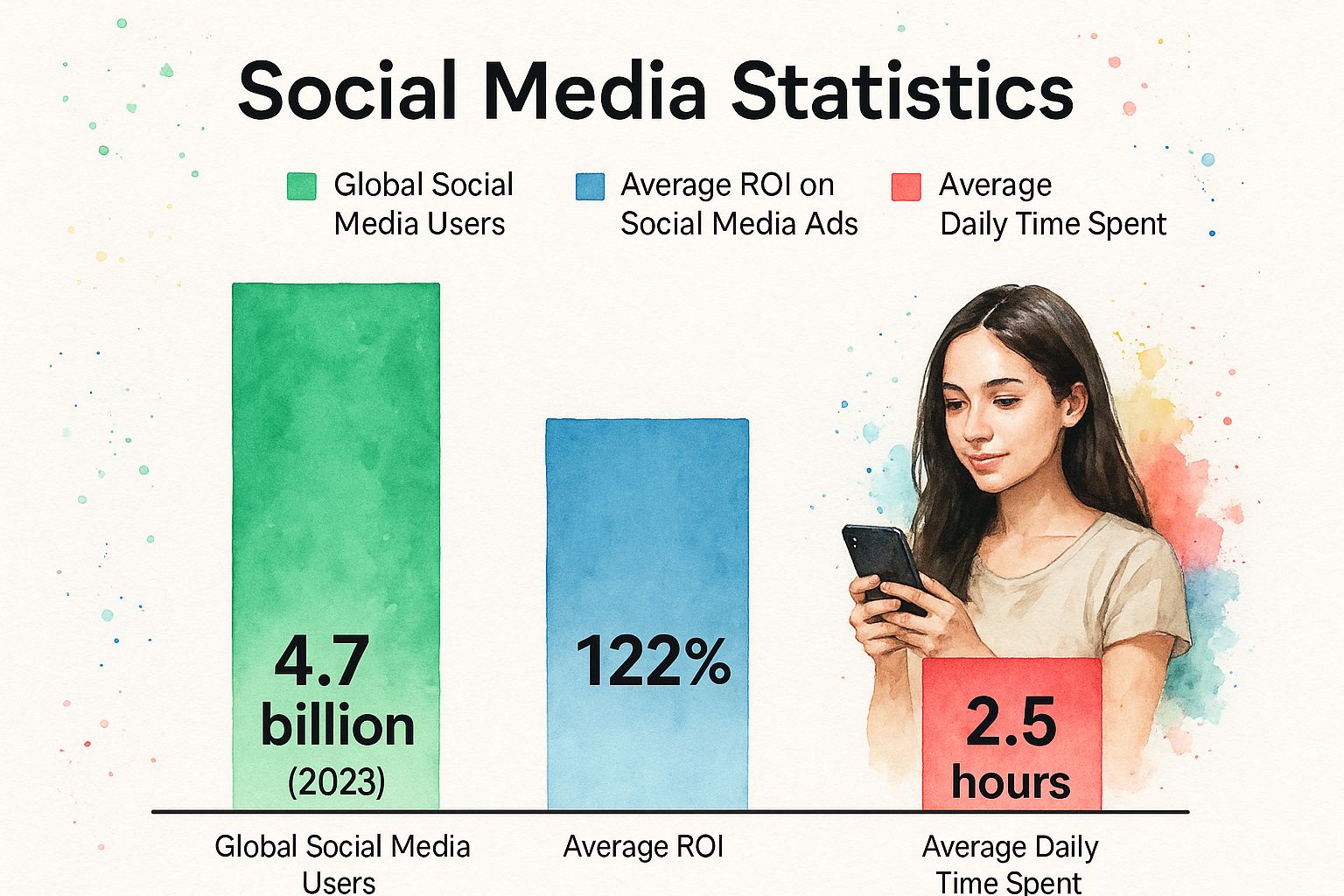
With 4.7 billion global users and an average ROI of 122%, it is clear that a huge, engaged audience is waiting for you. This only reinforces why it is so crucial to have your fundamental strategy in order to capture a piece of that pie.
Choosing the Right Platforms and Ad Formats
Choosing the right social media platform for your ads is like choosing a location for a shop. You wouldn't open a luxury boutique in an industrial park, right? Success with social media advertising depends on being present where your customers are, and reaching them when they are in the right mindset to listen.
Every platform has its own unique vibe and user behavior. A strategy that works great on LinkedIn might fail completely on TikTok. This is a fundamental step in any successful social media advertising plan; if you do this right from the start, your budget works harder and your message really lands.
Aligning Platforms with Your Business Goals
See every social network as a different tool in your toolbox, perfect for a specific task. To choose the right one, you must match the strengths of the platform with what you want to achieve with your campaign. This ensures you aren't just shouting into the void, but having a meaningful conversation with a receptive audience.
For Dutch companies, here is a practical breakdown of the key players:
- Meta (Facebook & Instagram): This is the powerhouse, a truly versatile choice. With its incredibly detailed targeting options and massive user base, it is a favorite for e-commerce sales, promoting local businesses, and generating new leads. Instagram is particularly a visual playground, perfect for brands in retail, travel, and hospitality.
- LinkedIn: This is the undisputed champion of B2B. If your customers are other companies or professionals in specific sectors like tech, finance, or consultancy, you need to be on LinkedIn. It is unrivaled for generating high-quality leads and strengthening your professional authority.
- TikTok: Don't write this off as just for dancing teenagers. TikTok's algorithm is a beast when it comes to brand discovery, especially with younger audiences. It is a goldmine for any brand that can create authentic, entertaining short videos.
- Pinterest: See Pinterest as a visual discovery engine where people actively plan future purchases. It is a fantastic platform for e-commerce, especially in niches like interior design, fashion, weddings, and DIY projects where visual inspiration is the main driver to buy.
Understanding Powerful Ad Formats
Once you have chosen your platforms, the next step is selecting the ad format that tells your story best. The format is the vehicle for your message. Choosing the right format can dramatically increase engagement and conversions. It is a common mistake to just use a static image, while a dynamic video would have been ten times more effective.
Your ad format must fit the user's mindset on that specific platform. People scroll through their Instagram feed looking for visual inspiration, so a beautiful carousel ad works wonders. On LinkedIn, they are in a professional mode, which makes a document ad sharing an insightful whitepaper highly effective.
Let's look at some of the most impactful options you have at your disposal.
Video Ads vs. Image Ads
Ah, the classic debate. There is a place for both.
Video ads are brilliant for storytelling and showing a product in action. They are fantastic for grabbing attention in a busy feed and can convey complex information or emotion in just a few seconds. A short, catchy video is often the best way to stop the scroll and leave a lasting impression.
Image ads, on the other hand, are quick to make and even quicker for users to process. They are perfect for showing a single, powerful product photo or an unmissable offer. Do not underestimate their power; a high-quality, striking image combined with sharp copy can be incredibly effective, especially in retargeting campaigns.
Interactieve and Immersieve Formats
To really break through the noise, you need to use formats that invite people to participate. These ads don't just show; they engage.
- Carousel Ads: This allows you to show multiple products, highlight different features, or even tell a step-by-step story within one ad. They are a huge win for e-commerce brands wanting to show a product range or service companies specifying different benefits.
- Collection Ads: This is a mobile-first format that essentially creates an instant storefront. When someone taps on the ad, they can browse an entire collection of products without ever leaving the app. It is a seamless path to purchase that can give your conversion rates a serious boost.
- Lead Gen Forms: For any service business, these are game-changers. These ads contain a form that is pre-filled with the user's profile information, making it ridiculously simple for them to request a quote or download a guide. This low-barrier approach can drastically lower your cost per lead.
A winning campaign almost always includes a smart mix of different platforms and formats. For a deeper look at building a cohesive plan from the ground up, explore our comprehensive social media marketing services.
Creating Ads that Stop the Scroll

Let's be honest. In the fast flow of a social media feed, your ad has less than two seconds to make an impression. That is a harsh reality. Success in social media advertising isn't about shouting the loudest; it's about being interesting enough to make someone pause their endless scrolling.
This is where your creative content – the mix of your visuals and your words – becomes your most powerful instrument. It’s not just about showing your product; it’s about telling a story that connects with your audience on a human level. Good creative content stops the scroll, but brilliant creative content incites action.
The Power of Visual Storytelling
Before anyone reads even one word of your ad copy, they see your image or video. This is your first, and often best, chance to grab their attention. A generic stock photo is simply not enough anymore. People recognize them from a mile away and are conditioned to ignore them completely.
Your imagery needs to do one of two things, and immediately: evoke an emotion or spark curiosity.
- For images: Think of high-quality, authentic photos. Instead of a sterile photo of your product on a white background, show a real person genuinely enjoying its benefit. This helps your audience imagine how they use what you offer.
- For videos: Keep them short and get straight to the point. Most users prefer videos between 11 and 17 seconds. You need to hook them within the first three seconds. And always, always design for viewing without sound with clear on-screen text or subtitles.
Writing Copy that Converts
Once your visual has earned you a moment of their time, your copy needs to close the deal. The best ad copy never lists features; it emphasizes solutions to the customer's problems. It must be clear, direct, and focused on one powerful message.
Think of your copy in three parts:
- The Hook: Start with a question or a bold statement that touches a known pain point.
- The Solution: Briefly explain how your product or service makes that specific problem disappear.
- The Call to Action (CTA): Tell them exactly what you want them to do next. Use action-oriented words like "Shop Now," "Learn More," or "Request a Quote."
Great ad copy feels like a conversation, not a sales pitch. Write like you would speak, use "you" and "your" to build a personal connection. This simple shift makes your brand more human and accessible, which is essential for building trust.
A/B Testing Demystified
How do you really know if a blue button works better than a green one? Or if a question in the headline yields more clicks than a statement? You don't guess – you test. A/B testing, also called split testing, is the secret weapon of every successful advertiser we know.
The concept is beautifully simple. You make two or more versions of an ad in which you change just one single element. Then you show these different versions to similar audiences and let the results tell you which performs better.
Here are a few things you should constantly be testing:
- Headlines: Pit a question against a direct benefit statement.
- Visuals: Test a video against a static image, or a lifestyle photo against a product-focused photo.
- Ad Copy: Experiment with a short, punchy description versus a longer, more detailed one.
- Call to Action: See if "Buy Now" converts better than "Discover the Collection."
By constantly testing and refining, you let hard data guide your decisions. This methodical approach is what turns a good campaign into a great one, ensuring you get the absolute best return on every euro you spend on your social media advertising efforts.
Find Your Perfect Customer with Advanced Targeting
A sleek-looking ad is great, but totally useless if the right people never see it. The real secret of a successful campaign isn't just a pretty picture; it's getting that picture in front of an audience ready to act. Simply aiming at broad demographics like age and location is no longer sufficient if you seriously want to achieve a return on your investment.
To make social media advertising truly work for you, you need to go deeper. This is where you stop shouting into the void and start precise conversations with audiences that have high purchase intent. Let's look at how you can use the data you already have to build powerful custom audiences and then find brand new customers who look exactly like your best customers.
Start with the Gold You Already Have
Your most powerful targeting tool is the data you already own. That list of past customers, your email newsletter subscribers, even the people who just visit your website – that is a goldmine. Social media platforms allow you to capitalize on this by creating so-called Custom Audiences.
Think of it this way: instead of describing your ideal customer to Facebook or LinkedIn, you literally show the platform who they are. You can upload a list of email addresses from customers, and the platform finds the matching profiles.
With this, you can get incredibly strategic:
- Bring old customers back by showing them a special "welcome back" offer.
- Upsell your current customers by advertising a service that complements what they have already bought.
- Stop wasting money by excluding existing customers from campaigns meant to find new leads.
This approach is so effective because you are reaching people who already have a relationship with your brand. They trust you, which makes them much more likely to take the next step.
Find New Customers Who Look Like Your Best Customers
Once you have built a solid Custom Audience, you can unleash the real power of the platform with Lookalike Audiences. This is where the algorithm becomes your best friend. You provide a "source" audience – let's say, your most profitable customers – and the platform analyzes their shared characteristics, interests, and online behaviors.
Then, it scans its entire user base to build a brand new audience of people who "look like" your best customers. It is one of the most efficient ways to expand your reach and find truly qualified leads. You can even specify how accurate the match must be, by testing a smaller, more precise audience against a larger one with broader reach.
A pro tip from our experience: don't build Lookalikes based on your entire customer list. Instead, segment your data first. Create a source audience of customers with the highest lifetime value or those who repeatedly buy a specific high-margin product. The quality of the leads you get with this is on another level.
The Art of the Second Chance: Retargeting
Have you ever looked at a product online, only to see ads for it everywhere afterwards? That is retargeting, and it is an absolute cornerstone of effective social media advertising. The hard truth is that very few people buy on their first visit to a website. Retargeting is your chance to bring them back.
By placing a small piece of code on your site (like the Meta Pixel), you can "tag" visitors and show them specific ads later in their social feeds. And you can be incredibly detailed with this. Imagine being able to:
- Target everyone who added an item to their cart but got distracted before checking out.
- Show a testimonial ad to someone who visited a specific service page but didn't book a call.
- Re-engage people who watched more than 75% of your video ad.
This strategy works because you are talking to a "warm" audience. They have already shown interest, so you aren't starting the conversation from scratch. For anyone wanting to tackle this really well, our all-in-one remarketing package offers a complete roadmap for implementing these campaigns.
The Dutch market is ripe for these tactics. At the start of 2025, there were approximately 14.8 million social media users in the Netherlands, which is more than 80% of the total population. This volume is exactly why a smart, data-driven targeting strategy is no longer optional – it is essential.
How to Measure and Optimize Your Campaigns

Getting your campaign live is a great feeling, but that is actually just the starting line. The real work in social media advertising begins after you launch. This is where you shift from simply spending money to making smart, data-backed investments.
Too many entrepreneurs fall into the "set and forget" trap. They launch their ads and cross their fingers for the best, which is a sure way to burn your budget with little result. What separates the campaigns that just break even from the campaigns that drive real, sustainable growth, is a dedication to continuous measurement and optimization.
Key Metrics that Really Matter
The first time you open the ad manager, it can feel like you are drowning in data. It is easy to get distracted by "vanity metrics" like likes or impressions. While they aren't completely useless, you must laser-focus on the numbers that directly impact your bottom line.
These are the core figures we have our clients focus on:
- Return On Ad Spend (ROAS): This is the ultimate test of profitability. For every euro you spend, how much do you get back in revenue? A ROAS of 4:1 is fantastic—this means you generate €4 for every €1 you spend.
- Cost Per Acquisition (CPA): How much do you pay for every new customer or qualified lead? Knowing your CPA is absolutely crucial to determine if your campaigns are financially sustainable.
- Conversion Rate: Of all the people who clicked on your ad, what percentage actually did what you wanted (bought something, filled out a form)? A low conversion rate often indicates a mismatch between your ad and your landing page.
- Click-Through Rate (CTR): This tells you what percentage of people who saw your ad actually clicked on it. A strong CTR is a solid sign that your creative content and copy resonate with your target audience.
You cannot track all this properly without the right setup. Installing a tracking code like the Meta Pixel on your website is not optional; it is essential. Think of it as a bridge that sends data from your site back to the ad platform, so you can see exactly which ads deliver results.
Turning Data into Actionable Insights
Having data is one thing; knowing what to do with it is something else. Your campaign reports tell a story about what works and what doesn't. Your job is to play detective, looking for clues that lead you to your next best move.
For example, you might see that your CPA is great on Instagram Stories, but sky-high on the Facebook feed. That is a huge clue. It tells you exactly where your audience is most engaged and where you should bet more of your budget.
Consider your first campaign launch as a scientific experiment. You are testing a hypothesis. The data you collect is the result, and it tells you exactly how to adjust your approach for the next round.
This creates a constant cycle of learning and refining. You analyze the data, come up with a new hypothesis ("I bet a video ad would perform better with this audience"), and then you test it. This iterative process is the engine that drives all successful social media ads.
A Practical Guide to Optimization
Once you have identified areas for improvement, it is time to roll up your sleeves. Optimization isn't about making random adjustments and hoping for the best. It's about making calculated adjustments based on what the data tells you. This continuous feedback loop is where you truly sharpen your social media advertising strategy.
Your optimization checklist should look something like this:
- Budget Allocation: Do some ad sets or campaigns yield a much better ROAS than others? Don't be afraid to pause the laggards and reallocate that budget to your clear winners.
- Audience Refinement: Dive into your performance reports. Do men aged 25-34 convert at much lower costs? You can easily refine your targeting to focus more of your budget on that specific group.
- Creative Tweaks: Is your CTR starting to drop? Maybe you are dealing with ad fatigue. It is time to test a new image, write a fresh headline, or try a totally different ad format to grab your audience's attention again.
Dutch social media users are also becoming smarter. We see a clear shift towards valuing authenticity and genuine connection over shiny, over-produced posts. This means your ad creatives must feel sincere. At the same time, social commerce is becoming increasingly seamless, making in-app purchases easier than ever. To keep up, your strategy must reflect these changing habits.
Automating parts of this process can help you react even faster. For example, you can set rules that automatically adjust your bids based on performance, saving time and making your campaigns more efficient. Discover how our marketing automation services can help you build these kinds of intelligent, self-optimizing campaign structures.
Frequently Asked Questions about Social Media Advertising
https://www.youtube.com/embed/mIaSBpfXbTs
Starting with social media advertising can feel like trying to hit a moving target. It is completely normal to have a long list of questions, whether you are just starting or have been running campaigns for years. We constantly get the same questions from entrepreneurs, so we have collected the most common questions to give you clear, no-nonsense answers.
The goal here is to cut through the jargon and offer practical advice you can actually use. From determining your budget to knowing when you will finally see results, these insights should help you feel more confident in your next steps.
How Much Should I Spend on Social Media Ads?
This is the big question, isn't it? The honest answer is: there is no magic number. The right budget depends entirely on your industry, your goals, and how competitive your market is. A local coffee shop and a national software company play two totally different games.
A good way to start is by beginning cautiously with a small, manageable budget. Something in the neighborhood of €10-€20 per day is often a solid starting point. The goal here is not to strike gold overnight; it is to buy data.
With that initial spend, you begin to collect essential clues:
- Which ad designs make people click?
- Which group of people is most interested?
- What are my starting costs for a click or a new lead?
Once you have that data and see a pattern that works, then you can scale your investment with real confidence. It is never just about how much you spend; it is about achieving a positive Return On Ad Spend (ROAS).
Which Social Media Platform is Best for My Business?
Forget for a moment what is trendy. The best platform is simply where your ideal customers can be found online. It makes no sense to throw your money at a platform if your target audience isn't there.
Here is a quick, practical breakdown we use:
- Are you selling to other businesses (B2B)? Then LinkedIn is almost always your best choice. Nothing comes close for targeting specific job titles, sectors, and decision-makers within companies.
- Do you have a visual product, like in e-commerce? Instagram and Pinterest . These platforms are built for visual discovery and are perfect for everything from fashion and interior design to food and travel.
- Are you trying to reach a younger audience? Then you cannot ignore TikTok . The algorithm is incredibly powerful for letting your brand get discovered via short, engaging videos.
Our biggest advice? Don't spread yourself too thin. It is much more effective to really master one or two platforms where your customers are, than to have a weak, scattered presence on five or six platforms.
How Long Does it Take Before I See Results from Social Media Ads?
You see the first metrics – like impressions, reach, and clicks – almost immediately. That direct feedback is one of the best aspects of digital advertising. But seeing the results that really matter for your business, like a constant stream of sales or high-quality leads, requires a bit more patience.
As a rule of thumb, account for an initial "learning phase" that lasts a few weeks. During this time, the platform's algorithm is figuring out who is most likely to respond to your ads and is optimizing their delivery. This is also your time to test different ad creatives and targeting options to see what catches on.
Success isn't a matter of flipping a switch. It comes from a steady cycle of launching a campaign, diving into the data, and making smart adjustments. That methodical approach is what turns your ad spend into a reliable, profitable machine for your business.
Ready to turn these answers into a winning strategy for your business? At Digitalique.nl, we combine data-driven insights with creative expertise to build social media campaigns that yield real, measurable growth. Let's build your success story together.
Start Growing Today. Don't leave your success to chance. Send an email to sales[at]digitalique.nl now to discuss your strategy.
