
Haal je te weinig resultaat uit je websiteverkeer? Je investeert in SEO en advertenties, maar die bezoekers worden maar geen klanten. Je bent niet de enige. Dit is precies waar conversie optimalisatie website (CRO) het verschil maakt.
Zie je website als je belangrijkste verkoper. In dit artikel leer je hoe je deze verkoper traint om topprestaties te leveren. We behandelen hoe je je klanten écht begrijpt, je website analyseert als een pro en met A/B-testen keuzes maakt op basis van data, niet op onderbuikgevoel.
Wat Conversie Optimalisatie Echt Betekent voor Jouw Bedrijf

Veel ondernemers worstelen met lage conversiepercentages. Ze trekken bezoekers aan, maar die haken af voordat ze een aankoop doen of contact opnemen. Conversie optimalisatie, vaak afgekort tot CRO, is het proces om je website te verbeteren zodat meer bezoekers doen wat jij wilt. In plaats van constant te jagen op nieuw verkeer, haal je simpelweg meer waarde uit de bezoekers die je al hebt.
Met een slimme CRO-strategie zorg je ervoor dat je website geen onduidelijkheid en frustratie veroorzaakt, maar bezoekers soepel begeleidt naar de aankoop. Zo wordt je website een efficiënte groeimotor voor je bedrijf.
Meer dan Alleen een Hoger Conversiepercentage
Natuurlijk is het einddoel van CRO om je conversieratio op te krikken, maar de voordelen gaan veel verder. Een goed geoptimaliseerde website tilt de hele gebruikerservaring (UX) naar een hoger niveau. Bezoekers vinden sneller wat ze zoeken, bouwen vertrouwen op in je merk en komen sneller terug.
Een sterke CRO-strategie helpt je om:
- De ROI van je marketing te maximaliseren: Elke bezoeker die je via betaalde advertenties of SEO binnenhaalt, heeft een grotere kans om te converteren. Je marketingbudget levert dus direct meer op.
- Waardevolle klantinzichten te verzamelen: Door gedrag te analyseren en A/B-testen uit te voeren, ontdek je wat jouw doelgroep drijft, welke bezwaren ze hebben en hoe ze beslissingen nemen.
- Een duurzaam concurrentievoordeel op te bouwen: Terwijl je concurrenten geld blijven pompen in meer verkeer, bouw jij aan een efficiëntere machine die meer haalt uit het verkeer dat er al is.
Voordat we dieper ingaan op de methodes, is het goed om de basisprincipes van conversie optimalisatie helder te hebben. Deze elementen vormen samen de fundering van elke succesvolle CRO-strategie.
De Kernpilaren van Conversie Optimalisatie
| Pilaar | Beschrijving | Voorbeeld |
| Data-gedreven Analyse | Het systematisch verzamelen en analyseren van data om te begrijpen hoe gebruikers zich op je site gedragen. | Heatmaps gebruiken om te zien waar bezoekers klikken en scrollen op een productpagina. |
| Gebruikerservaring (UX) | Het ontwerpen van een intuïtieve, frictieloze en prettige ervaring voor de gebruiker. | Het vereenvoudigen van een checkout-proces door onnodige velden te verwijderen. |
| Hypothese & Testen | Het formuleren van een testbare hypothese en deze valideren met A/B-testen of multivariate testen. | Testen of een groene CTA-knop beter converteert dan een blauwe knop. |
| Overtuigende Copywriting | Het schrijven van overtuigende en heldere teksten die de bezoeker aanzetten tot actie. | Een productomschrijving herschrijven om de focus te leggen op voordelen in plaats van functies. |
| Continue Verbetering | Het realiseren dat CRO een doorlopend proces is van leren, aanpassen en optimaliseren. | Resultaten van een test gebruiken als input voor de volgende hypothese. |
Deze pijlers laten zien dat CRO veel meer is dan wat knoppen veranderen; het is een strategische aanpak die diep in de kern van je online business raakt.
Een Continu Proces van Verbetering
Het is cruciaal om te begrijpen dat conversie optimalisatie geen eenmalig project is. Het is een doorlopende cyclus: analyseren, een hypothese opstellen, testen en leren. De markt en het gedrag van consumenten veranderen constant, dus je website moet mee-evolueren.
Opvallend is dat de adoptie van CRO-technologieën in Nederland nog relatief bescheiden is, wat een enorme kans biedt voor bedrijven die vooroplopen. In 2025 gebruikt slechts ongeveer 2,1% van de Nederlandse websites specifieke tools voor conversie optimalisatie. Binnen deze niche is Elfsight marktleider met een aandeel van 24,3%. Dit toont aan dat bedrijven die nu investeren in CRO een flinke voorsprong kunnen nemen. Ontdek meer inzichten over het gebruik van conversie optimalisatie in Nederland.
Bij Digitalique.nl zien we CRO als de brug tussen wat jouw bedrijf aanbiedt en wat je klant écht nodig heeft. Het gaat niet om trucjes, maar om het creëren van een naadloze en overtuigende online ervaring die duurzame groei stimuleert.
Begrijp Je Klant voor Hogere Conversies
Voordat je ook maar denkt aan het veranderen van een knopkleur, is de absolute eerste stap in conversie optimalisatie website het écht begrijpen van je bezoekers. Wijzigingen doorvoeren op basis van onderbuikgevoel is als rijden met een blinddoek; je komt waarschijnlijk niet waar je wilt zijn. Echte, effectieve optimalisatie begint met data.
Kruip in het hoofd van je bezoeker. Wat proberen ze echt te bereiken op je site? Welke vragen hebben ze? En, cruciaal, wat weerhoudt hen ervan de laatste stap te zetten? Het beantwoorden van deze vragen is wat een strategisch plan onderscheidt van willekeurig giswerk.
Graven in de Kwantitatieve Data
Laten we eerst kijken naar de informatie die je al hebt. Kwantitatieve data vertelt je wat er op je website gebeurt. Tools zoals Google Analytics zijn briljant voor het spotten van gedragspatronen.
Hier zoek je naar rode vlaggen en verborgen kansen. Verlaten mensen massaal je site vanaf één specifieke pagina? Is je mobiele conversieratio veel lager dan die van desktop? Deze cijfers vertellen je niet waarom het gebeurt, maar ze wijzen je wel direct naar de probleemgebieden.
Deze screenshot van Google Analytics toont een typisch dashboard waarmee je gebruikersacquisitie en engagement kunt volgen.
Door in deze rapporten te duiken, kun je gemakkelijk pagina's met veel verkeer en een schrikbarend hoog uitstappercentage vinden. Dat is een duidelijk teken van frictie in de klantreis en een perfecte plek om je onderzoek te starten.
Kwalitatieve Inzichten voor het Hele Verhaal
Terwijl de cijfers je het wat laten zien, gaat kwalitatieve data over het waarom. Hier ontdek je de menselijke verhalen achter de kliks. Het gaat erom de frustratie te voelen, de motivatie te begrijpen en je site door de ogen van je bezoekers te zien.
Enkele krachtige manieren om deze context te krijgen zijn:
- Heatmaps en Sessie-opnames: Tools zoals Hotjar of Clarity zijn fantastisch. Ze laten visueel zien waar gebruikers klikken, hoe ver ze scrollen en waar hun muis zweeft. Sessie-opnames zijn nog beter—het is alsof je meekijkt terwijl iemand je site gebruikt, zodat je precies ziet waar ze vastlopen of in de war raken.
- Klantonderzoeken en Feedback Polls: Soms is de eenvoudigste oplossing de beste: vraag het gewoon. Een kleine, beleefde pop-upenquête op een pagina met een hoog uitstappercentage met de vraag: "Wat weerhield je ervan om je aankoop vandaag af te ronden?" kan je gouden inzichten opleveren.
- Gebruikerstesten: Hier vraag je echte mensen uit je doelgroep om taken op je site uit te voeren terwijl ze hardop denken. Hun live, ongefilterde feedback is van onschatbare waarde voor het opsporen van bruikbaarheidsproblemen waar je zelf blind voor bent geworden.
Het combineren van het 'wat' uit kwantitatieve data met het 'waarom' uit kwalitatieve feedback is de magische formule. Data kan een 70% uitval op de verzendpagina tonen, maar een enquête kan onthullen dat onverwachte verzendkosten de directe oorzaak zijn.
Creëer Actiegerichte Klantpersona's
Het laatste stukje van de puzzel is om al je onderzoek samen te brengen in klantpersona's. We hebben het hier niet over algemene persona's vol demografische data die in een la belanden. Voor CRO moeten je persona's gebouwd zijn voor actie.
Je persona's moeten duidelijke antwoorden geven op vragen als:
- Wat is hun primaire doel als ze op je site landen?
- Wat zijn hun grootste frustraties of pijnpunten met jouw type product of dienst?
- Wat zijn hun belangrijkste drijfveren om te kopen?
- Welke specifieke informatie hebben ze nodig om zich zelfverzekerd genoeg te voelen om te converteren?
Door de volledige customer journey te begrijpen, kun je elk deel van je website afstemmen op hun behoeften. Onze gids over het in kaart brengen van de klantreis biedt een raamwerk om elk contactpunt te visualiseren. Dit complete beeld is essentieel voor een website die niet alleen verkeer trekt, maar bezoekers consequent omzet in loyale klanten.
Zo Analyseer je Jouw Website als een Pro

Data is de motor van effectieve conversie optimalisatie website, maar je kunt er ook hopeloos in verdwalen. Om echt slimme beslissingen te nemen, heb je een scherpe focus nodig. Het gaat er niet om dat je eindeloos door rapporten klikt, maar dat je de juiste vragen stelt en precies weet waar je de antwoorden vindt.
Je hoeft echt geen datawetenschapper te worden. Het draait erom dat je leert luisteren naar de signalen die je website je geeft. Zo stap je af van giswerk en vorm je sterke, testbare ideeën die gebaseerd zijn op echt gebruikersgedrag.
Inzichten Opdiepen uit Google Analytics 4
Google Analytics 4 (GA4) is je belangrijkste gereedschap om de klantreis te doorgronden. De échte kracht zit ‘m alleen niet in het standaard dashboard, maar in specifieke, doelgerichte rapporten die precies laten zien waar je kansen liggen. Vergeet oppervlakkige cijfers zoals het totaal aantal bezoeken; duik in de rapporten die je de paden en de struikelblokken van je gebruikers tonen.
Twee rapporten die je absoluut moet leren kennen zijn:
- Conversiepaden: Dit rapport laat je de exacte volgorde zien van kanalen waarmee een bezoeker in aanraking komt voordat er een conversie plaatsvindt. Misschien ontdek je wel dat social media niet direct voor verkoop zorgt, maar wel een onmisbare rol speelt in de beginfase van de klantreis.
- Gebruikersanalyse (User Explorer): Hier kun je het geanonimiseerde gedrag van individuele gebruikers analyseren. Je volgt hun hele reis, stap voor stap, van het eerste bezoek tot de laatste actie. Perfect om verwarrende navigatie of eindeloze klik-loops op te sporen.
Wil je dieper graven en GA4 echt voor je laten werken? Lees dan meer over onze Google Analytics diensten en ontdek hoe wij data omzetten in actie.
Data vertelt een verhaal. Een hoog uitstappercentage op je contactformulier is niet zomaar een getal; het is het verhaal van een bezoeker die op het laatste moment gefrustreerd, verward of onzeker raakt.
De Conversietrechter Onder de Loep Nemen
Een analyse van je conversietrechter is als detectivewerk op de plaats delict – het delict van een gemiste verkoop of lead. Je brengt de stappen die een gebruiker zet visueel in kaart, bijvoorbeeld van de homepage naar een productpagina, naar de winkelwagen en uiteindelijk naar de bedankpagina.
Door deze reis uit te stippelen, zie je direct in welke fase het grootste percentage gebruikers ‘weglekt’. Gebeurt dat op het moment dat ze de verzendkosten zien? Of is er een onduidelijke stap in het registratieproces? Het identificeren van dit knelpunt is het halve werk.
Voor Nederlandse e-commercesites is het belangrijk om te weten waar je staat. In het laatste kwartaal van 2023 lag het gemiddelde conversiepercentage rond de 2,8%. De wetenschap dat direct verkeer het hoogst converteert (3,3%) en betaald zoekverkeer op 3,2% zit, helpt je om realistische doelen te stellen. Dit geeft je een ijkpunt om je eigen prestaties mee te vergelijken.
Vergeet de Technische Audit Niet
Al je analyses van de klantreis zijn voor niets als je website technisch rammelt. Een technische audit is een fundamenteel onderdeel van conversie optimalisatie website, omdat het een directe impact heeft op de gebruikerservaring en dus ook op je conversies.
Een paar cruciale technische factoren om te checken:
- Snelheid: Elke seconde telt. Een trage pagina is een absolute conversiekiller, zeker op mobiele apparaten waar het geduld van gebruikers nog dunner is. Gebruik tools zoals Google’s PageSpeed Insights om te zien waar de rem zit.
- Mobielvriendelijkheid: Je website moet op elk apparaat een vlekkeloze ervaring bieden. Moeten inzoomen om een knop aan te tikken is een garantie voor een verloren klant.
- Browsercompatibiliteit: Werkt je site perfect op Chrome, Safari, Firefox en Edge? Kleine bugs op één browser kunnen opgeteld een flinke hap uit je omzet nemen.
Een technische audit zorgt ervoor dat het fundament van je website staat als een huis. Zonder dit probeer je eigenlijk een lekkende emmer te vullen. Combineer deze drie aanpakken – diepgaande GA4-analyses, een trechteranalyse en een technische audit – en je krijgt een compleet beeld van je websiteprestaties en de beste kansen voor groei.
De Kunst van het Testen: A/B-tests en AI-personalisatie
Je analyse heeft een sterke hypothese opgeleverd. Misschien iets als: "We geloven dat het veranderen van onze vage 'Verstuur'-knop naar een specifieke 'Ontvang Je Gratis Offerte' het aantal formulierinzendingen zal verhogen." En nu?
Het is verleidelijk om de verandering gewoon door te voeren en te hopen op het beste, maar giswerk hoort niet thuis in effectieve conversie optimalisatie website. Om zeker te weten of je idee werkt, moet je het wetenschappelijk testen. Hier laat je echt gebruikersgedrag het debat beslechten, niet de meningen op kantoor.
De gouden standaard hiervoor is A/B-testen. Zie het als een directe competitie tussen twee versies van je webpagina. Je toont 50% van je bezoekers Versie A (het origineel, ook wel de 'controle' genoemd) en de andere 50% krijgt Versie B (je nieuwe versie, de 'variant'). Door bij te houden welke versie meer conversies oplevert, krijg je een duidelijke, data-gedreven winnaar.
Het A/B-Testproces Meester Worden
Een succesvolle A/B-test is meer dan alleen twee pagina's lanceren. Je hebt een gedisciplineerd proces nodig voor betrouwbare resultaten die echt impact hebben.
Waar begin je? Focus op elementen met het grootste potentieel om gebruikersbeslissingen te beïnvloeden. Wij adviseren altijd te kijken naar:
- Koppen: Trekt een op voordelen gerichte kop meer lezers aan dan een vragende kop?
- Call-to-Action (CTA) Knoppen: Test alles—de tekst, kleur, grootte en zelfs de positie op de pagina. Kleine aanpassingen kunnen hier verrassend grote winsten opleveren.
- Paginalay-outs: Kan een eenvoudige lay-out met één kolom op een belangrijke landingspagina beter presteren dan je huidige ontwerp?
- Afbeeldingen en Video's: Converteert een productvideo echt beter dan een galerij met statische afbeeldingen? Laat de data beslissen.
Om deze experimenten uit te voeren, heb je de juiste tools nodig. Google Optimize was een populaire gratis keuze, maar is inmiddels gestopt. Tegenwoordig zijn platforms als VWO en Optimizely marktleiders.
Onthoud dit: een "mislukte" test is geen mislukking. Als je nieuwe versie niet wint, heb je nog steeds een waardevol inzicht gekregen in wat niet werkt voor je publiek. Die kennis is net zo belangrijk voor je volgende hypothese.
Interpreteer Je Resultaten Correct
Zodra je test is afgelopen, moet je de resultaten kritisch analyseren. Een veelgemaakte fout is om al na een paar dagen een winnaar uit te roepen. Je moet absoluut wachten tot de test statistische significantie bereikt—meestal een betrouwbaarheidsniveau van 95% of hoger. Dit is je bewijs dat het resultaat te danken is aan je wijzigingen, niet aan willekeurig toeval.
De Volgende Stap: AI en Geo-Personalisatie
Terwijl A/B-testen fantastisch is voor het optimaliseren voor de "gemiddelde" gebruiker, gaat personalisatie een stap verder. Het doel is om een unieke ervaring te creëren voor elke bezoeker. Hier komt moderne technologie, met name Artificial Intelligence (AI), echt tot zijn recht.
Denk aan deze scenario's:
- GEO-Targeting: Een bezoeker uit Amsterdam landt op je homepage en ziet een banner die je Amsterdamse kantoor of lokale casestudy's uitlicht. Dat bouwt direct een connectie op.
- Gedragspersonalisatie: AI kan het surfgedrag van een gebruiker op je site volgen. Als ze herhaaldelijk je SEO-diensten hebben bekeken, kun je de CTA op de homepage dynamisch aanpassen naar "Ontdek Onze SEO-pakketten" bij hun volgende bezoek.
- Dynamische Content: Een e-commercesite kan AI gebruiken om productaanbevelingen te tonen op basis van wat vergelijkbare gebruikers hebben gekocht.
Dit niveau van personalisatie was vroeger voorbehouden aan grote bedrijven. Nu maken AI-gedreven tools het toegankelijk voor veel meer ondernemingen. Dit is de toekomst van conversie optimalisatie website: een reis die voelt als een persoonlijk consult.
Essentiële Elementen van een Hoog-Converterende Website
Zodra je in de data bent gedoken en een paar solide hypotheses hebt, is het tijd om je te richten op de tastbare onderdelen van je website. Effectieve conversie optimalisatie website gaat niet alleen over eindeloos testen; het gaat om het bouwen van een solide basis met elementen die bewezen hebben bezoekers te begeleiden, overtuigen en gerust te stellen.
Zie je website als een fysieke winkel. Is deze goed verlicht en makkelijk te navigeren? Zijn de borden duidelijk? Is het personeel behulpzaam? Elk element op je site speelt een vergelijkbare rol.
De Psychologie van Hoog-Converterend Design
Goed webdesign is veel meer dan alleen dingen er mooi uit laten zien—het gaat erom de aandacht van je bezoeker strategisch te sturen. Een visueel chaotische pagina creëert mentale frictie, wat leidt tot verwarring en uiteindelijk tot het verlaten van de site. Een schoon, strategisch ontwerp daarentegen maakt de weg die je wilt dat ze nemen intuïtief en moeiteloos.
Enkele belangrijke ontwerpprincipes die conversies direct beïnvloeden:
- Visuele Hiërarchie: Zo vertel je bezoekers wat het belangrijkst is zonder een woord te zeggen. Gebruik grootte, kleur en plaatsing om je kernboodschap en call-to-action (CTA) onmisbaar te maken.
- Witruimte (Negatieve Ruimte): Wees niet bang voor lege ruimte. Het is een krachtig hulpmiddel dat rommel vermindert, de leesbaarheid verbetert en de aandacht vestigt op cruciale inhoud.
- Strategisch Gebruik van Kleur: Kleur triggert emotie en kan gedrag sturen. Gebruik bijvoorbeeld één heldere accentkleur alleen voor je klikbare elementen (zoals knoppen en links).
Deze infographic laat de impact van verschillende optimalisatiebenaderingen zien. Kijk hoe elementen zoals gepersonaliseerde CTA's drastisch beter kunnen presteren dan een standaard opzet.
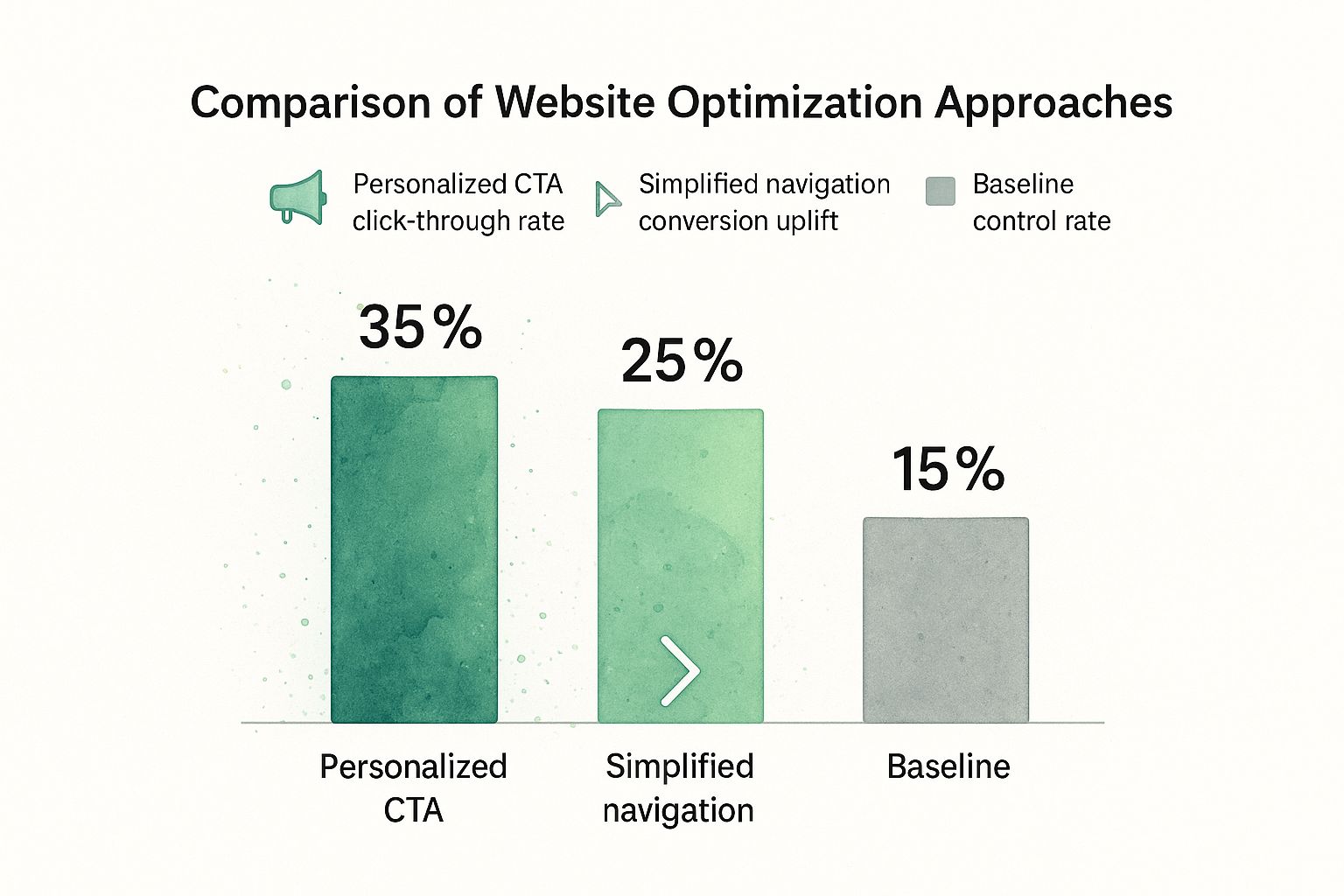
De data is duidelijk: het personaliseren van de gebruikerservaring, zelfs met iets simpels als een gepersonaliseerde CTA, kan je klikfrequentie meer dan verdubbelen.
Overtuigende Teksten die Aanzetten tot Actie
Jouw woorden zijn je digitale verkoper. Generieke, op functies gerichte teksten inspireren mensen niet tot actie. Echt overtuigende copywriting sluit aan bij de problemen van je bezoeker op persoonlijk niveau en positioneert jouw oplossing als het enige logische antwoord.
Je tekst moet altijd zijn:
- Voordeelgericht: In plaats van "Onze software heeft een nieuw dashboard," probeer "Beheer al je taken op één plek en bespaar uren per week." Focus altijd op het resultaat voor de klant.
- Helder en Beknopt: Vermijd jargon. Gebruik korte zinnen en eenvoudige taal.
- Actiegericht: Gebruik sterke, actieve werkwoorden en vertel mensen precies wat je wilt dat ze doen.
Creëer Onweerstaanbare Calls-to-Action (CTA's)
Jouw Call-to-Action is de laatste poort naar conversie. Een zwakke, generieke CTA zoals "Verstuur" of "Klik Hier" is een conversiekiller omdat het onzekerheid creëert. Wat gebeurt er als ik klik?
Een krachtige CTA is daarentegen specifiek, overtuigend en schept glasheldere verwachtingen.
- In plaats van "Download," probeer "Ontvang Je Gratis Marketinggids."
- In plaats van "Abonneer," probeer "Sluit Je Aan bij 10.000+ Slimme Marketeers."
Voor complexe landingspagina's kan een perfect geoptimaliseerde CTA de allerbelangrijkste factor zijn. Als je een belangrijke pagina echt wilt perfectioneren, biedt onze landing page optimisation gids een gericht raamwerk om dit goed te doen.
Een geweldige CTA neemt de laatste zweem van twijfel weg bij een bezoeker. Het verduidelijkt de waarde die ze direct na het klikken ontvangen, waardoor de beslissing om te converteren zowel gemakkelijk als zelfverzekerd aanvoelt.
Minimaliseer Frictie in Formulieren en Checkouts
Niets doodt conversies sneller dan een lang, ingewikkeld formulier. Elk veld dat je een bezoeker vraagt in te vullen, is een extra punt van frictie—een extra kans voor hen om op te geven en te vertrekken.
- Vraag alleen wat je absoluut nodig hebt. Heb je echt hun telefoonnummer nodig voor een nieuwsbriefaanmelding? Waarschijnlijk niet.
- Gebruik slimme standaardwaarden en automatisch invullen. Maak het proces zo pijnloos mogelijk.
- Toon voortgang. Voor formulieren of checkouts met meerdere stappen toont een eenvoudige voortgangsbalk gebruikers hoe dicht ze bij de eindstreep zijn.
Bouw Vertrouwen met Sociaal Bewijs
Mensen vertrouwen andere mensen veel meer dan dat ze merken vertrouwen. Sociaal bewijs is het krachtige psychologische principe dat we kijken naar de acties en ervaringen van anderen om ons eigen gedrag te sturen.
Je kunt dit in je site verweven door te tonen:
- Klantbeoordelingen en Testimonials: Authentieke beoordelingen, vooral met namen en foto's, zijn ongelooflijk overtuigend.
- Vertrouwensbadges: Het weergeven van beveiligingszegels (zoals SSL-certificaten) en bekende betalingslogo's (iDEAL, Visa, PayPal) stelt bezoekers onmiddellijk gerust.
- Casestudy's en Klantlogo's: Laten zien dat andere gerespecteerde bedrijven je al vertrouwen, is een krachtige aanbeveling.
Jouw Vragen over Conversie Optimalisatie Beantwoord

Duiken in conversie optimalisatie website kan overweldigend voelen. We begrijpen dat. Door de jaren heen hebben we talloze ondernemers door dit proces begeleid en we hebben gemerkt dat dezelfde vragen steeds weer terugkomen.
Om je echte duidelijkheid te geven, hebben we de meest gestelde vragen die we van klanten horen verzameld en direct beantwoord. Dit is geen theorie; dit zijn praktische, rechttoe rechtaan antwoorden uit onze praktijkervaring.
Hoeveel Kost Conversie Optimalisatie?
Dit is bijna altijd de eerste vraag, en het eerlijke antwoord is: dat hangt ervan af. De kosten van een CRO-project zijn direct gekoppeld aan de omvang en complexiteit van het werk.
Zie het als het bouwen van een huis. Een simpele renovatie heeft een ander prijskaartje dan het ontwerpen van een villa op maat. Op dezelfde manier kost een eenmalig project om één landingspagina aan te passen minder dan een doorlopend CRO-programma met diepgaande analyse, gebruikersonderzoek en continue A/B-testen over je hele website.
Over het algemeen zien de prijsstructuren er als volgt uit:
- Projectbasis: Je betaalt een vaste prijs voor een specifiek resultaat, zoals een volledige website-audit of een reeks A/B-tests op je checkout-proces.
- Maandelijkse Retainers: Voor doorlopende optimalisatie betaal je een maandelijks bedrag. Dit is perfect voor bedrijven die CRO zien als een continue groeistrategie, niet als een eenmalige oplossing.
- Prestatiegericht: In sommige gevallen kan een bureau een deel van hun vergoeding koppelen aan de resultaten die ze leveren, zoals een meetbare stijging in omzet of leads.
De sleutel is om CRO niet langer als kostenpost te zien, maar als een investering. Een succesvol optimalisatieprogramma betaalt zichzelf vele malen terug door simpelweg de waarde van je bestaande bezoekers te vergroten.
Hoe Lang Duurt Het Voordat Ik Resultaat Zie?
Als het gaat om conversie optimalisatie, is geduld een schone zaak. Hoewel sommige "quick wins"—zoals het repareren van een kapot contactformulier—bijna onmiddellijk resultaat kunnen laten zien, is een goed CRO-proces een langetermijnspel.
Hier is een realistische tijdlijn die je kunt verwachten:
- Dataverzameling & Analyse (2-4 weken): Deze eerste fase draait om het verzamelen van voldoende solide data om sterke hypotheses te vormen. Je kunt dit deel absoluut niet overhaasten.
- A/B-testen Uitvoeren (2-6 weken per test): Een A/B-test moet lang genoeg lopen om statistische significantie te bereiken. Dit betekent dat je genoeg data hebt verzameld om er zeker van te zijn dat het resultaat geen toevalstreffer is.
- Tastbare ROI Zien (3-6 maanden): Je zult waarschijnlijk onderweg kleine, stapsgewijze verbeteringen zien, maar de significante, bedrijfskritische resultaten worden vaak pas duidelijk na een paar test- en implementatiecycli.
Het doel van conversie optimalisatie website is duurzame groei, niet magische snelle oplossingen. Het gaat om het bouwen van een steeds slimmere, effectievere verkoopmachine, één data-onderbouwde verbetering per keer.
Wat zijn de Eerste Stappen die ik Moet Nemen?
Voel je je een beetje overweldigd door alle mogelijkheden? Nergens voor nodig. De beste manier om te beginnen is door je te richten op het "laaghangend fruit"—de plekken waar je met de minste inspanning de grootste impact kunt maken.
Je allereerste stap moet zijn om de grootste lekken in je conversietrechter te identificeren. Duik in je Google Analytics-data en vind de pagina's met de hoogste uitstappercentages. Waar verlies je de meeste potentiële klanten?
Zodra je de probleempagina hebt gevonden, installeer dan een heatmap-tool zoals Hotjar of Microsoft Clarity. Bekijk een paar sessie-opnames van echte gebruikers op die specifieke pagina. Je zult versteld staan hoe snel je kunt zien wat de frictie veroorzaakt.
Dit eenvoudige, tweestaps proces—vind het lek, en kijk dan wat gebruikers daadwerkelijk doen—geeft je je eerste, meest impactvolle hypothese om te testen.
Ben je klaar om te stoppen met gissen en te beginnen met het bouwen van een website die net zo hard werkt als jij? Bij Digitalique.nl combineren we data-gedreven analyse met bewezen strategieën om meer van je bezoekers om te zetten in waardevolle klanten. Laten we het gesprek starten en het ware potentieel van je website ontsluiten. Plan vandaag nog je gratis strategiesessie met ons in.