
Vraag jij je af: "Hoeveel kost adverteren op Google eigenlijk?" Je bent niet de enige. Het korte antwoord is: er is geen vast prijskaartje. De kosten voor Google adverteren hangen volledig af van jouw branche, de concurrentie en wat je precies wilt bereiken.
Zie het niet als een product met een vaste prijs, maar eerder als een veiling waar jij de controle hebt. Je biedt op de aandacht van een potentiële klant, en het mooie is: jij bepaalt zelf over elke euro die je uitgeeft. In deze gids leggen we je precies uit hoe het werkt en hoe je jouw budget slim inzet voor maximaal resultaat.
De Factoren die Jouw Google Ads Kosten Bepalen
De uiteindelijke kosten voor Google adverteren zijn een dynamische mix van verschillende factoren. Het is cruciaal om te begrijpen dat jij aan de knoppen zit. In tegenstelling tot traditioneel adverteren betaal je bij Google Ads meestal pas wanneer iemand daadwerkelijk op je advertentie klikt. Dit model noemen we Pay-Per-Click (PPC).
Dit geeft je enorm veel controle, maar succes hangt af van hoe goed je de belangrijkste variabelen beheert. Een slimme strategie is veel meer dan alleen het hoogste bod plaatsen. Het draait om het efficiënt inzetten van je budget voor maximale impact. Dit is de kern van succesvol zoekmachine adverteren.
Voordat we dieper ingaan op de specifieke elementen, geven we je een snel overzicht van de belangrijkste knoppen waar je aan kunt draaien.
Sleutelfactoren die Jouw Google Ads Kosten Beïnvloeden
| Factor | Invloed op Kosten | Jouw Controle |
|---|---|---|
| Concurrentie in je branche | Hogere concurrentie leidt tot hogere klikprijzen (CPC's). | Laag |
| Kwaliteitsscore | Een hoge score verlaagt je CPC en verbetert je advertentiepositie. | Hoog |
| Geografische targeting | Kosten verschillen sterk tussen steden en landelijke gebieden. | Hoog |
| Biedstrategie | Bepaalt direct hoeveel je bereid bent te betalen per klik of conversie. | Hoog |
Zoals je ziet, heb je op de meeste vlakken zelf de touwtjes in handen. Laten we nu eens kijken wat deze factoren in de praktijk voor jou betekenen.

Wat Beïnvloedt Jouw Budget?
Elk van de volgende elementen speelt een directe rol in wat je uitgeeft en welk rendement je kunt verwachten. Als je deze onder de knie krijgt, leg je de basis voor een winstgevende campagne.
- Concurrentie in de branche: Dit is een grote. In populaire markten, zoals de juridische sector of financiële dienstverlening, vechten veel bedrijven om dezelfde zoekwoorden. Dat drijft de kosten per klik (CPC) flink op.
- Kwaliteitsscore: Google beloont relevantie. Een hoge Kwaliteitsscore, die Google toekent op basis van de kwaliteit van je advertentie, zoekwoord en landingspagina, leidt tot lagere kosten en een betere advertentiepositie. Dit is jouw geheime wapen.
- Geografische targeting: Adverteren in een drukke stad als Amsterdam is bijna altijd duurder dan in een landelijke regio. De reden is simpel: meer concurrentie op een kleiner oppervlak.
- Je biedstrategie: Hoeveel je bereid bent te betalen voor een klik heeft een directe invloed. De slimste strategieën focussen echter niet alleen op klikken, maar op conversies. Dat maakt je uitgaven een stuk efficiënter.
Het is dus echt een samenspel van deze factoren. Een goed doordachte strategie zorgt ervoor dat je budget niet zomaar wordt opgemaakt, maar optimaal wordt ingezet om leads en verkopen te genereren.
Hoe Werkt de Google Ads Veiling Echt?
Veel ondernemers denken dat Google Ads een simpele veiling is: wie het meest biedt, krijgt de toppositie. Dat is een veelvoorkomend misverstand dat je veel geld kan kosten. De waarheid is genuanceerder. Google's prioriteit is om zijn gebruikers tevreden te houden, wat betekent dat ze de meest relevante advertenties willen tonen.
Omdat Google de gebruiker vooropstelt, gaat de veiling niet alleen over wie het diepste in de buidel tast. Het is meer een wedstrijd waarbij Google naar twee dingen kijkt: hoeveel je bereid bent te betalen en hoe goed je advertentie is. Hier ligt de echte kans. Zo kun je grotere concurrenten verslaan zonder meer uit te geven.
Ad Rank: Jouw Ticket naar de Toppositie
Waar je advertentie op de pagina verschijnt, hangt af van een metric genaamd Ad Rank. En nee, dat gaat niet alleen om je bod. Ad Rank is een simpele berekening die je maximale bod vermenigvuldigt met je Kwaliteitsscore.
Ad Rank = Maximaal Bod x Kwaliteitsscore
Deze formule is de motor van de hele Google Ads veiling. Het betekent dat een adverteerder met een fantastische Kwaliteitsscore een concurrent met een hoger bod makkelijk kan overtreffen. Dit is dé sleutel om je kosten voor Google adverteren efficiënt te beheren. Een betere Ad Rank levert je niet alleen een hogere positie op, maar zorgt vaak ook voor lagere kosten per klik.
Kwaliteitsscore: Jouw Geheime Wapen
Dus, wat is die belangrijke Kwaliteitsscore? Zie het als het officiële rapport van Google voor jouw advertentie-inspanningen. Het is een beoordeling van 1 tot 10 die de relevantie en kwaliteit van je zoekwoorden, advertentietekst en landingspagina beoordeelt.
Een hoge Kwaliteitsscore is jouw manier om aan Google te signaleren dat je advertentie perfect aansluit bij de zoekopdracht van een gebruiker. Hierop focussen is een van de krachtigste manieren om je advertentiekosten te verlagen. Onze hele aanpak voor search engine marketing is gebouwd op het creëren van een ijzersterke Kwaliteitsscore vanaf dag één.
Google gebruikt drie hoofdfactoren om je score te berekenen:
- Verwachte klikfrequentie (CTR): Hoe waarschijnlijk is het, op basis van eerdere prestaties, dat mensen op je advertentie klikken?
- Advertentierelevantie: Sluit je advertentietekst direct aan op het zoekwoord dat iemand heeft ingetypt? De connectie moet duidelijk zijn.
- Ervaring op de landingspagina: Als iemand op je advertentie klikt, levert de pagina dan wat de advertentie beloofde? De pagina moet relevant, gebruiksvriendelijk en waardevol zijn.
Beheers deze elementen en je bent niet langer zomaar een deelnemer aan de veiling; je zet de veiling naar jouw hand.
Wat Kost een Google Advertentie in Mijn Branche?
Het is een van de eerste vragen die elke ondernemer stelt: "Wat kost een typische klik in mijn specifieke branche?" En het is de juiste vraag om te stellen. Hoewel de wereld van Google Ads constant in beweging is, is het kennen van de benchmarks voor jouw sector de basis voor een slim budget.
Laten we eens kijken naar de gemiddelde Kosten-Per-Klik (CPC) die je kunt verwachten in verschillende branches in Nederland. Je zult snel merken dat sommige sectoren veel duurder zijn dan andere. Dit komt meestal door twee dingen: intense concurrentie en de hoge levenslange waarde van een klant. Als één nieuwe klant duizenden euro's kan opleveren, zijn bedrijven bereid meer te betalen om hun aandacht te trekken.
Deze afbeelding geeft je een goed beeld van het concurrentielandschap en laat zien hoe sterk de prijs van een enkele klik kan variëren per branche.
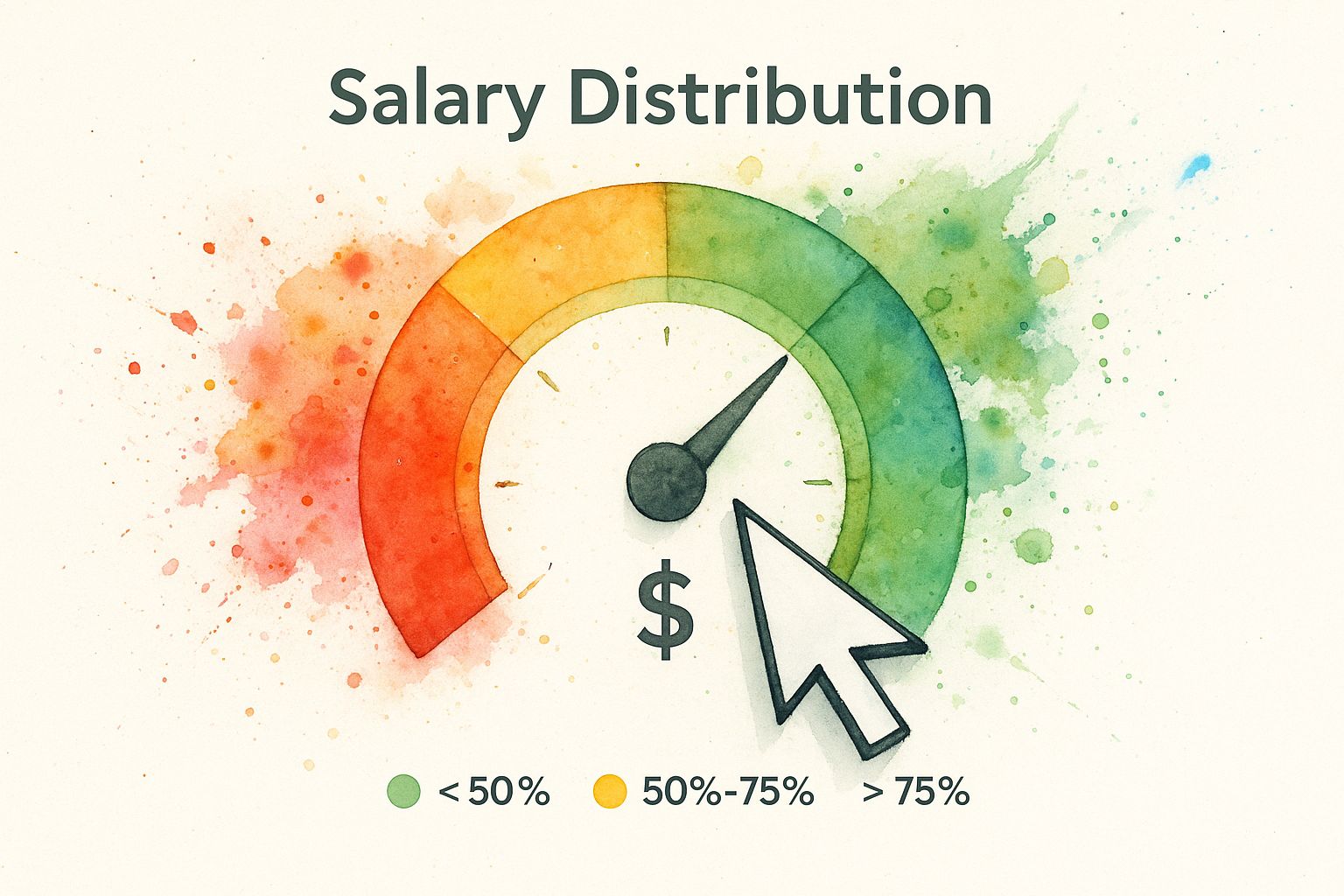
Zoals je ziet, hebben branches als de advocatuur en financiële dienstverlening vaak de hoogste klikkosten, terwijl sectoren als e-commerce en reizen gematigder zijn. Deze context helpt je vanaf het begin realistische verwachtingen te stellen voor je advertentiebudget.
Geschatte Gemiddelde CPC per Branche in Nederland
Om je een duidelijker beeld te geven, hebben we enkele van de meest voorkomende sectoren op de Nederlandse markt uitgesplitst. Deze tabel schetst de typische CPC-bereiken die je kunt tegenkomen in het Google Zoeknetwerk, samen met het algemene concurrentieniveau.
| Branche | Gemiddeld CPC-bereik (€) | Concurrentieniveau |
|---|---|---|
| Juridische diensten | €6,00 – €8,00+ | Hoog |
| Financiën & Verzekeringen | €3,00 – €5,00 | Hoog |
| B2B Technologie & Diensten | €3,00 – €6,00 | Hoog |
| E-commerce (Retail) | €1,00 – €2,50 | Gemiddeld tot Hoog |
Deze cijfers zijn niet in steen gebeiteld, maar ze bieden een solide startpunt voor het plannen van je campagnes.
Waarom die Grote Prijsverschillen?
De digitale advertentieruimte in Nederland is ongelooflijk actief. Dit zorgt voor een zeer competitieve omgeving die een direct effect heeft op de Google Ads-kosten.
Laten we eens kijken waarom sommige branches duurder zijn:
- Juridische diensten (€6 - €8+ per klik): De waarde van één nieuwe cliënt voor een advocatenkantoor kan enorm zijn. Daarom zijn kantoren bereid zeer agressief te bieden op topzoekwoorden, wat de prijs voor iedereen in die ruimte opdrijft.
- Financiën & Verzekeringen (€3 - €5 per klik): Net als in de juridische sector is de langetermijnwaarde van een nieuwe klant die een hypotheek, lening of verzekering afsluit aanzienlijk. Dit rechtvaardigt de hogere biedingen.
- B2B Technologie & Diensten (€3 - €6 per klik): In de B2B-wereld gaan verkopen vaak om grote contracten en langdurige klantrelaties. Een enkele gekwalificeerde lead kan tienduizenden euro's waard zijn, wat een hogere CPC de investering waard maakt.
- E-commerce (€1 - €2,50 per klik): Dit is een ander spel. CPC's zijn over het algemeen lager, maar succes hangt af van een hoog verkoopvolume. Het doel hier is niet één hoogwaardige conversie, maar een winstgevende Return on Ad Spend (ROAS) over honderden of duizenden transacties.
Bij Digitalique hebben we gespecialiseerde strategieën ontwikkeld om de unieke uitdagingen van verschillende sectoren aan te gaan. Je kunt zien hoe we onze aanpak afstemmen op jouw specifieke industrie.
Het doel van het begrijpen van deze benchmarks is niet om je te laten afschrikken door hoge kosten. Het gaat erom jezelf te wapenen met de juiste informatie om vanaf dag één een slimmere, kosteneffectievere advertentiestrategie te bouwen.
Een Slim Google Ads Budget Instellen voor Jouw Bedrijf
Het bepalen van je Google Ads budget kan aanvoelen als een schot in het duister. Hoeveel is genoeg? Waar ligt de grens tussen slim investeren en geld verbranden?
Het geheim is om te stoppen met gokken en te beginnen met berekenen. Een solide budget is geen willekeurig getal; het is een strategisch bedrag dat direct gekoppeld is aan wat je wilt bereiken.
De beste manier om dit te doen, is door terug te werken vanuit je omzetdoelen. Begin niet met de vraag: "Hoeveel kan ik uitgeven?" Vraag jezelf in plaats daarvan af: "Hoeveel ben ik bereid te betalen om een nieuwe klant te werven?" Deze simpele verandering in perspectief verandert adverteren van een kostenpost in een berekende investering.
Bereken Je Doel-CPA
Je doel-Cost Per Acquisitie (CPA) is het magische getal. Het is het absolute maximum dat je kunt uitgeven om een nieuwe klant binnen te halen en nog steeds winst te maken. Zodra je dit helder hebt, valt de rest van je budget op zijn plaats.
Bedenk wat een klant je gedurende zijn levensduur waard is. Als een nieuwe klant gemiddeld €1.000 aan omzet genereert en je winstmarge 30% (€300) is, kun je beslissen hoeveel van die winst je wilt herinvesteren om de volgende klant te krijgen. Deze berekening is de basis van elke duurzame campagne.
Een goed gedefinieerd budget verandert adverteren van een gok in een voorspelbare motor voor bedrijfsgroei.
Van Doelen naar een Dagelijks Budget
Met je doel-CPA in de hand, kun je een logisch startbudget opstellen. Laten we een snel, praktisch voorbeeld doorlopen.
Stel, je hebt een B2B-adviesbureau en je doel is om 10 gekwalificeerde leads per maand te genereren.
- Definieer je Doel-CPA: Uit ervaring weet je dat ongeveer één op de vijf leads een betalende klant wordt, en elke klant is zo'n €2.000 waard. Om het bedrijf gezond te houden, ben je bereid tot €150 per lead te betalen.
- Bereken je Maandbudget: Simpele wiskunde. Om die 10 leads te krijgen, investeer je 10 leads x €150 per lead = €1.500 per maand.
- Bepaal je Dagbudget: Google Ads werkt met een dagbudget. Dus je deelt je maandelijkse totaal door het gemiddelde aantal dagen in een maand (ongeveer 30,4). Dat is €1.500 / 30,4, wat je een dagbudget van ongeveer €49 geeft.
Plotseling heb je een startpunt dat is gebaseerd op data, niet op een wilde gok.
De Twee Fases van Budgetteren
Onthoud dat je budget niet vaststaat. Het moet evolueren. Wij denken altijd in twee fasen: de testfase en de schaalfase.
- Testbudget (Leerfase): In het begin is je belangrijkste doel het verzamelen van data. Je moet genoeg uitgeven om zinvolle tests uit te voeren, te ontdekken welke zoekwoorden converteren en welke advertentieteksten aanslaan. Deze fase draait om leren.
- Groeibudget (Schaalfase): Zodra je winnende campagnes hebt die een positief rendement opleveren, is het tijd om gas te geven. Nu investeer je vol vertrouwen meer geld in wat al werkt, wetende dat elke euro die je erin stopt een voorspelbaar rendement oplevert.
Praktische Manieren om Je Advertentiekosten te Verlagen
Zodra je budget vaststaat, begint het echte werk. Het doel is niet alleen om geld uit te geven, maar om het slim te investeren om je kosten voor Google adverteren te verlagen en tegelijkertijd betere resultaten te behalen. Laten we vijf krachtige, praktische strategieën bekijken die je direct kunt toepassen.
Beheers Je Kwaliteitsscore
We kunnen het niet genoeg benadrukken: je Kwaliteitsscore is de krachtigste hefboom om je advertentie-uitgaven te verminderen. Een hogere score vertelt Google dat je advertenties relevant zijn, en als beloning krijg je een lagere Kosten-Per-Klik (CPC) en betere posities.
Focus op de perfecte driehoek: zoekwoorden, advertentietekst en landingspagina. Als iemand zoekt naar "handgemaakte leren laarzen," moet je advertentie over "handgemaakte leren laarzen" gaan, en de landingspagina... je raadt het al, over handgemaakte leren laarzen. Deze strakke afstemming is precies wat Google's algoritme wil zien.
Voorkom Verspilling met Uitsluitingszoekwoorden
Je wilt niet betalen voor een klik als iemand zoekt naar "gratis advies," terwijl jij premium diensten verkoopt. Dat is precies waar uitsluitingszoekwoorden voor dienen. Ze filteren irrelevante zoekopdrachten weg die nooit zullen converteren.
Controleer regelmatig je "Zoektermen"-rapport in Google Ads. Dit rapport is een goudmijn, want het toont de exacte zoekopdrachten die mensen gebruikten. Zie je termen die niets met je aanbod te maken hebben? Voeg ze direct toe aan je lijst met uitsluitingszoekwoorden. Dit bespaart je op de lange termijn verrassend veel geld.
Verhoog Klikken met Advertentie-extensies
Advertentie-extensies zijn fantastisch. Het zijn extra stukjes informatie—zoals je telefoonnummer, adres of links naar specifieke pagina's—die je gratis aan je advertenties kunt toevoegen. Ze maken je advertentie groter, geven meer informatie en verhogen de kans dat men klikt.
Het gebruik van extensies kan je Klikfrequentie (CTR) aanzienlijk verbeteren. Een hogere CTR draagt weer bij aan een betere Kwaliteitsscore, wat de sleutel is tot lagere kosten.
Laat Smart Bidding het Zware Werk Doen
Stel niet zomaar je biedingen in en vergeet ze. De Smart Bidding-strategieën van Google gebruiken machine learning om automatisch te optimaliseren voor conversies. Strategieën zoals "Doel-CPA" of "Conversies maximaliseren" passen je biedingen in realtime aan om de meeste leads of verkopen voor je budget te realiseren.
Deze systemen analyseren duizenden signalen om het perfecte bod in te stellen, iets wat geen mens kan evenaren. Het geeft je de kracht van Google's data om slimmere beslissingen te nemen.
Optimaliseer Je Landingspagina's
Je werk is niet voorbij na de klik. De landingspagina is waar de conversie moet plaatsvinden. Een trage, verwarrende of mobiel-onvriendelijke pagina zal je conversieratio's kelderen, hoe briljant je advertentie ook is.
Zorg ervoor dat je landingspagina's snel laden, een glasheldere call-to-action (CTA) hebben en precies leveren wat je advertentie beloofde. Een soepele gebruikerservaring is de cruciale laatste stap om dure klikken om te zetten in waardevolle klanten.
Kijk Verder dan de Klik en Vind je Echte ROI
Het is makkelijk om te focussen op een lage kost per klik. Maar lage kosten zijn een valse overwinning als die klikken geen omzet opleveren. Het cijfer dat er echt toe doet, is je Return on Investment (ROI). Hier verschuift de focus van kosten naar waarde.

Zie de kosten voor Google adverteren niet als een uitgave, maar als een directe investering in de voorspelbare, duurzame groei van je bedrijf. Die mindset is de eerste stap naar langetermijnsucces.
Van Kosten naar Waarde
Om je ROI echt te bepalen, moet je conversies bijhouden. Een "conversie" is elke waardevolle actie na een klik: een ingevuld contactformulier, een aanmelding voor een nieuwsbrief, of een telefoontje.
Wanneer je conversietracking correct instelt in Google Ads, trek je een directe lijn van je advertentie-uitgaven naar tastbare resultaten. De basisformule voor ROI is simpel:
ROI = (Opbrengst uit Advertenties - Kosten van Advertenties) / Kosten van Advertenties
Deze vergelijking transformeert je advertenties van een kostenpost naar een winstgenerator. Het vertelt je precies hoeveel omzet je genereert voor elke euro die je investeert.
Begrijp de Klantlevensduurwaarde
Laten we nog een stap verder gaan met een nog krachtiger concept: Klantlevensduurwaarde (CLV). De klant die je vandaag binnenhaalt, koopt misschien niet één keer, maar wordt een loyale klant voor jaren.
Bijvoorbeeld: €50 uitgeven om een klant te werven die een aankoop van €70 doet, lijkt een kleine winst. Maar wat als diezelfde klant de komende vijf jaar elk jaar terugkomt en nog eens €70 uitgeeft? Plotseling ziet die initiële investering van €50 er ongelooflijk slim uit.
De Nederlandse markt begrijpt al lang de kracht van zoekmachine-adverteren. Al in 2016 bedroegen de totale online advertentie-uitgaven in Nederland ongeveer €1,683 miljard. Zoekadvertenties namen met 45% het grootste deel voor hun rekening, zo'n €755 miljoen. Je kunt dieper in de cijfers duiken door het volledige onderzoek over de advertentie-uitgaven van 2016 te lezen.
Uiteindelijk is slimme, datagestuurde reclame de motor die je bedrijf vooruit helpt.
Veelgestelde Vragen over de Kosten van Google Ads
Wanneer je je verdiept in de kosten voor Google adverteren, komen er bijna altijd een paar vragen naar boven. Het is volkomen normaal om je af te vragen over timelines, budgetten en of je het zelf moet doen. Laten we drie van de meest voorkomende vragen aanpakken die wij van ondernemers horen.
Hoe Snel Kan Ik Resultaten Verwachten?
Dit is dé grote vraag. Hoewel je advertenties vrijwel direct verkeer naar je website kunnen sturen, kost het tijd om dat verkeer om te zetten in winstgevende business.
Beschouw de eerste 1-3 maanden als een essentiële leerfase. We geven niet zomaar geld uit; we kopen data. In deze periode testen we alles—verschillende advertentieteksten, zoekwoorden en doelgroepen—om te ontdekken wat werkt. Het draait allemaal om continu bijsturen en verfijnen.
Moet Ik Google Ads Zelf Doen of een Bureau Inhuren?
Dit is een klassiek 'kosten versus expertise'-dilemma. Zelf je campagnes beheren bespaart je de bureaukosten, wat verleidelijk is. Maar wees voorbereid op een steile leercurve. Google Ads is complex, en het is voor beginners ontzettend makkelijk om dure fouten te maken die je budget opslokken zonder resultaat.
Door een gespecialiseerd bureau zoals Digitalique in te huren, haal je vanaf dag één expertise in huis. Wij hebben de fouten al gemaakt en de lessen geleerd op kosten van een ander. Onze taak is om de valkuilen te omzeilen, je rendement te maximaliseren en jou de vrijheid te geven om te doen waar je goed in bent: je bedrijf runnen.
Wat is een Realistisch Startbudget?
Google accepteert elk bedrag dat je ze geeft, maar een te klein budget is vaak zonde van het geld. Het genereert simpelweg niet genoeg data om slimme, geïnformeerde beslissingen te nemen. Voor de meeste MKB-bedrijven adviseren wij een startbudget van minimaal €15-€20 per dag.
Dit geeft je campagnes genoeg brandstof om consistent te draaien en de klik- en conversiedata te verzamelen die we nodig hebben om te optimaliseren. Je ideale startpunt hangt natuurlijk af van je branche en doelen, maar dit budget biedt een solide basis om te leren en te groeien.
Klaar om je advertentie-uitgaven om te zetten in een voorspelbare motor voor groei? Het team van Digitalique staat voor je klaar om een strategie te bouwen die echte, meetbare resultaten oplevert. Ontdek hoe we jou kunnen helpen.