
Vraag jij je af: "wat zijn de webshop laten maken kosten nu echt?" Je zoekt een concreet antwoord, geen vage schatting. Laten we er meteen induiken: de kosten voor een professionele webshop variëren van €2.000 voor een basisopzet tot meer dan €25.000 voor een complexe, op maat gemaakte e-commerce machine.
Waar jouw project op dit spectrum landt, hangt volledig af van wat jij nodig hebt om je bedrijf te laten groeien. In deze gids leggen we uit waar je geld naartoe gaat, zodat jij een slimme investering kunt doen die je online zichtbaarheid en conversies verhoogt.
Jouw Financiële Startpunt
Zie het als het bouwen van een fysieke winkel. Je kunt beginnen met een simpele pop-up, doorstromen naar een standaard winkelpand, of voluit gaan voor een A-locatie. Elke keuze dient een ander doel en heeft een ander prijskaartje. Door de verschillende niveaus te begrijpen, kun je realistische verwachtingen stellen en je budget afstemmen op je ambities.
De Kosten per Niveau Opgesplitst
Om de cijfers te begrijpen, is het handig om webshops in te delen in een paar niveaus. Een eenvoudige webshop in Nederland start rond de €2.000. De meeste kleine tot middelgrote bedrijven komen echter uit in de range van €8.000 tot €20.000 voor een solide, functionele webshop.
Voor ondernemers met grotere plannen—denk aan unieke ontwerpen en geavanceerde functies—kan de investering gemakkelijk oplopen tot boven de €25.000. De definitieve prijs weerspiegelt de hoeveelheid werk. Wil je dieper graven? Je kunt meer inzichten ontdekken over webontwikkelingskosten in Nederland.
Waarom die enorme variatie? Omdat een "webshop" geen standaardproduct is; het is een project met vele factoren die de kosten beïnvloeden:
- Het Platform: Een template-gebaseerd systeem zoals Shopify is heel anders dan een maatwerkoplossing op een open-source platform als Magento.
- Complexiteit van het Ontwerp: Wil je een strak, effectief ontwerp gebaseerd op een bewezen template, of een volledig unieke, merkervaring die vanaf nul is opgebouwd? Dat laatste kost meer.
- Maatwerk Functionaliteiten: Heb je speciale betaalmethoden, geavanceerde productfilters of complexe koppelingen met je voorraadsysteem nodig? Elke extra functie verhoogt de ontwikkeltijd en dus de kosten.
- Het Team: De ervaring, omvang en reputatie van het bureau of de freelancer die je inhuurt, zie je natuurlijk terug in hun offerte.
Om je een duidelijker beeld te geven, hebben we een snel overzicht gemaakt van wat je kunt verwachten bij verschillende investeringsniveaus.
Geschatte Investeringsniveaus voor Webshops
Deze tabel geeft je een snelle vergelijking van verschillende webshoptypes en hun typische startinvesteringen in Nederland. Gebruik dit als richtlijn om te bepalen waar jouw project zou kunnen passen.
| Webshop Niveau | Typische Prijsklasse (EUR) | Beste Keuze Voor |
|---|---|---|
| Starter / DIY Webshop | €500 - €3.000 | Zelfstandige ondernemers, hobbyisten, of bedrijven die een productidee testen met een zeer beperkt budget. |
| Professionele MKB Webshop | €5.000 - €15.000 | Kleine tot middelgrote bedrijven die een betrouwbare, goed ontworpen winkel nodig hebben met standaard e-commerce functies. |
| Maatwerk High-End Webshop | €20.000 - €50.000+ | Gevestigde bedrijven met specifieke integratiebehoeften, hoge bezoekersaantallen en een focus op een unieke gebruikerservaring. |
Deze tabel helpt je om je budget en de gesprekken met potentiële ontwikkelaars vorm te geven. Onthoud dat dit startpunten zijn; de uiteindelijke kosten hangen altijd af van de specifieke details van jouw project.
De Kern van Je Ontwikkelingsbudget Begrijpen

Laten we het hebben over de grootste kostenpost op je factuur: de ontwikkeling. Dit is de motor van je webshop, waar de code wordt geschreven om jouw visie tot leven te brengen. Het is bijna altijd het grootste deel van je investering, en met goede reden. Maar waar betaal je nu precies voor?
Eerst is het belangrijk om de twee manieren te begrijpen waarop bureaus en ontwikkelaars hun werk prijzen. Elk model heeft voor- en nadelen, en de juiste keuze hangt af van hoe duidelijk je projectplan is en hoeveel flexibiliteit je nodig hebt.
Vaste Prijs vs. Uurtarief
De keuze tussen een vaste prijs en een uurtarief is een van de eerste belangrijke beslissingen. Het heeft een enorme impact op je budget en projectmanagement.
- Projecten met Vaste Prijs: Bij dit model spreek je één totaalprijs af voor een zeer duidelijk omschreven project. Het grote voordeel is budgetzekerheid—je weet precies wat je betaalt. Het nadeel? Het is rigide. Als je halverwege een nieuwe functie wilt toevoegen, heb je waarschijnlijk een nieuwe offerte en een contractupdate nodig.
- Uurtarief (Nacalculatie): Hier betaal je voor de daadwerkelijke tijd die het team aan je webshop besteedt. Dit geeft je maximale flexibiliteit om functies aan te passen of van richting te veranderen. De valkuil is dat de eindfactuur onvoorspelbaar kan zijn als je de scope niet strak bewaakt.
Welke is geschikt voor jou? Een vaste prijs is perfect als je een ijzersterk, gedetailleerd plan hebt. Een uurtarief is beter voor complexe projecten waarbij je verwacht dat de eisen zullen evolueren.
Complexiteit: De Echte Kostenbepaler
Wat bepaalt nu uiteindelijk het aantal uren of de hoogte van die vaste prijs? In één woord: complexiteit. De uiteindelijke webshop laten maken kosten zijn direct gekoppeld aan de functies die jij wilt. Een eenvoudige webshop met een paar producten is iets heel anders dan een enorm platform met duizenden artikelen, meerdere integraties en maatwerk logica.
Denk na over hoe deze veelvoorkomende functies de complexiteit verhogen, wat de ontwikkeltijd en kosten opdrijft:
- Koppelingen met Betaalproviders: Standaard betaalopties zoals iDEAL of Stripe integreren is meestal eenvoudig. Maar als je moet koppelen met een gespecialiseerd of minder gebruikelijk internationaal betaalsysteem? Dat is maatwerk en kost tijd.
- Geavanceerd Zoeken & Filteren: Klanten laten filteren op maat, kleur, merk en prijs lijkt simpel. Achter de schermen kan de logica om dit naadloos te laten werken met een grote voorraad zeer complex worden.
- Gepersonaliseerde Klantaccounts: Functies zoals bestelgeschiedenis, opgeslagen adressen, verlanglijstjes en loyaliteitsprogramma's zorgen voor een fantastische gebruikerservaring. Ze vereisen ook robuust en veilig databasewerk om al die klantgegevens te beheren.
- Koppelingen met Externe Systemen: Wil je dat je webshop communiceert met je boekhoudsoftware (zoals Exact Software), je voorraadsysteem of je CRM? Deze integraties zijn cruciaal voor een efficiënte bedrijfsvoering, maar elke koppeling vergroot de ontwikkelingsscope.
Belangrijk Inzicht: Elke functie op je "must-have" lijst vertaalt zich direct in ontwikkeluren. Het is slim om je "essentiële functies voor de lancering" te scheiden van de "leuk voor later" functies. Zo beheer je effectief je startbudget.
Het goede nieuws? Als je je webshop in Nederland laat bouwen, krijg je uitstekende waarde voor je geld. Uurtarieven voor bekwame ontwikkelaars liggen doorgaans tussen €40 en €100. Dat is aanzienlijk betaalbaarder dan in veel andere westerse landen, waardoor je meer kunt laten doen zonder in te boeten op kwaliteit. Je kunt hier dieper in duiken door het volledige onderzoek naar ontwikkelingskosten in Europa en de VS te lezen. Met deze informatie kun je een veel productievere discussie voeren met elke potentiële ontwikkelpartner.
Het Fundament van Je Webshop Kiezen: Het E-commerce Platform
Het kiezen van je e-commerce platform is als het kiezen van de motor voor je online winkel. Deze ene beslissing heeft invloed op alles, vooral op je totale webshop laten maken kosten.
Vergelijk het met het opzetten van een fysieke winkel. Je kunt een kraam huren op een drukke markt (Shopify), een kant-en-klare winkelruimte leasen (BigCommerce), of alles uit de kast halen en je eigen vlaggenschipwinkel bouwen (denk aan Magento).
Elke weg heeft zijn eigen prijskaartje, zowel vooraf als voor de dagelijkse operatie. Dit is niet alleen een technische keuze; het is een kernbeslissing die je budget, flexibiliteit en groeimogelijkheden bepaalt.
SaaS vs. Open-Source Platformen
Je eerste grote keuze is tussen "Software as a Service" (SaaS) en een open-source platform. Dit zijn twee totaal verschillende filosofieën voor het bouwen en beheren van een webshop.
- SaaS Platformen (Het "Huurmodel"): Dit zijn de alles-in-één oplossingen zoals Shopify of BigCommerce. Je betaalt een maandelijks bedrag en krijgt de software, hosting, beveiliging en ondersteuning in één pakket. Het is gebruiksvriendelijk en voorspelbaar, perfect voor bedrijven die snel online willen zonder een team van ontwikkelaars. De keerzijde? Maatwerk kan beperkt zijn, en je betaalt vaak transactiekosten bovenop je abonnement.
- Open-Source Platformen (Het "Eigendomsmodel"): Hier hebben we het over zwaargewichten zoals Magento (nu Adobe Commerce) en WooCommerce voor WordPress. De software zelf is gratis te downloaden, maar je bent verantwoordelijk voor al het andere: hosting, beveiliging, onderhoud en elke regel maatwerkcode. Dit geeft je onbeperkte vrijheid om iets unieks te bouwen, maar de initiële bouw- en doorlopende onderhoudskosten zijn aanzienlijk hoger.
Deze afbeelding laat zien hoe die kosten zich doorgaans verhouden voor basisopstellingen versus maatwerk, plus de essentiële doorlopende kosten die je niet kunt negeren.
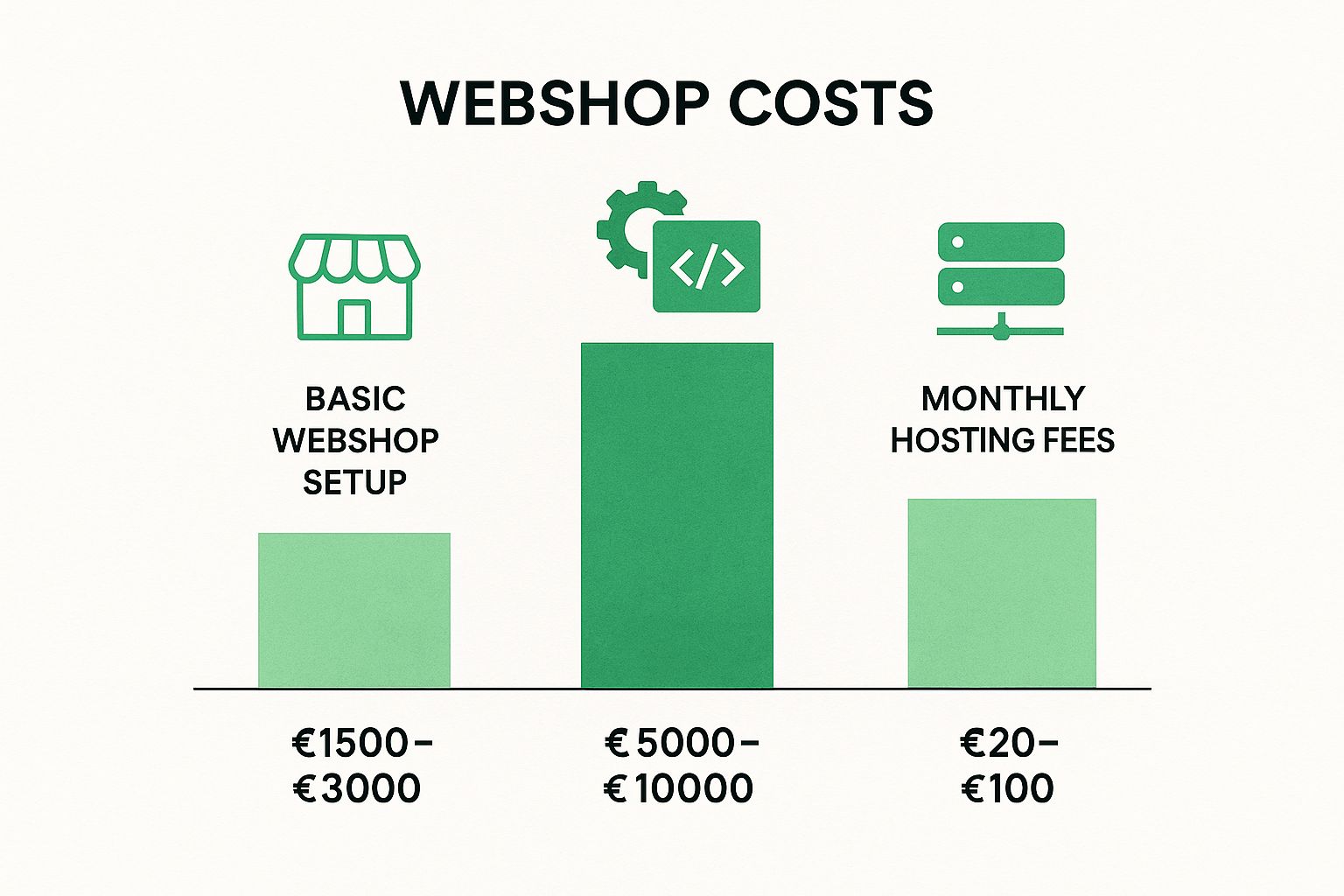
Zoals je ziet, vereist een maatwerk webshop een veel grotere initiële investering, maar zelfs de eenvoudigste opstellingen hebben terugkerende kosten die je in je financiële planning moet opnemen.
Om je een duidelijker beeld te geven, volgt hier een analyse van de typische kosten die verbonden zijn aan populaire e-commerce platformen. Dit zou je moeten helpen beslissen welk fundament geschikt is voor jouw budget en behoeften.
Kostenvergelijking: SaaS vs. Open-Source
| Platform Type | Voorbeelden | Opstartkosten | Doorlopende Kosten | Beste Keuze Voor |
|---|---|---|---|---|
| SaaS | Shopify, BigCommerce | Laag (€500 - €5.000 voor opzet) | Maandelijks abonnement (€30 - €300+), transactiekosten, app-kosten | Startups, MKB, en bedrijven die een snelle, onderhoudsarme lancering willen. |
| Open-Source | Magento, WooCommerce | Hoog (€10.000 - €50.000+ voor ontwikkeling) | Hosting, beveiliging, onderhoudscontracten, ontwikkelaarskosten | Gevestigde bedrijven met unieke behoeften, hoog verkoopvolume en lange-termijn groeiplannen. |
Uiteindelijk hangt de juiste keuze af van jouw specifieke situatie en wat je bereid bent te investeren, zowel nu als in de toekomst.
De Financiële Verplichtingen Vergelijken
Het juiste platform kiezen is een balans tussen je directe budget en je lange-termijnvisie. Een SaaS-oplossing lijkt op dag één goedkoper vanwege de lage opstartkosten, maar de maandelijkse abonnements- en transactiekosten kunnen na verloop van tijd flink oplopen. Een open-source webshop vereist daarentegen een forse investering vooraf, maar kan kosteneffectiever zijn voor winkels met een hoog volume, omdat je geen percentage van elke verkoop aan het platform afdraagt.
Belangrijk Inzicht: Kijk niet alleen naar de initiële bouwkosten. Bereken de Total Cost of Ownership (TCO), inclusief abonnementskosten, transactiekosten, essentiële plug-ins en onderhoud over de komende jaren.
Het is veel om af te wegen, dat weten we. Als je de voor- en nadelen nog steeds op een rijtje probeert te zetten, zal onze diepgaande uitleg over het verschil tussen een custom webshop en een standaardplatform alles verduidelijken. Het begrijpen van deze kernverschillen is de sleutel tot het kiezen van een fundament dat echt past bij jouw bedrijfsdoelen en je portemonnee.
De Verborgen Operationele Kosten Onthullen
Je webshop laten bouwen is een enorme mijlpaal, maar het is slechts het begin. Een geweldige webshop is geen statische website; het is een levend, ademend bedrijf dat constante brandstof nodig heeft. Na de lancering verschuift je focus van ontwikkeling naar de dagelijkse operatie van je winkel.
Dit is waar veel startende ondernemers verrast worden door de doorlopende operationele kosten.
Het begrijpen van deze uitgaven is een cruciaal onderdeel van het berekenen van de ware webshop laten maken kosten. Wanneer je hier vanaf het begin rekening mee houdt, voorkom je financiële verrassingen en zorg je ervoor dat je bedrijf soepel en winstgevend kan draaien.
Essentiële Technische Abonnementen
Voordat je zelfs maar je eerste verkoop kunt doen, zijn er een paar technische rekeningen te betalen. Dit zijn de onvermijdelijke abonnementen die je digitale deuren openhouden, je lichten aan en je klanten veilig.
Zie deze als het online equivalent van huur en nutsvoorzieningen voor een fysieke winkel. Het zijn terugkerende, fundamentele kosten.
Dit heb je absoluut nodig:
- Domeinregistratie: Dit is het unieke adres van je webshop op het internet (zoals jouwwinkel.nl). Het is een kleine maar essentiële jaarlijkse vergoeding, meestal tussen €10 en €20 per jaar.
- Webhosting: Dit is het digitale stuk grond waarop je winkel is gebouwd. Hostingkosten variëren sterk, afhankelijk van het verkeer dat je verwacht en de prestaties die je nodig hebt. Reken op €10 tot €50 per maand voor gedeelde hosting; dedicated oplossingen kosten aanzienlijk meer.
- SSL-certificaat: Dit zorgt voor het slotje in de browser van je klant en versleutelt hun gegevens. Het is een absolute must-have voor vertrouwen en veiligheid. Hoewel sommige hostingpakketten een gratis SSL bevatten, kunnen premium certificaten je €50 tot €200 per jaar kosten.
Transactie- en Softwarekosten
Elke keer dat je een verkoop doet, gaat een klein deel van die omzet naar iemand anders. Dit zijn transactiekosten, in rekening gebracht door de betaalproviders die creditcards, iDEAL en andere betaalmethoden veilig verwerken.
Een populaire provider zoals Stripe rekent bijvoorbeeld een klein percentage plus een vast bedrag per transactie. Voor iDEAL-betalingen kun je specifiek rekenen op kosten rond de €0,29 per transactie. Het lijkt weinig, maar geloof ons, het telt snel op zodra de bestellingen binnenstromen.
Maar betalingen zijn slechts één stukje van de puzzel. Je dagelijkse operatie zal vrijwel zeker afhankelijk zijn van andere gespecialiseerde software. Denk hierbij aan:
- Boekhoudsoftware: Tools zoals Xero of Moneybird zijn essentieel voor het beheren van facturen en het op orde houden van je financiën.
- Klantenservicetools: Software om je te helpen klantvragen en -problemen te beheren zonder gek te worden.
- E-mailmarketingplatforms: Diensten zoals Mailchimp voor het versturen van nieuwsbrieven, promoties en herinneringen voor verlaten winkelwagens.
Elk van deze diensten heeft meestal een eigen maandelijks abonnement. Het is essentieel om te budgetteren voor de tools die je bedrijf niet alleen draaiende houden, maar het ook beter laten draaien.
Budgetteren voor Onderhoud en Toekomstige Groei
 De lancering van je webshop is niet de eindstreep; het is het startblok. Om veilig, snel en concurrerend te blijven, heeft je site een toegewijd budget nodig voor onderhoud en groei. Dit is geen optionele extra, maar een cruciale investering in je lange-termijnsucces.
Zie je webshop als een nieuwe auto. Je zou hem niet van de dealer ophalen en vervolgens de olieverversingen, bandenrotaties en onderhoudsbeurten negeren, toch? Dezelfde logica geldt hier. Zonder regelmatig onderhoud zullen de prestaties afnemen, veiligheidsrisico's toenemen en raak je snel achterop bij de concurrentie.
Plannen voor Doorlopend Onderhoud
Een solide onderhoudsplan is je verzekering tegen toekomstige hoofdpijn. Het omvat al het proactieve werk dat je winkel soepel en veilig laat draaien en kostbare noodsituaties voorkomt. Dit vanaf dag één meenemen in je totale webshop laten maken kosten is simpelweg een slimme financiële zet.
Een goed onderhoudscontract of interne checklist moet deze basisprincipes dekken:
- Kritieke Software-updates: Regelmatig updaten van je platform (zoals WooCommerce of Magento), thema's en plug-ins is essentieel om beveiligingslekken te dichten en alles compatibel te houden.
- Beveiligingsscans: Proactief scannen op malware en kwetsbaarheden is onmisbaar voor de bescherming van je bedrijf en de gevoelige gegevens van je klanten.
- Prestatiecontroles: De laadsnelheid van je site in de gaten houden is cruciaal. Langzame sites frustreren niet alleen gebruikers; ze kunnen je Google-ranking ernstig schaden.
- Regelmatige Back-ups: Een betrouwbaar back-upsysteem betekent dat je je site snel kunt herstellen als er iets misgaat, waardoor downtime en verloren omzet worden geminimaliseerd.
Als vuistregel moet je jaarlijks 15-25% van je initiële ontwikkelingskosten budgetteren voor onderhoud. Dit zorgt ervoor dat je de middelen hebt om je digitale winkelpui in perfecte staat te houden.
Budgetteren voor Toekomstig Succes
Maar alleen de lichten aanhouden is niet genoeg om te groeien. De verwachtingen van je klanten zullen veranderen, nieuwe technologieën zullen opduiken en je concurrenten zullen constant op zoek zijn naar een voorsprong. Om voorop te blijven lopen, heb je een apart budget nodig voor toekomstige verbeteringen en marketing.
Dit groeibudget stelt je in staat om wendbaar en responsief te zijn. Het is het fonds dat je aanspreekt om de functies te bouwen waar je klanten om vragen of om in te spelen op nieuwe marktkansen.
Overweeg om geld opzij te zetten voor belangrijke groei-activiteiten zoals deze:
- Nieuwe Functies Toevoegen: Vragen je klanten steeds om een loyaliteitsprogramma, betere productfilters of een nieuwe betaalmethode? Een groeibudget maakt dit soort verbeteringen mogelijk.
- Zoekmachineoptimalisatie (SEO): Het aantrekken van gratis, organisch verkeer van Google is een van de meest duurzame manieren om te groeien. Dit vereist een doorlopende investering in strategie en content.
- Marketing en Adverteren: Het uitvoeren van gerichte advertentiecampagnes op Google of sociale media is essentieel voor het genereren van direct verkeer en verkopen, vooral tijdens belangrijke winkelperiodes.
Investeren in deze gebieden is hoe je een functionele webshop transformeert in een winstgevend, groeiend bedrijf. Sterke content is bijvoorbeeld een hoeksteen van goede SEO. Als je je afvraagt waarom, legt onze gids uit waarom contentmarketing essentieel is voor mijn webshop. Een maandelijks budget reserveren voor deze activiteiten is cruciaal voor de lange-termijngezondheid van je winkel.
Hoe Je een Offerte Krijgt Waarop Je Kunt Vertrouwen

Je hebt nu een goed beeld van alle factoren die de webshop laten maken kosten bepalen. De grote vraag is: hoe krijg je een offerte waarop je echt kunt bouwen? Een geheim: een transparante, nauwkeurige offerte begint niet bij het bureau, maar bij jou.
Een ontwikkelaar om een prijs vragen zonder een duidelijk plan is als een aannemer om een offerte voor een huis vragen zonder blauwdrukken. Je krijgt wel een getal, maar het zal een wilde gok zijn, vol met "wat als"-scenario's. Een gedetailleerde briefing geeft een bureau daarentegen alles wat ze nodig hebben voor een precieze, eerlijke offerte.
Deze eenvoudige voorbereiding geeft jou de controle. Het stelt je in staat om verschillende partners eerlijk te vergelijken, omdat iedereen op exact hetzelfde project offereert. Geen appels met peren vergelijken meer.
Jouw Checklist Voordat Je een Offerte Aanvraagt
Voordat je die eerste e-mail stuurt, neem de tijd om een eenvoudig document op te stellen met jouw visie. Geloof ons, deze ene stap is de beste manier om scope creep, budgetoverschrijdingen en hoofdpijn te voorkomen.
Hier is een praktische checklist om je op weg te helpen:
- Definieer Je Bedrijfsdoelen: Wat moet deze webshop precies voor je bedrijf doen? Probeer je de online omzet met 50% te verhogen? Je hele bestelproces automatiseren? Of een nieuwe markt aanboren? Wees specifiek.
- Maak een Lijst van Functies (Noodzakelijk vs. Wenselijk): Pak een vel papier en trek een lijn in het midden. Aan de ene kant zet je de absolute, onmisbare functies die je nodig hebt voor de lancering (zoals iDEAL-betalingen of productfilters). Aan de andere kant zet je de coole functies die je later zou willen toevoegen (zoals een klantloyaliteitsprogramma).
- Verzamel Inspiratie: Zoek drie tot vijf webshops die je geweldig vindt. Noteer bij elk wat je specifiek aanspreekt. Is het het strakke ontwerp? Het soepele afrekenproces? Een slimme functie die je nog nooit eerder hebt gezien?
Belangrijk Inzicht: Hoe gedetailleerder je briefing, hoe nauwkeuriger je offerte. Deze duidelijkheid is de basis voor een succesvolle samenwerking en zorgt ervoor dat je investering direct gekoppeld is aan je bedrijfsdoelen.
Met dit huiswerk ben je klaar voor een echt productief gesprek. Je kunt onze aanpak verkennen en meer leren over het proces wanneer je besluit om een professionele webshop te laten bouwen met een toegewijde partner.
Veelgestelde Vragen Over de Kosten van een Webshop
De kosten van een nieuwe webshop kunnen overweldigend lijken. Om duidelijkheid te scheppen, hebben we de meest gestelde vragen van ondernemers die hun budget bepalen op een rij gezet. Hier zijn snelle, duidelijke antwoorden.
Kan ik zelf een webshop bouwen om geld te besparen?
Ja, dat kan zeker. Platformen zoals Shopify zijn ontworpen zodat je zelf een site kunt bouwen en kunnen een fantastische start zijn, vooral als je een krap budget hebt of een idee wilt testen.
Wees echter voorbereid op een serieuze tijdsinvestering en een leercurve. Als je streeft naar een professionele, schaalbare webshop die je merk versterkt en consistente omzet genereert, is het inschakelen van experts op de lange termijn vaak de slimmere zet. Een bureau neemt de technische hoofdpijn uit handen, zodat jij je kunt richten op waar je goed in bent: je bedrijf runnen.
Hoeveel moet ik budgetteren voor de marketing van mijn nieuwe webshop?
Marketing is niet iets wat je er op het einde aan toevoegt; het is wat daadwerkelijk klanten naar je nieuwe winkel zal brengen. Een goede vuistregel is om 10-20% van je verwachte omzet te reserveren voor je marketinginspanningen.
Voor een gloednieuwe webshop heb je ook een speciaal lanceringsbudget nodig. Dit moet basiswerk zoals SEO, het draaien van Google Ads en social media-campagnes dekken om die eerste golf van verkeer te genereren en verkopen te realiseren.
Waarom verschillen offertes van verschillende bureaus zo sterk?
Offertes kunnen sterk variëren, en dit komt meestal door de ervaring van een bureau, de technologie die ze gebruiken en wat er precies in het project is inbegrepen. Het is belangrijk om verder te kijken dan alleen de eindprijs.
Een lagere offerte kan betekenen dat je een generieke template krijgt met weinig ruimte voor maatwerk, of dat het werk wordt uitbesteed. Een hoger prijskaartje duidt vaak op een volledig op maat gemaakte oplossing, een toegewijde projectmanager en een ervaren intern team. Vergelijk altijd de gedetailleerde voorstellen naast elkaar, niet alleen het eindbedrag.
Ben je klaar om een webshop te bouwen die er niet alleen goed uitziet, maar ook echte resultaten oplevert? Bij Digitalique Marketing combineren we strategisch denken met technische expertise om e-commerce platforms te creëren die groei stimuleren.
Laten we jouw project bespreken en vandaag bouwen aan je toekomstige succes.