
Heb je het gevoel dat je bedrijf online onzichtbaar is? Als je worstelt om websiteverkeer te genereren en nieuwe klanten te bereiken, ben je zeker niet de enige. Social media advertising is allang geen 'leuke extra' meer; het is een krachtig instrument voor voorspelbare bedrijfsgroei. Dit artikel helpt je de controle terug te pakken.
We gaan het hebben over waarom betaald adverteren onmisbaar is, hoe je de juiste kanalen kiest voor de Nederlandse markt, en hoe je een eerste campagne opzet die daadwerkelijk resultaat boekt. Je leert hoe je met een slimme strategie de frustratie van lage online zichtbaarheid en onduidelijke marketing-ROI kunt aanpakken.
Waarom Social Media Advertising Onmisbaar Is Voor Groei
Vroeger was een sterke, organische aanwezigheid op social media goud waard. Je plaatste iets en je volgers zagen het. Simpel. Maar die tijd ligt helaas achter ons. Het organische (dus onbetaalde) bereik van bedrijfspagina's is al jaren aan het kelderen. Zelfs als je de meest waardevolle content deelt, ziet vaak maar een fractie van je volgers het nog.
Dit is precies waar betaalde social media advertising het verschil maakt. Het is de meest directe manier om de controle terug te pakken en je bedrijf te positioneren waar het écht telt: recht voor de neus van potentiële klanten die actief op zoek zijn naar wat jij te bieden hebt.
De Sprong van Organisch naar Betaald
Het verschil tussen een organische post en een betaalde advertentie is als het verschil tussen hopen dat er toevallig iemand langs je winkel loopt en een winkel openen in de drukste winkelstraat van de stad. Organische posts zijn fantastisch om de relatie met je bestaande volgers te onderhouden. Maar met betaalde advertenties breek je door die bubbel heen en spreek je een volledig nieuw, specifiek publiek aan.
De voordelen spreken voor zich:
- Hyper-Targeting: Bereik mensen op basis van locatie, leeftijd, interesses en zelfs online gedrag. Verkoop je luxe koffiebonen? Dan kun je jouw advertenties richten op mensen in jouw regio die interesse hebben getoond in 'espresso' en 'speciaalkoffie'. Zo specifiek kan het zijn.
- Meetbare Resultaten: Elke euro die je uitgeeft, is volledig traceerbaar. Je ziet precies hoeveel mensen je advertentie hebben gezien, erop hebben geklikt en welke actie ze daarna op je website hebben ondernomen. Dit maakt de ROI (Return On Investment) glashelder en pakt de onzekerheid over marketingresultaten aan.
- Voorspelbare Groei: Zodra je een winnende formule hebt gevonden – de juiste advertentie, voor het juiste publiek, met de juiste boodschap – kun je de resultaten opschalen. Je marketing verandert hierdoor van een gokspel in een voorspelbare motor voor leads en omzet.
Een Groeiende Markt Vol Kansen
De groeiende investeringen in social media advertising in Nederland bewijzen dat steeds meer bedrijven deze kracht erkennen. De totale uitgaven aan social media advertenties in Nederland zullen naar verwachting ongeveer 1,43 miljard dollar bereiken in 2025. En het stopt daar niet: de sector zal naar verwachting een jaarlijkse groei van 10,56% behouden tot 2029. Dit onderstreept het enorme vertrouwen dat adverteerders in deze kanalen hebben. Meer details over deze markttrends vind je op Statista.
"Stoppen met adverteren om geld te besparen is als een klok stilzetten om tijd te besparen." – Henry Ford
Dit citaat van Henry Ford is misschien wel relevanter dan ooit. Investeren in een slimme advertentiestrategie is geen kostenpost; het is een directe investering in de zichtbaarheid en de toekomst van je bedrijf. Het pakt de frustratie van online onzichtbaarheid en onduidelijke marketingresultaten direct aan door gerichte, meetbare en schaalbare resultaten te leveren die je bedrijf vooruithelpen.
De Juiste Platforms Kiezen Voor De Nederlandse Markt
Het kiezen van de juiste plek voor je social media advertising is net zo belangrijk als de advertentie zelf, vooral in de Nederlandse markt. Een klassieke fout is je budget te dun uitsmeren over elk platform dat er bestaat. Dat is een gegarandeerde manier om je middelen uit te putten en tegenvallende resultaten te behalen. De sleutel is strategisch zijn, niet zomaar overal aanwezig zijn.
Zie het als het kiezen van een locatie voor een fysieke winkel. Je opent toch ook geen luxe boetiek in een industriegebied? Online geldt dezelfde logica. Je moet je advertenties plaatsen waar jouw ideale klanten al hun tijd doorbrengen.
Platforms Afstemmen op Jouw Bedrijfsdoelen
Het type bedrijf dat je runt, heeft een grote invloed op je keuze. Een B2B-dienstverlener die beslissers wil bereiken, vindt zijn publiek op een heel andere online plek dan een B2C-merk dat lifestyleproducten verkoopt aan een jonger publiek.
Dit is waar zoveel bedrijven de plank misslaan: ze jagen trends na in plaats van een solide strategie op te bouwen. Alleen omdat een platform populair is, betekent dat nog niet dat het de juiste match is voor jou. De eerste, meest cruciale stap is precies weten met wie je probeert te praten.
Je doel is niet om op elk platform te zijn; het is om de juiste te domineren. Richt je energie en budget op de plekken waar je de grootste impact kunt maken en in contact kunt komen met klanten die oprecht geïnteresseerd zijn in wat je te bieden hebt.
De juiste platformstrategie levert niet alleen verkopen op; het bouwt een sterke basis voor je merk. Deze infographic toont de kernvoordelen die je kunt verwachten.
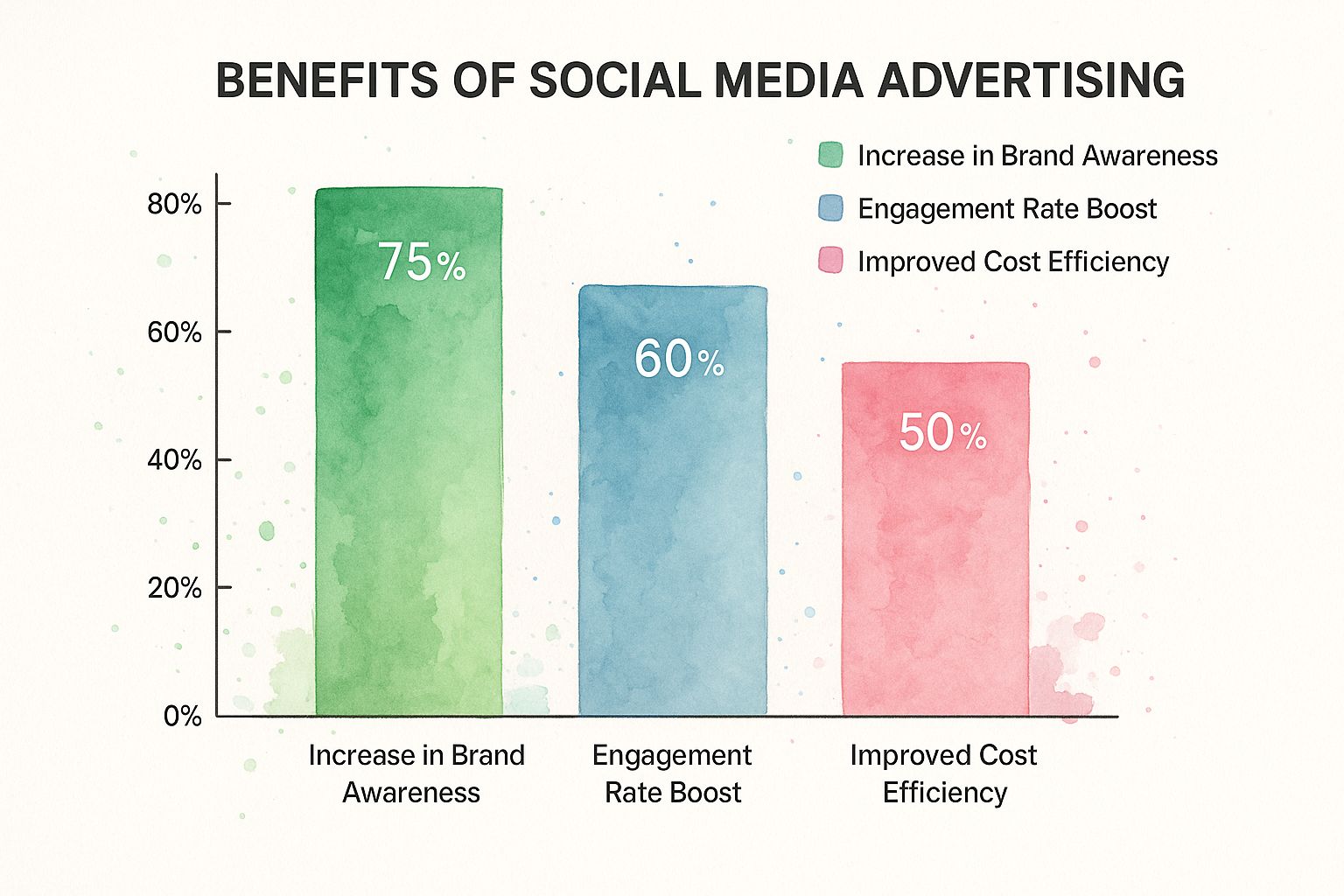
Zoals je ziet, levert een gerichte aanpak meer op dan alleen klikken. Het verhoogt de zichtbaarheid van je merk en de verbinding met je publiek — twee pijlers van duurzame, langetermijngroei.
Een Blik op de Grote Spelers in Nederland
De Nederlandse social media scene heeft zijn eigen dynamiek. Om een boodschap te creëren die echt aankomt, moet je de demografie en het gedrag van gebruikers op elk platform begrijpen. Het landschap hier verschuift voortdurend met de gewoonten van consumenten. Medio 2025 had Facebook bijvoorbeeld nog steeds een dominante positie met 72,75% van de gebruikers, gevolgd door Instagram met 10,63% en Pinterest met 4,02%. Je kunt dieper duiken in deze social media trends om je strategie echt aan te scherpen.
Om je te helpen beslissen waar je jouw advertentiebudget moet investeren, volgt hier een snelle vergelijking van de belangrijkste platforms voor Nederlandse bedrijven.
Social Media Platform Vergelijking voor Nederlandse Bedrijven
| Platform | Primair Publiek (NL) | Best Geschikt Voor | Sterke Advertentieformaten |
|---|---|---|---|
| Breed; 30-65+, diverse interesses | Community building, websiteverkeer, lokale bedrijfspromotie | Gedetailleerde targeting, Lead Ads, Dynamische Ads | |
| 18-35, visueel-gedreven consumenten | Merkbekendheid, e-commerce, lifestyle producten, influencer marketing | Stories, Reels, Carrousels, Shoppable Posts | |
| Professionals, B2B beslissers, werkzoekenden | Leadgeneratie, B2B marketing, thought leadership, recruitment | Gesponsorde Content, InMail, Lead Gen Forms | |
| TikTok | 13-24 (Gen Z), trendvolgers | Merkbekendheid, virale marketing, campagnes met user-generated content | Korte video-advertenties, Branded Hashtag Challenges |
Deze tabel geeft je een startpunt, maar de beste keuze hangt altijd af van jouw specifieke doelen en publiek.
De Juiste Keuze Maken Voor Jouw Bedrijf
Dus, hoe maak je de definitieve keuze? Begin met jezelf deze drie simpele vragen te stellen:
- Wie is mijn ideale klant? Wees specifiek. Denk na over hun leeftijd, beroep en waar ze zich mee bezighouden.
- Wat zijn mijn bedrijfsdoelstellingen? Probeer je merkbekendheid op te bouwen, leads te genereren of directe verkopen te stimuleren? Elk doel heeft een ander pad.
- Welk soort content kan ik creëren? Heb je prachtige visuals die perfect zijn voor Instagram, of ben je beter in het schrijven van diepgaande artikelen voor LinkedIn?
Het beantwoorden van deze vragen wijst je in de richting van de platforms waar jouw investering het hardst voor je zal werken. Natuurlijk hoef je dit niet allemaal alleen uit te zoeken. Onze experts kunnen je helpen een strategie te ontwikkelen die is afgestemd op jouw merk. Leer meer over onze uitgebreide social media marketing services om te zien hoe we kunnen helpen.
Uiteindelijk is verstandig investeren op de juiste kanalen de basis van succesvolle social media advertising.
Je Eerste Krachtige Advertentiecampagne Bouwen
Klaar om te beginnen, maar weet je niet waar je moet starten? Het is makkelijk om het overzicht te verliezen tussen alle opties. We gaan door die ruis heen breken en je een duidelijk stappenplan geven om je eerste campagne van de grond af aan op te bouwen.

Laten we dit opdelen in eenvoudige, beheersbare stappen. We beginnen met het stellen van meetbare doelen, zoals meer bezoekers naar je website trekken of gekwalificeerde leads vinden. Daarna duiken we in de kunst van het vinden van je publiek, waarbij we verder gaan dan de basis om mensen te targeten op basis van hun echte interesses en online gedrag.
Stap 1: Begin met Glasheldere Doelstellingen
Voordat je ook maar één euro uitgeeft, moet je één simpele vraag beantwoorden: wat probeer je te bereiken? Zonder een duidelijk doel is je campagne als een schip zonder roer. Je geeft geld uit zonder te weten of het werkt en pakt het probleem van onduidelijke marketing-ROI niet aan.
Voor een eerste social media advertising campagne vallen je doelstellingen waarschijnlijk in een van deze categorieën:
- Merkbekendheid: Simpelweg je naam bekend maken en ervoor zorgen dat de juiste mensen deze zien.
- Websiteverkeer: Potentiële klanten rechtstreeks naar je website of een specifieke landingspagina sturen.
- Leadgeneratie: Contactgegevens verzamelen, zoals e-mailadressen, van mensen die oprecht geïnteresseerd zijn.
- Verkopen: Mensen aanzetten tot een aankoop direct vanuit je advertentie.
Deze eerste beslissing vormt alles wat volgt, van het platform dat je gebruikt tot de advertentie die je creëert. Voor je allereerste campagne is het vaak een goed idee om je te richten op websiteverkeer of leadgeneratie. Deze geven je direct solide data waar je van kunt leren.
Stap 2: Definieer en Target Jouw Ideale Publiek
Dit is waar de echte kracht van social media advertising naar voren komt. Vergeet ouderwetse billboard-advertenties die naar iedereen schreeuwen maar met niemand verbinden. Hier kun je ongelooflijk specifiek zijn.
Denk verder dan simpele demografische gegevens zoals leeftijd en locatie. De echte magie gebeurt wanneer je target op:
- Interesses: Welke pagina's volgen ze? In welke onderwerpen zijn ze geïnteresseerd? Je kunt zelfs mensen targeten die interesse hebben getoond in je concurrenten.
- Gedrag: Hoe winkelen ze online? Klikken ze daadwerkelijk op advertenties? Deze gedragsaanwijzingen zijn goud waard omdat ze aangeven dat iemand klaar is om actie te ondernemen.
- Custom Audiences (Aangepaste Doelgroepen): Je kunt een lijst van je huidige klanten uploaden om "lookalike" doelgroepen te vinden—nieuwe mensen die vergelijkbare eigenschappen delen met je beste klanten.
De truc is om een gedetailleerde "buyer persona" op te bouwen. Geef deze persoon een naam, een baan en een lijst met problemen waar ze mee te maken hebben. Hoe echter je ze maakt, hoe makkelijker het is om een boodschap te creëren die echt aansluit.
Stap 3: Structureer Je Campagne voor Succes
Campagnestructuur klinkt misschien wat technisch, maar het is gewoon een logische manier om je advertenties en budget te organiseren. Denk aan een archiefkast. De Campagne is de hele kast, gewijd aan één enkel doel (zoals websiteverkeer). De Advertentiesets zijn de lades daarin, elk met een eigen specifiek publiek en budget. De Advertenties zijn de individuele bestanden in elke lade, met je verschillende afbeeldingen en teksten.
Deze opzet is perfect om te testen. Je kunt bijvoorbeeld één advertentieset draaien gericht op jonge professionals in Amsterdam en een andere op kleine ondernemers in Utrecht, beide onder dezelfde "Leadgeneratie" campagne.
Een georganiseerde aanpak is cruciaal om erachter te komen wat werkt. Nederland heeft een zeer actieve social media scene, met ongeveer 14.8 miljoen actieve gebruikers begin 2025. Platforms groeien ook snel; het potentiële advertentiebereik van Snapchat is bijvoorbeeld met 495.000 gebruikers (een stijging van 7,1%) toegenomen tussen 2024 en 2025. Een goed gestructureerde campagne is jouw sleutel om effectief op dit publiek in te spelen. Je kunt meer sociale media statistics ontdekken om je targeting aan te scherpen.
Stap 4: Stel een Slim Budget en Schema in
Eén van de grootste angsten voor nieuwe adverteerders is het budget uit de hand te laten lopen. Het goede nieuws? Jij hebt de volledige controle. Je kunt dagelijkse of looptijdbudgetten instellen voor elke advertentieset, zodat je nooit meer uitgeeft dan je van plan bent.
Voor je eerste poging, begin met een klein testbudget—misschien €15 tot €25 per dag. Het doel is hier niet om van de ene op de andere dag een miljoen verkopen te realiseren; het is om data te verzamelen. Je moet zien welke doelgroepen reageren en welke advertenties de klikken krijgen.
Laat je campagnes minstens 5-7 dagen lopen voordat je grote veranderingen doorvoert. Dit geeft het algoritme van het platform genoeg tijd om te leren en je advertenties correct te leveren. Zodra je betrouwbare data hebt en een winnende advertentie ontdekt, kun je er met vertrouwen meer geld achter zetten.
Advertentiecontent Maken Die Echt Converteert
Het perfect targeten van je publiek is een geweldige start, maar het is slechts het halve werk. Als je advertentiecreatie saai of verwarrend is, zal zelfs de meest ideale prospect er voorbij scrollen zonder een tweede blik. Hier komt je creatieve strategie om de hoek kijken—het is de vonk die een passieve scroller verandert in een actieve klant. Het doel is om een boodschap te creëren die zo overtuigend is dat het hen stopt en inspireert tot actie.
Je advertentiecontent moet meer doen dan alleen je product laten zien. Het moet een verhaal vertellen, een echt probleem oplossen en direct aansluiten bij de hoop en frustraties van je publiek. Om dit te bereiken, leunen we op een klassiek raamwerk dat ongelooflijk effectief is in het structureren van een overtuigende advertentie.
Het AIDA-Framework: Je Gids voor Overtuigende Advertenties
Het AIDA-model is een eenvoudig, vierstaps proces om een potentiële klant van bewustwording naar actie te leiden. Zie het als de verhaallijn voor je advertentie.
- Attention (Aandacht): Allereerst moet je advertentie binnen enkele seconden de aandacht trekken. Dit kun je doen met een opvallend beeld, een pakkende kop, of een vraag die een veelvoorkomend pijnpunt raakt.
- Interest (Interesse): Zodra je hun aandacht hebt, moet je hun interesse vasthouden. Leg kort uit waar je aanbod over gaat en waarom het belangrijk is voor hen. Wek net genoeg nieuwsgierigheid op om ze meer te willen laten weten.
- Desire (Verlangen): Hier leg je de verbinding. Laat hen de "na"-situatie zien—hoe hun leven of bedrijf beter zal zijn met jouw product of dienst. Gebruik testimonials of op voordelen gerichte taal om je aanbod onmisbaar te maken.
- Action (Actie): Tot slot moet je hen precies vertellen wat ze hierna moeten doen. Dit is je Call-to-Action (CTA), en deze moet onmogelijk verkeerd te begrijpen zijn.
Door je tekst en visuals rond deze vier fasen te structureren, creëer je een logische en overtuigende stroom die de gebruiker op natuurlijke wijze naar je einddoel leidt.
Visuals Die het Scrollen Stoppen
Op visueel gedreven platforms zoals Instagram en Facebook is het de afbeelding of video die je de klik oplevert. Generieke stockfoto's werken gewoon niet meer. Je visuals moeten authentiek aanvoelen en passen bij de native sfeer van het platform.
- Gebruik Hoogwaardige, Authentieke Beelden: Toon echte mensen die je product gebruiken of van je dienst genieten. Foto's die een emotie oproepen en oprecht aanvoelen, presteren consequent beter dan overdreven gepolijste, zakelijke afbeeldingen.
- Omarm Video Content: Korte video's zijn koning, vooral voor formaten zoals Reels en Stories. Een snelle, boeiende video die je product in actie toont of een nuttige tip deelt, kan veel krachtiger zijn dan een statische afbeelding.
- Optimaliseer voor Mobiel: De overgrote meerderheid van de social media gebruikers zit op hun telefoon. Zorg ervoor dat je tekst gemakkelijk te lezen is op een klein scherm en je kernboodschap overkomt, zelfs met het geluid uit, aangezien veel mensen video's zonder geluid bekijken.
Teksten Schrijven Die Verbinden en Verkopen
Je advertentietekst geeft context aan je visuals en doet het zware werk als het op overtuigen aankomt. Deze moet duidelijk, beknopt en volledig gericht zijn op de klant.
De meest effectieve advertentietekst praat niet over functies; het praat over transformaties. In plaats van te zeggen "Onze software heeft een geautomatiseerde rapportagefunctie," zeg je "Bespaar elke week uren met geautomatiseerde rapporten die rechtstreeks in je inbox worden afgeleverd."
Focus op voordelen, niet alleen op functies. Een functie is wat iets is; een voordeel is wat het doet voor de klant. Kader alles rond het oplossen van hun problemen en het helpen bereiken van hun doelen. Houd je taal simpel, direct en vrij van jargon.
Een Duidelijke Call-to-Action (CTA) Creëren
Je CTA is misschien wel het meest kritieke onderdeel van je social media advertising content. Het is de laatste instructie die hun interesse omzet in een tastbaar bedrijfsresultaat. Een zwakke of vage CTA zal je conversiepercentage absoluut kelderen.
Je CTA moet zijn:
- Specifiek: "Meer Informatie" is prima, maar "Download Je Gratis Gids" of "Shop de Nieuwe Collectie" is veel beter. Het schept een duidelijke verwachting.
- Actiegericht: Begin met een sterk werkwoord dat aanzet tot een klik, zoals "Ontvang," "Probeer," "Reserveer," of "Start."
- Visueel Prominent: Zorg ervoor dat de knop of link gemakkelijk te zien is en nog makkelijker aan te tikken is.
Uiteindelijk is een krachtige CTA het laatste puzzelstukje dat je advertentie-uitgaven omzet in meetbare resultaten. Door de gewenste actie glashelder te maken, verhoog je je kans op succes aanzienlijk. Een goed opgestelde CTA is een sleutelcomponent in het verbeteren van de prestaties van je website, en je kunt meer leren hierover door onze expertise in conversion rate optimisation te verkennen.
Meten Wat Belangrijk Is en Je ROI Bewijzen
Hoe bewijs je nu dat jouw social media advertising een slimme investering is en niet zomaar een kostenpost? Dit is de hamvraag. Het antwoord hierop scheidt campagnes die uitdoven van campagnes die een ware groeimotor worden. Om daar te komen, moet je voorbij 'vanity metrics' (ijdelheidsstatistieken zoals likes) kijken en je focussen op de data die daadwerkelijk je bedrijfsresultaten beïnvloeden.

Het is makkelijk om verdwaald te raken in een zee van verwarrende afkortingen, maar maak je geen zorgen. De sleutel is weten dat elke statistiek slechts een deel van het verhaal van je campagne vertelt. Zodra je ze leert interpreteren, kun je met vertrouwen de echte waarde aantonen die je advertenties genereren.
Belangrijke Social Media Advertising Statistieken Uitgelegd
Om een goed beeld te krijgen van je campagneprestaties, moet je de juiste cijfers bijhouden. Zie deze statistieken als het dashboard van je auto—elke meter geeft je cruciale feedback om je soepel naar je bestemming te leiden. Hier is een eenvoudige uitleg van de belangrijkste statistieken, wat ze betekenen en waarom ze belangrijk zijn voor jouw bedrijf.
| Statistiek | Wat Het Meet | Waarom Het Belangrijk Is |
|---|---|---|
| Bereik & Impressies | Bereik is het aantal unieke mensen dat je advertentie ziet. Impressies zijn het totale aantal keren dat je advertentie wordt getoond (één persoon kan het meerdere keren zien). | Dit toont de omvang van de zichtbaarheid van je advertentie. Een hoog bereik betekent dat je succesvol je merk onder de aandacht van nieuwe ogen brengt. |
| Click-Through Rate (CTR) | Het percentage mensen dat je advertentie zag en er vervolgens op klikte. | Dit vertelt je hoe overtuigend je advertentiecreatie is. Een lage CTR betekent vaak dat je beeld of kop niet genoeg aandacht trekt. |
| Cost Per Click (CPC) | Het gemiddelde bedrag dat je betaalt elke keer dat iemand op je advertentie klikt. | Dit meet direct hoe kostenefficiënt je verkeer genereert. Het doel is om dit laag te houden terwijl je kwalitatief hoogwaardige bezoekers aantrekt. |
| Conversieratio | Het percentage klikken dat resulteert in een gewenste actie, zoals een aankoop, download of ingevuld formulier. | Dit is de ultieme test van de effectiviteit van je advertentie. Het laat zien of je de juiste mensen aantrekt die klaar zijn om actie te ondernemen. |
| Return On Ad Spend (ROAS) | De totale omzet die wordt gegenereerd voor elke euro die aan advertenties wordt uitgegeven. Een 3:1 ROAS betekent dat je €3 hebt verdiend voor elke €1 die je hebt geïnvesteerd. | Dit is de meest cruciale statistiek om de ROI te bewijzen. Het koppelt je advertentie-uitgaven direct aan omzet, wat de ware financiële impact van je campagnes aantoont. |
Door deze cijfers door en door te kennen, kun je een goed gesprek voeren over prestaties. Het brengt je voorbij het tellen van 'likes' en richt de discussie op tastbare bedrijfsresultaten.
Essentiële Tracking Tools Implementeren
Om al deze vitale data te verzamelen, moet je absoluut de juiste tracking tools hebben geïnstalleerd. Zonder deze vlieg je blind. Voor platforms zoals Facebook en Instagram is de meest fundamentele tool de Meta Pixel.
Denk aan de Meta Pixel als een kleine, onzichtbare code op je website die rechtstreeks is verbonden met je advertentieaccount. Het is een klein stukje code dat je op je site plaatst en dat vervolgens rapporteert hoe gebruikers die op je advertentie hebben geklikt zich gedragen zodra ze aankomen. Deze tool helpt je om te zien welke advertenties resultaten opleveren.
Deze krachtige tool stelt je in staat om precies te zien welke advertenties specifieke acties stimuleren, zoals:
- Websitebezoeken: Bepaal welke campagnes het meest effectief zijn in het aantrekken van mensen naar je site.
- Lead-inzendingen: Tel precies hoeveel mensen je contactformulier invullen na het klikken op een advertentie.
- Aankopen: Koppel verkopen direct terug aan de specifieke advertenties die ze hebben geïnspireerd.
Eerlijk gezegd is het implementeren van de Pixel niet-onderhandelbaar voor iedereen die serieus is over social media advertising. Het levert het harde bewijs dat je nodig hebt om je advertentie-uitgaven te rechtvaardigen en slimmere beslissingen te nemen. Zoals de HubSpot's analysis benadrukt, is het volgen van klikken en conversies essentieel om te begrijpen wat echt nieuwsgierigheid wekt en verkopen stimuleert.
Een Simpel Raamwerk voor het Analyseren van Je Resultaten
Zodra je data binnenkomt, heb je een eenvoudig raamwerk nodig om er wijs uit te worden. Raak niet overweldigd. Focus je gewoon op het beantwoorden van deze drie vragen op volgorde:
- Werkt de Advertentie? Begin met je CTR. Ligt deze op of boven de benchmark voor jouw branche? Als deze achterblijft, is dat je eerste teken dat de creatie of tekst een opfrisbeurt nodig heeft.
- Is het Publiek Juist? Kijk vervolgens naar je Conversieratio. Als je een hoge CTR hebt maar een zeer lage conversieratio, trek je misschien de verkeerde menigte aan—mensen die nieuwsgierig genoeg zijn om te klikken, maar geen gekwalificeerde leads of klanten zijn.
- Is Het Winstgevend? Dit is waar ROAS centraal staat. Als je ROAS positief is en voldoet aan je bedrijfsdoelen, heb je een winnaar. Als deze laag of negatief is, is het tijd om het probleem te diagnosticeren door terug te gaan naar de eerste twee vragen.
Door je campagnes regelmatig te beoordelen met deze simpele lens, stop je met gissen en begin je te weten. Je kunt met vertrouwen inzetten op wat werkt, schrappen wat niet werkt, en continu je rendement op investering verbeteren. Deze data-gedreven aanpak is de basis van duurzame groei door social media advertising.
Hoe Je Advertentiecampagnes Optimaliseert en Opschaalt
Het live zetten van je social media advertising campagne is eigenlijk pas het begin. Het echte werk—en de echte groei—komt van wat je daarna doet: slimme, continue optimalisatie. Zo verander je een paar goede beginresultaten in een krachtige, voorspelbare machine die je bedrijf consistent voedt.
Dit gaat niet over willekeurig dingen proberen om te zien wat werkt. Het gaat om een systematisch proces van testen, analyseren en intelligent herinvesteren. Doe je dit goed, dan haal je het absolute maximum uit elke euro die je uitgeeft en voorkom je dat je kosten uit de hand lopen naarmate je groeit.
De Kracht van A/B-Testen
Zie A/B-testen als een rechtstreekse competitie tussen je advertenties. Het is een simpele maar ongelooflijk krachtige manier om erachter te komen wat jouw publiek precies aanspreekt. Het concept is eenvoudig: je maakt twee licht verschillende versies van dezelfde advertentie (Advertentie A en Advertentie B) en laat ze tegelijkertijd lopen om te zien welke betere resultaten oplevert.
De gouden regel hier is om slechts één variabele tegelijk te testen. Als je de kop en de afbeelding verandert, weet je nooit welke verandering daadwerkelijk het verschil heeft gemaakt.
Hier zijn een paar veelvoorkomende elementen die het waard zijn om te testen:
- Koppen: Trekt een directe vraag meer aandacht dan een gewaagde uitspraak?
- Visuals: Presteert een video beter dan een statische afbeelding? En hoe zit het met een strakke productfoto versus een lifestylefoto van mensen die het gebruiken?
- Advertentietekst: Is korte en krachtige tekst effectiever, of wint een meer gedetailleerde uitleg?
- Call-to-Action (CTA): Converteert "Shop Nu" beter dan "Meer Informatie"?
Door deze elementen methodisch te testen, stop je met gissen en begin je beslissingen te nemen op basis van echte data. Deze cyclus van het verfijnen van je advertenties is precies hoe je cruciale statistieken zoals je Click-Through Rate (CTR) verbetert en je Cost Per Click (CPC) verlaagt.
Herverbind en Converteer met Retargeting
Heb je ooit online een product bekeken, om vervolgens de volgende week overal op internet advertenties voor dat exacte item te zien? Dat is retargeting, en het is een van de krachtigste strategieën in social media advertising. Het geeft je de mogelijkheid om specifieke advertenties te tonen aan mensen die al op de een of andere manier met je merk hebben geïnteracteerd.
Retargeting is zo effectief omdat je niet probeert een koud publiek te overtuigen. Je heractiveert simpelweg de betrokkenheid van mensen die al interesse hebben getoond door je website te bezoeken, een item aan hun winkelwagentje toe te voegen of je social media posts te liken.
Dit "warme" publiek is veel waarschijnlijker om te converteren. Door hen op maat gemaakte advertenties te tonen die hen herinneren aan hun aanvankelijke interesse, kun je hen zachtjes terugleiden om hun aankoop af te ronden of hun aanvraag te voltooien. Het is een essentiële tactiek om elke druppel waarde uit je websiteverkeer te persen. Wij helpen bedrijven deze krachtige opvolgsystemen te bouwen; je kunt learn more about our remarketing services om te zien hoe we helpen deze anders verloren kansen te benutten.
Je Campagnes Intelligent Opschalen
Zodra je een winnende formule hebt gevonden—een advertentie die consistent een geweldige Return On Ad Spend (ROAS) levert—is de verleiding groot om het budget gewoon op te schroeven. Maar effectief opschalen vereist iets meer finesse dan simpelweg meer geld ertegenaan gooien.
Slim opschalen draait om het geleidelijk verhogen van je uitgaven terwijl je je belangrijkste statistieken nauwlettend in de gaten houdt. Een plotselinge, massale budgetverhoging kan het algoritme van het platform schokken, wat vaak leidt tot minder efficiënte uitgaven. Een veel betere aanpak is om je budget elke paar dagen met 20-25% te verhogen, maar alleen zolang de prestaties stabiel blijven.
Dit geeft het systeem de tijd om zich aan te passen en nieuwe, hoogwaardige mensen binnen je doelgroep te vinden, waardoor je je bereik en resultaten kunt laten groeien zonder je winstgevendheid te kelderen.
Veelgestelde Vragen over Social Media Advertising
Zelfs met een solide plan is het volkomen normaal om vragen te hebben wanneer je voor het eerst in social media advertising duikt. We begrijpen dat. Om je wat extra duidelijkheid te geven, hebben we antwoorden verzameld op de meest voorkomende vragen die we horen van Nederlandse ondernemers zoals jij.

Hoeveel Moet Ik Uitgeven aan Social Media Advertising?
Er is geen magisch getal, en het goede nieuws is dat je geen enorm budget nodig hebt om te beginnen. De sleutel is om te starten met een testbudget waar je je comfortabel bij voelt, misschien €15 tot €25 per dag, puur om wat initiële data te verzamelen.
Je doel is niet alleen om geld uit te geven; het is om het verstandig te investeren. Zodra je een campagne vindt die duidelijk winstgevend is met een positieve Return On Ad Spend (ROAS), kun je met vertrouwen je budget gaan opschalen. Op die manier weet je dat elke euro hard werkt voor je bedrijf.
Hoe Lang Duurt Het Voordat Ik Resultaten Zie van Mijn Advertenties?
Je zult vrijwel onmiddellijk initiële data zien zoals klikken, impressies en bereik—vaak binnen 24 tot 48 uur. Deze vroege feedback is geweldig om te weten of je advertentie de aandacht trekt.
Het meten van echte bedrijfsresultaten zoals gekwalificeerde leads en daadwerkelijke verkopen vereist echter iets meer geduld. Het duurt doorgaans enkele weken tot een maand om voldoende betekenisvolle data te verzamelen om slimme, strategische beslissingen te nemen. Onthoud dat consistentie veel belangrijker is dan streven naar perfectie van de ene op de andere dag.
Moet Ik Dit Zelf Doen of Een Bureau Inhuren?
Je eigen advertenties beheren is zeker een optie, vooral als je de tijd hebt om de platforms echt te leren kennen en op de hoogte te blijven van hun constante updates. De wereld van digitale advertenties verandert snel, en wat vandaag werkt, werkt morgen misschien niet meer.
Samenwerken met een gespecialiseerd bureau zoals het onze geeft je direct toegang tot expertise, bewezen strategieën en jarenlange praktijkervaring. Dit leidt meestal tot een snellere en hogere ROI, waardoor jij je kunt concentreren op wat je het beste doet: je bedrijf runnen.
Navigeren door de wereld van social media advertising kan complex aanvoelen, maar je hoeft het niet allemaal alleen uit te zoeken. Digitalique staat klaar om jouw strategische partner te zijn en jouw visie om te zetten in meetbaar online succes. Groei Morgen, Start Vandaag. Deel jouw visie of idee hieronder.