
Publiceer je consistent kwalitatieve artikelen, maar zie je nog steeds geen significante resultaten in Google? Dit is een veelvoorkomende frustratie onder ambitieuze ondernemers in Nederland.
Vaak ligt het probleem niet bij de kwaliteit van een enkel artikel, maar bij het ontbreken van een samenhangende strategie om je expertise te tonen. Dat is waar topische autoriteit om de hoek komt kijken.
De Oplossing Voor Lage Rankings
Zie topische autoriteit als het stevige fundament dat jouw site transformeert tot de meest betrouwbare, uitgebreide bron in je niche. Zomaar wat geweldige content posten is niet meer genoeg. Google wil het bewijs zien dat je jouw vakgebied van binnen en van buiten kent en die diepgaande kennis regelmatig deelt.
Wanneer je dit goed aanpakt, beloont Google je met hogere rankings, meer organisch verkeer en uiteindelijk meer gekwalificeerde leads. Het is geen snelle oplossing; het is een groeistrategie voor de lange termijn. Door autoriteit op te bouwen rond jouw kernthema's, verhef je jouw site van zomaar een stem tot dé bron die zowel zoekmachines als potentiële klanten vertrouwen.

Wat Je Zult Leren
In deze gids ontleden we topische autoriteit en leggen we uit waarom het onmisbaar is voor moderne SEO. Je zult zien hoe het direct aansluit bij Google's E-E-A-T-principes (Experience, Expertise, Authoritativeness, Trustworthiness) en ontdek je de strategieën die wij bij Digitalique.nl gebruiken om autoriteit op te bouwen, te meten en te benutten.
Hieronder vind je een korte samenvatting van de kerncomponenten van topische autoriteit en hun directe impact op je bedrijf.
Topische Autoriteit In Een Oogopslag
| Component | Omschrijving | Zakelijke Impact |
|---|---|---|
| Contentpijlers | Consistent diepgaande kennis tonen binnen jouw niche. | Verbetert de zichtbaarheid in zoekmachines en positioneert je als dé expert. |
| Contentclusters | Contentpijlers en clusters identificeren en organiseren. | Leidt tot efficiënte contentcreatie en verhoogt de thematische relevantie. |
| Praktische Uitvoering | Content produceren die expertise en vertrouwen uitstraalt. | Verhoogt de betrokkenheid van gebruikers en verlaagt bounce rates. |
| Resultaten Meten | Metrieken gebruiken om prestaties te volgen en de strategie aan te passen. | Maximaliseert de ROI door te focussen op onderwerpen met hoge impact. |
Gebruik de bovenstaande details om je aanpak te bepalen voordat je dieper in elke sectie duikt.
We behandelen:
- Kernprincipes: Wat betekent het echt om een autoriteit te zijn in je vakgebied en hoe toon je dat online?
- Strategische Planning: Hoe kies je de juiste onderwerpen (contentpijlers) en bouw je er clusters omheen?
- Praktische Uitvoering: Tips voor het creëren van content die niet alleen informeert, maar ook expertise en vertrouwen uitstraalt.
- Resultaten Meten: Manieren om te controleren of je inspanningen lonen en hoe je kunt bijsturen voor maximale impact.
Gewapend met deze inzichten kun je jouw website transformeren in een krachtige leadgeneratie-machine en de basis leggen voor duurzame bedrijfsgroei. Laten we beginnen.
Topische Autoriteit Simpel Uitgelegd
Laten we het jargon achterwege laten. Stel je voor dat je website een bibliotheek is. Als je maar één boek hebt over webdesign, één over social media en een ander over e-mailmarketing, is je bibliotheek nergens echt een expert in. Het is slechts een verzameling losse onderwerpen.
Maar wat gebeurt er als je een hele vleugel bouwt die enkel gewijd is aan e-commerce webdesign? Deze vleugel zou vol staan met alles van Shopify-ontwikkeling en WooCommerce-plugins tot de beveiliging van betaalpoorten en user experience design.
Plotseling wordt jouw bibliotheek de definitieve, toonaangevende autoriteit op dat ene onderwerp. Dat is topische autoriteit in een notendop.

Het is het strategische proces van het creëren van een diep, onderling verbonden web van content rond een specifiek onderwerp. Dit signaleert aan zoekmachines zoals Google dat je een echte expert bent, wat direct je 'Expertise' en 'Authoritativeness' versterkt—twee belangrijke pijlers van Google's E-E-A-T-richtlijnen.
Autoriteit Versus Populariteit
Het is makkelijk om topische autoriteit te verwarren met andere SEO-statistieken zoals Domein Autoriteit (DA). Zie DA als een maatstaf voor de algehele populariteit van je website, voornamelijk beïnvloed door hoeveel andere sites naar je linken. Een hoge DA is geweldig, maar het bewijst niet dat je een expert bent op een specifiek onderwerp.
Topische autoriteit draait daarentegen volledig om geloofwaardigheid en diepgaande kennis binnen een specifieke niche.
Je kunt een lagere Domein Autoriteit hebben dan een grote concurrent, maar hen toch verslaan op specifieke onderwerpen waar je superieure expertise hebt getoond. Google hecht meer waarde dan ooit aan vakkennis.
Dit is fantastisch nieuws voor gespecialiseerde bedrijven. Het betekent dat je geen enorm linkbuilding-budget nodig hebt om te concurreren. In plaats daarvan kun je je richten op het worden van de meest complete bron in jouw vakgebied—iets wat volledig binnen je eigen controle ligt.
Waarom Het Nu Belangrijker Is Dan Ooit
Dus, waarom is dit zo cruciaal geworden? Vroeger kon je misschien goed scoren door je op één zoekwoord te richten met één sterk artikel. Die tijd is voorbij. De algoritmes van Google zijn nu veel geavanceerder; ze begrijpen context en de relaties tussen verschillende concepten.
Wanneer je consequent hoogwaardige content publiceert die een onderwerp vanuit elke mogelijke hoek belicht, creëer je een krachtige "content hub". Dit bewijst aan Google dat jouw site een betrouwbare informatiebron is.
Hierdoor is Google eerder geneigd om:
- Je nieuwe content sneller te ranken, omdat het je site al vertrouwt op dat onderwerp.
- Je pagina's te tonen voor een breder scala aan gerelateerde zoekopdrachten, wat je zichtbaarheid enorm vergroot.
- Je bedrijf als een geloofwaardige leider te zien, wat vertrouwen opbouwt bij potentiële klanten nog voordat ze erover nadenken contact op te nemen.
Het opbouwen van topische autoriteit is hoe je van het simpelweg beantwoorden van een vraag verschuift naar het definitieve antwoord worden. Het is een fundamentele strategiewijziging, waarbij je niet langer achter losse zoekwoorden aanjaagt, maar hele conversaties in je sector domineert. Deze aanpak wint niet alleen het vertrouwen van algoritmes; belangrijker nog, het wint het vertrouwen van je toekomstige klanten.
De Basis Leggen Voor een Sterke Contentstrategie
Echte topische autoriteit bouw je niet zomaar op. Het is een bewust, gestructureerd proces, vergelijkbaar met een architect die zorgvuldig een wolkenkrabber ontwerpt. Je kunt niet zomaar beginnen met bouwen; je hebt een oersterk fundament nodig. Dit fundamentele werk draait om het in kaart brengen van je content-universum om je expertise strategisch te verankeren.
De allereerste stap is het identificeren van je 'contentpijlers'. Zie dit als de belangrijkste, dragende zuilen van je expertise. Ze vertegenwoordigen de kernthema's waarvoor jouw bedrijf absoluut bekend moet staan. Dit is niet zomaar een lijst van je diensten; het zijn de brede kennisgebieden waar je enorme waarde kunt bieden aan je publiek.
Je Kerncontentpijlers Identificeren
Hoe kom je erachter wat jouw pijlers zouden moeten zijn? Het begint met het stellen van een paar eerlijke, kritische vragen:
- Wat zijn onze belangrijkste bedrijfsdoelen? Als je leads wilt genereren voor e-commerce klanten, dan is een pijler als 'E-commerce Groeistrategieën' volkomen logisch.
- Waar liggen onze klanten 's nachts wakker van? Als ze constant worstelen met online zichtbaarheid, kan 'Lokale SEO voor MKB' een andere krachtige pijler zijn.
- Waar zijn we écht experts in? Je moet onderwerpen kiezen waar je team daadwerkelijke, praktische ervaring mee heeft en unieke inzichten kan delen die je concurrenten simpelweg niet kunnen evenaren.
Zodra je 2-4 kernpijlers hebt vastgesteld, heb je de blauwdruk voor je hele contentplan. Elk stuk content dat je vanaf nu creëert, moet een van deze fundamentele onderwerpen direct ondersteunen, waardoor je autoriteit wordt versterkt in de ogen van zowel Google als je toekomstige klanten.
Topicclusters Bouwen Voor Diepgang
Met je pijlers stevig op hun plek, is het tijd om 'topicclusters' rondom elke pijler te bouwen. Als een pijler een dragende zuil is, dan zijn topicclusters de individuele kamers en planken die eraan verbonden zijn. Elk cluster is een gefocuste verzameling van artikelen, gidsen en bronnen die een subonderwerp vanuit elke mogelijke hoek verkennen.
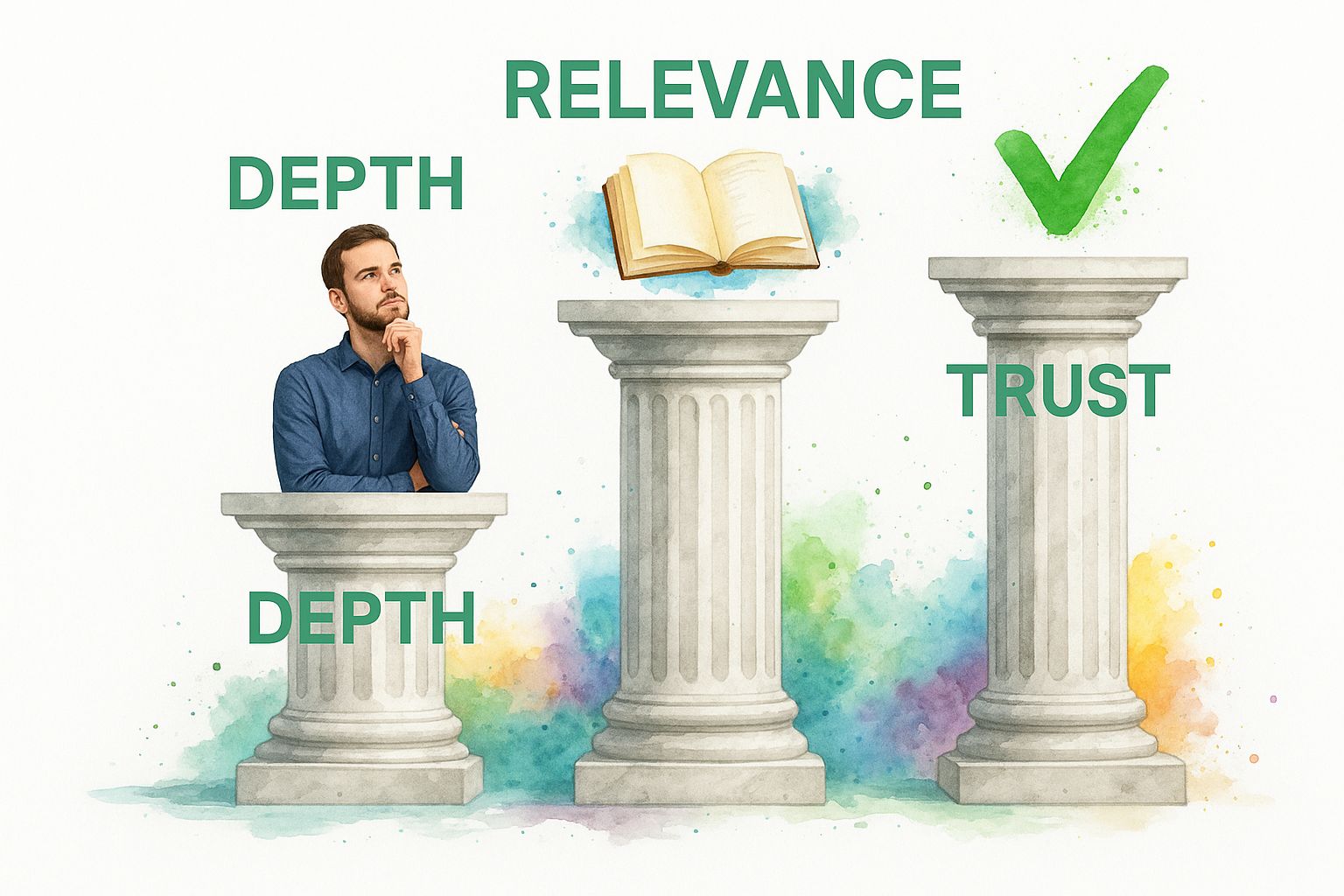
Deze structuur draait om het bewijzen van je diepgang. Als wij bij Digitalique.nl bijvoorbeeld 'Leadgeneratie' als kernpijler zouden kiezen, zouden we specifieke clusters kunnen opbouwen rond subonderwerpen zoals:
- Lokale SEO: Dit cluster zou artikelen bevatten over het optimaliseren van een Google Bedrijfsprofiel, het uitvoeren van lokaal zoekwoordenonderzoek en het belang van citation building.
- PPC-campagnes: Hier zouden we gidsen maken over het opzetten van Google Ads, het maximaliseren van je advertentiebudget en het schrijven van advertentieteksten die daadwerkelijk converteren.
- Content Marketing Funnels: Dit zou content bevatten die uitlegt hoe je artikelen kunt afstemmen op de klantreis, van de eerste bewustwordingsfase tot de uiteindelijke beslissing.
Deze hele aanpak, die een essentieel onderdeel is van elk solide content marketing plan, zorgt ervoor dat je een onderwerp zo uitgebreid behandelt dat Google geen andere keuze heeft dan jou als dé expert te erkennen.
Het Belang van Strategische Interne Links
Het laatste, en misschien wel meest cruciale, onderdeel van dit fundament is strategische interne linking. Dit is het cement dat je pijlers en clusters bij elkaar houdt. Zie deze links als de gangen en deuren die alle verschillende secties van je expertise met elkaar verbinden. Ze begeleiden zowel gebruikers als zoekmachinecrawlers door je content en laten duidelijk zien hoe alles met elkaar in verband staat.
Elke keer dat je een nieuw artikel binnen een cluster publiceert, moet je het teruglinken naar de hoofdpijlerpagina. Net zo belangrijk is het om te linken tussen gerelateerde artikelen binnen hetzelfde cluster. Dit creëert een dicht, onderling verbonden web dat bewijst dat je het onderwerp van A tot Z hebt behandeld, waardoor je website een onmiskenbare content hub wordt.
Dit soort strategische investering wordt steeds belangrijker. Kijk maar naar de bloeiende startup-scene hier in Nederland. De scale-up ratio—dat wil zeggen, startups die met succes de groeifase bereiken—schoot omhoog van 13% in 2019 naar een indrukwekkende 21,5% in 2024. Deze groei wordt gevoed door bedrijven die vroeg investeren in het opbouwen van een gezaghebbende digitale aanwezigheid door middel van precies dit soort slimme contentstrategie. Het helpt hen door de ruis heen te breken en een duurzaam bedrijf op te bouwen.
Hoe Je Content Creëert Die Je Expertise Bewijst
Nu je contentpijlers en -clusters zijn uitgestippeld, is het tijd om van planning naar uitvoering over te gaan. Hier begint het echte werk: het creëren van de hoogwaardige content die je topische autoriteit daadwerkelijk opbouwt. Het doel is eenvoudig maar ambitieus: maak van jouw artikel de allerbeste, meest behulpzame bron op het internet voor elk subonderwerp dat je behandelt.
Simpelweg content produceren is niet genoeg. Elk stuk moet met precisie worden gemaakt, waaruit blijkt dat je diep begrijpt waar je publiek—en zoekmachines—naar op zoek zijn. Het betekent dat je veel verder moet gaan dan het oppervlak en je expertise met elk woord moet bewijzen.
Elke Vraag Onthullen Met Diepgaand Zoekwoordenonderzoek
De beste expertcontent begint met het begrijpen van elke vraag die je publiek stelt. Standaard zoekwoordenonderzoek raakt slechts de oppervlakte en vindt alleen de meest voor de hand liggende termen. Om echte autoriteit op te bouwen, moet je veel dieper graven. We hebben het over het ontdekken van de long-tail zoekwoorden—die langere, specifiekere vragen die je precies vertellen waar je klanten mee worstelen.
Zie het zo: dit zijn de vervolgvragen die iemand in een echt gesprek zou stellen. Dus in plaats van je alleen te richten op "lokale SEO," moet je zoekopdrachten vinden als "hoe krijg je backlinks voor een lokaal bedrijf" of "beste schema markup voor de website van een loodgieter." Schema markup is een soort code die je aan je website toevoegt om zoekmachines te helpen de inhoud beter te begrijpen.
Wij hebben een paar favoriete methoden om deze gouden kansen te vinden:
- Google's "Mensen vragen ook"-sectie: Dit is een directe lijn naar waar gebruikers vervolgens nieuwsgierig naar zijn. We analyseren deze om ervoor te zorgen dat onze content op natuurlijke wijze hun volgende logische vraag beantwoordt.
- Concurrentieanalyse: We pluizen de best scorende artikelen voor jouw onderwerp uit om te zien welke vragen zij goed beantwoorden, en belangrijker nog, welke ze hebben gemist. Die leemte is waar jij kunt uitblinken.
- Forums en Community's Doorzoeken: Plekken als Reddit of niche-industrieforums zijn schatkamers van echte gebruikersvragen. Hier kom je erachter hoe je publiek daadwerkelijk over hun problemen praat.
Door een masterlijst te maken van elke denkbare vraag, creëer je in feite een blauwdruk voor content die onmiskenbaar compleet is. Dit stuurt een krachtig signaal naar Google dat je het onderwerp vanuit elke hoek hebt behandeld.
Contentbriefings Maken Voor Vlekkeloze Uitvoering
Voordat er ook maar één woord wordt geschreven, stellen we een gedetailleerde contentbriefing op. Zie het als het bouwplan voor elk artikel. Het zorgt ervoor dat elk stuk content uitgebreid, accuraat en perfect afgestemd is op je doel om topische autoriteit op te bouwen.
Een zwakke briefing leidt tot zwakke, generieke content. Een sterke briefing garandeert daarentegen dat elk artikel een strategische aanwinst is.
Onze contentbriefings zijn geen suggesties; het zijn strategische routekaarten. Ze zorgen ervoor dat elke schrijver het kerndoel van het artikel, de doelgroep, de belangrijkste te beantwoorden vragen en zijn specifieke rol binnen het topiccluster begrijpt.
Deze zorgvuldige planning neemt al het giswerk weg. Het zorgt ook voor consistentie over de hele linie, wat cruciaal is als je een groot volume aan content produceert om expertise te vestigen. Het is het verschil tussen het publiceren van een willekeurige verzameling artikelen en het opbouwen van een samenhangende bibliotheek van expertkennis.
E-E-A-T In Je Schrijfstijl Verwerken
Google's E-E-A-T (Experience, Expertise, Authoritativeness en Trustworthiness) principes zijn niet zomaar modewoorden; ze zijn de kwaliteitsnorm. Om je expertise te bewijzen, moet je deze principes direct in je schrijfstijl verwerken.
Dit gaat niet over zeggen dat je een expert bent. Het gaat erom dat je je werk laat zien en het bewijs levert om het te onderbouwen.
Hoe je E-E-A-T in de praktijk demonstreert:
- Toon Ervaring Uit Eerste Hand: Vertel je lezers niet alleen wat ze moeten doen—laat het ze zien. Gebruik zinnen als: "In onze ervaring met klanten..." of "Hier is een fout die we hebben gemaakt en wat we ervan hebben geleerd..." Dit toont aan dat je praktijkervaring hebt.
- Citeer Geloofwaardige Bronnen: Als je statistieken of data gebruikt, link dan naar hoogwaardige, niet-concurrerende bronnen. Een link naar een gerespecteerd industrieonderzoek of een Google Search Central blogpost bouwt direct vertrouwen op.
- Bied Unieke Inzichten: Je content moet meer bieden dan een herhaling van wat al goed scoort. Voeg je eigen unieke perspectief, analyse of data toe. Dit is wat een echte leider onderscheidt van een volger.
- Benadruk Expertise van de Auteur: Zorg voor duidelijke auteursbiografieën die relevante ervaring en referenties benadrukken. Dit vertelt zowel je lezers als Google dat de content afkomstig is van een gekwalificeerde bron.
Door deze principes consequent toe te passen, stop je met het simpelweg schrijven van artikelen. Je begint met het creëren van bedrijfsmiddelen die je meesterschap bewijzen, echt vertrouwen opbouwen bij je publiek en Google elke reden geven om jou als de definitieve autoriteit in je vakgebied te zien.
Je Voortgang Volgen en Meten Wat Telt
Dus, je steekt er werk in. Maar hoe weet je of het daadwerkelijk loont? Topische autoriteit kan een beetje abstract aanvoelen, dat begrijpen we. Het goede nieuws is dat er concrete prestatie-indicatoren (KPI's) zijn die je kunt volgen om je vooruitgang in zwart-wit te zien. Dit gaat niet over duimen en hopen op het beste; het gaat erom data te gebruiken om te bevestigen dat Google je eindelijk begint te zien als dé expert in jouw vakgebied.
Echte autoriteit opbouwen is een marathon, geen sprint. Maar door de juiste statistieken in de gaten te houden, zie je duidelijk bewijs van je vooruitgang, lang voordat je de finish bereikt. Het draait allemaal om het verzamelen van de inzichten die je nodig hebt om te verdubbelen op wat werkt en je strategie bij te sturen voor de grootste impact.

Introductie van Topic Share: Je Autoriteitsbenchmark
Een van de krachtigste manieren om topische autoriteit te meten is door te kijken naar je ‘Topic Share’. Zie het als jouw stuk van de taart voor een specifiek online gesprek. Het is het percentage van het totale organische verkeer dat je site krijgt van een zorgvuldig geselecteerde set zoekwoorden die allemaal gerelateerd zijn aan je hoofdpijler.
Stel dat je pijler ‘Leadgeneratie’ is. Je zou beginnen met het samenstellen van een lijst van honderden, misschien duizenden, gerelateerde zoekwoorden. Met een tool als Ahrefs of Semrush kun je vervolgens je zichtbaarheid in dit hele zoekwoordenuniversum volgen en het rechtstreeks vergelijken met je concurrenten. Wanneer je je Topic Share ziet stijgen, is dat een direct, krachtig signaal dat je autoriteit groeit.
Deze aanpak is bijzonder relevant voor Nederlandse bedrijven in gespecialiseerde sectoren. De Topic Share van een site—het aandeel van het verkeer dat het krijgt van zoekwoorden binnen een onderwerp vergeleken met concurrenten—is een belangrijke indicator van autoriteit. Techbedrijven in Nederland die zich richten op e-commerce kunnen bijvoorbeeld hun autoriteit meten door hun verkeersaandelen van relevante zoekwoordensets op te tellen. En aangezien 15% van de dagelijkse Google-zoekopdrachten gloednieuw is, helpt het opbouwen van sterke topische autoriteit je een groter deel van dat opkomende verkeer te veroveren.
Groei in Zoekwoorden en Topposities Volgen
Naast het grote plaatje van verkeersaandeel, moet je ook de details van je zoekwoordrankings induiken—zowel de breedte als de diepte. Een cruciale statistiek is het totaal aantal zoekwoorden waarvoor je pijler- en clusterpagina's in de top 100 scoren. Naarmate je autoriteit groeit, zul je merken dat je pagina's vanzelf beginnen te ranken voor steeds meer gerelateerde zoekopdrachten, zelfs voor zoektermen waar je niet specifiek op hebt gericht.
Wat nog veelzeggender is, is het aantal zoekwoorden dat in de topposities (1-10) rankt. Een gestage toename hier bewijst dat Google niet alleen je relevantie ziet, maar ook genoeg vertrouwen heeft om je content als het definitieve antwoord te presenteren. Het is een duidelijk teken dat je uitgebreide contentstrategie doel treft.
Wij raden aan om deze belangrijke rankingstatistieken nauwlettend in de gaten te houden:
- Totaal Gerankte Zoekwoorden (Top 100): Dit toont het algehele bereik en de relevantie van je contentcluster.
- Zoekwoorden op Pagina Eén (Top 10): Een sterke indicator van groeiende autoriteit en serieus verkeerspotentieel.
- Zoekwoorden in de Top 3: Dit is de 'sweet spot' waar de overgrote meerderheid van de klikken plaatsvindt.
Door deze statistieken in de loop van de tijd te volgen, krijg je een glashelder beeld van je voortgang. Onze SEO services leunen zwaar op deze KPI's om tastbare groei voor onze klanten aan te tonen.
Gebruikersbetrokkenheid Analyseren
Vergeet tot slot niet dat Google kijkt hoe mensen met je content omgaan. Positieve gebruikerssignalen zijn een enorme blijk van vertrouwen in de kwaliteit en waarde die je levert. Wanneer mensen langer blijven, meer lezen en niet onmiddellijk terugklikken naar de zoekresultaten, vertelt dit Google dat je content zijn werk heeft gedaan en hun zoekvraag heeft beantwoord.
Hoge betrokkenheid is het ultieme bewijs van expertise. Het toont aan dat echte mensen je content oprecht nuttig vinden, en dat is precies wat de algoritmes van Google willen belonen.
Hier is een overzicht van de belangrijkste statistieken om te monitoren en de tools die je kunt gebruiken om ze te volgen.
Belangrijke Metrieken Voor het Volgen van Topische Autoriteit
| Metriek | Wat Het Meet | Aanbevolen Tool |
|---|---|---|
| Gemiddelde Tijd op Pagina | Hoe lang bezoekers op een specifieke pagina blijven, wat duidt op boeiende en uitgebreide content. | Google Analytics |
| Bounce Rate | Het percentage bezoekers dat vertrekt na slechts één pagina te hebben bekeken. Een lager percentage is beter. | Google Analytics |
| Pagina's per Sessie | Het gemiddelde aantal pagina's dat een gebruiker in één sessie bezoekt. Een hoger aantal duidt op sterke interne links. | Google Analytics |
| Organisch Verkeer | Het totale aantal bezoekers afkomstig van zoekmachines, wat de algehele zichtbaarheid toont. | Google Analytics, Google Search Console |
| Zoekwoordrankings | De positie van je site in de zoekresultaten voor specifieke zoekwoorden, wat relevantie en autoriteit aangeeft. | Ahrefs, Semrush, Google Search Console |
| Topic Share | Het percentage verkeer van je site voor een gedefinieerde set zoekwoorden versus concurrenten. | Ahrefs, Semrush (met aangepaste configuratie) |
Door deze kwantitatieve rankingstatistieken te combineren met de kwalitatieve data van gebruikersbetrokkenheid, krijg je een compleet en accuraat beeld van hoe je topische autoriteit daadwerkelijk groeit. Het gaat niet alleen om cijfers; het gaat om het begrijpen van het verhaal dat ze vertellen.
Autoriteit Omzetten in Leads en Verkoop
Hoge rankings en veel verkeer zijn mooie mijlpalen, maar ze betalen de rekeningen niet. Het echte doel is duurzame bedrijfsgroei. Hier leggen we de verbinding tussen je zuurverdiende topische autoriteit en je bedrijfsresultaat—het omzetten van die expertstatus in daadwerkelijke leads en verkopen.
Wanneer je een erkende autoriteit wordt, verandert er iets fundamenteels. Je stopt met het najagen van klanten en begint ze aan te trekken. Potentiële klanten die jouw merk consequent vinden met de beste, meest uitgebreide antwoorden, beginnen je te vertrouwen lang voordat ze erover denken om te bellen. Dit vooraf opgebouwde vertrouwen is je krachtigste verkoopinstrument.
Van Vertrouwde Bron naar Gewaardeerde Partner
Denk even na over je eigen aankoopproces. Als je een oplossing nodig hebt, kies je dan het eerste bedrijf dat verschijnt, of degene die je herhaaldelijk heeft geholpen het probleem te begrijpen? Autoriteit positioneert jou als die laatste. De leads die je genereert zijn niet langer koud; het zijn warme prospects die jou al zien als een geloofwaardige, behulpzame expert.
Dit verkort de verkoopcyclus drastisch. Je team kan de basisintroducties overslaan en direct diepgaande gesprekken voeren over het oplossen van specifieke problemen, omdat je content al het voorbereidende werk heeft gedaan.
De go-to bron in je niche worden betekent dat verkoopgesprekken beginnen met: "Oké, hoe kunnen jullie me helpen?" in plaats van "Wie waren jullie ook alweer?" Deze simpele verschuiving is een absolute gamechanger voor je conversieratio's.
Praktische Strategieën voor Conversie
Nu, het omzetten van je autoriteit in omzet vereist een plan. Het is niet genoeg om alleen briljante content te hebben; je moet je lezers voorzichtig begeleiden naar de volgende stap.
Hier zijn een paar praktische strategieën die wij inzetten:
- Strategische Call-to-Actions (CTA's): Beëindig je artikelen niet zomaar met een algemeen "neem contact op". Wij plaatsen relevante, contextuele CTA's binnen je content. In een diepgaand artikel over lokale SEO kan de CTA bijvoorbeeld een gratis Google Bedrijfsprofiel audit aanbieden.
- Content als Verkooptool: We zorgen ervoor dat je verkoopteam gewapend is met je beste artikelen. Wanneer een prospect een specifieke vraag heeft, kan je team een link sturen naar een gedetailleerde gids die je hebt geschreven. Dit versterkt de expertise van je bedrijf en voegt enorm veel waarde toe aan het gesprek.
- Lead Magnets Die Waarde Bewijzen: Bied hoogwaardige downloadbare bronnen aan zoals checklists, whitepapers of casestudy's in ruil voor een e-mailadres. Dit is een klassieke, effectieve manier om leads te verzamelen die actief op zoek zijn naar de oplossingen die jij biedt.
Vertrouwen opbouwen door expertise is belangrijker dan ooit. De recente toezegging van de Nederlandse overheid van € 5,25 miljard voor digitale innovatie en de bestrijding van desinformatie toont een nationale focus op digitaal vertrouwen. Terwijl zij werken aan het tegengaan van nepnieuws—een probleem dat 90% van de burgers als cruciaal beschouwt—zullen bedrijven die zich als geloofwaardige, gezaghebbende bronnen positioneren, vanzelf een aanzienlijk concurrentievoordeel behalen.
Uiteindelijk is je topische autoriteit het fundament waarop sterke klantrelaties worden gebouwd. Door je expertise strategisch te koppelen aan je verkoopproces via slimme linkbuilding tactics, transformeer je je content van een simpele marketinguitgave in een krachtig, omzet genererend bedrijfsmiddel.
Veelgestelde Vragen Over Topische Autoriteit
Terwijl je deze strategie begint te begrijpen, komen er altijd een paar vragen naar boven. Dat snappen we. Hier zijn enkele duidelijke antwoorden op de vragen die we het vaakst horen over het opbouwen van de autoriteit die echte groei stimuleert.
Hoe Lang Duurt Het om Topische Autoriteit Op te Bouwen?
Laten we duidelijk zijn: echte autoriteit opbouwen is een langetermijnspel, geen snelle overwinning. De tijdlijn hangt echt af van hoe competitief je branche is en, eerlijk gezegd, hoe consistent je kunt zijn met het leveren van echt geweldige content.
Over het algemeen zul je binnen 3-6 maanden bemoedigende tekenen zien, zoals betere zoekwoordposities en een mooie stijging in organisch verkeer. Maar om je niche echt te domineren en de onbetwiste expert te worden, vooral in een competitief veld, kijk je waarschijnlijk naar een jaar of meer van gericht werk. Het doel is gestage, duurzame vooruitgang, niet onmiddellijke perfectie.
Kan een Klein Bedrijf Concurreren met Grote Websites?
Absoluut. Sterker nog, dit is waar kleiner zijn je superkracht is. Een grote, kapitaalkrachtige concurrent probeert misschien een expert te zijn in alles, zoals 'digitale marketing' in het algemeen. Dat is hun zwakte.
Als kleiner, wendbaarder bedrijf kun je diep gaan en de absolute autoriteit worden in een zeer specifieke niche—zeg, 'SEO voor lokale bouwbedrijven in Nederland'. Door die niche te domineren, bouw je veel diepere, zinvollere autoriteit op dan een reus die alles voor iedereen probeert te zijn. Deze laserfocus trekt juist hoogwaardige klanten aan die op zoek zijn naar een specialist, geen generalist.
Wat Is het Verschil Tussen Topische en Domein Autoriteit?
Dit is een heel belangrijke om goed te begrijpen. Domein Autoriteit (een metriek populair gemaakt door Moz) is een algemene score. Het probeert het algehele rankingpotentieel van een website te voorspellen en wordt sterk beïnvloed door backlinks. Zie het als algemene populariteit.
Topische autoriteit, daarentegen, draait volledig om context. Een grote nieuwssite heeft misschien een torenhoge Domein Autoriteit, maar het heeft nul topische autoriteit over een onderwerp dat het nooit behandelt, zoals 'e-commerce conversie optimalisatie'. Het valt gewoon niet binnen hun expertise.
De algoritmes van Google worden elke dag slimmer en belonen steeds vaker echte vakkennis. De bewezen autoriteit van je site binnen je niche weegt voor rankings vaak zwaarder dan een generieke Domein Autoriteit score ooit zou kunnen.
Hoeveel Artikelen Heb Ik Nodig voor een Topiccluster?
Er is hier geen magisch getal. Het echte doel is niet om een specifiek aantal artikelen te halen; het is om volledig en onmiskenbaar compleet te zijn. Je missie is om elke vraag te beantwoorden die je ideale klant heeft over een bepaald subonderwerp.
Begin met diepgaand onderzoek om al die gerelateerde vragen te vinden. Het aantal artikelen dat je nodig hebt, is simpelweg hoeveel er nodig zijn om ze allemaal grondig te beantwoorden. Voor een vrij eenvoudig onderwerp kunnen dat 5-7 artikelen zijn. Voor iets complexers en competitievers, zou je gemakkelijk 20 of meer nodig kunnen hebben. Kies altijd voor diepgang en kwaliteit boven het simpelweg halen van een getal.
Klaar om de autoriteit op te bouwen die jouw bedrijf echt verdient? Bij Digitalique.nl schrijven we niet zomaar content; we bouwen datagedreven strategieën die jouw expertise omzetten in je krachtigste troef om klanten aan te trekken. Laat zoals altijd je commentaar hieronder achter. We waarderen jullie opinies.
Discover our SEO and Content Marketing services today