
Het is geen geheim meer: een toppositie in Google is cruciaal voor jouw bedrijf. Is jouw website onzichtbaar voor potentiële klanten? Worstel je met lage bezoekersaantallen en onduidelijke marketingresultaten? Deze gids is speciaal ontworpen voor drukke Nederlandse ondernemers en marketeers zoals jij. We laten je precies zien wat er nodig is om jouw website bovenaan in Google te krijgen – van het doorgronden van je klant tot het bouwen van een website die Google volledig vertrouwt. Geen wollige theorie, maar concrete stappen voor duurzame online groei.
Jouw Gids naar de Top van Google
Als ondernemer weet je dat online zichtbaarheid geen extraatje meer is; het is de motor van je bedrijf. Wanneer een potentiële klant een oplossing zoekt, is de eerste stap bijna altijd een zoekopdracht in Google. De uitdaging is niet alleen online aanwezig zijn, maar gevonden worden op precies dat moment. Dat is de essentie van je website bovenaan in Google krijgen.
De digitale marktplaats wordt gedomineerd door één speler. In Nederland heeft Google een duizelingwekkend marktaandeel van ongeveer 89%. Dat betekent dat bijna negen van de tien potentiële klanten Google gebruiken om producten en diensten te vinden. Hoog scoren is dus geen voordeel, het is een absolute noodzaak om jouw doelgroep te bereiken. Wil je meer cijfers? Statista heeft een actueel overzicht van de Nederlandse zoekmachinemarkt.
De Vier Pijlers van Succes
Om die felbegeerde toppositie te bereiken, hebben we een gestructureerde aanpak nodig. Zie het als het bouwen van een huis: je start met een solide fundering, bouwt sterke muren, richt het praktisch in en zorgt voor een goede reputatie in de buurt. SEO werkt precies zo, gebaseerd op een paar kernonderdelen die naadloos samenwerken. We breken het hele proces op in vier duidelijke pijlers, zonder complex jargon.
SEO draait niet om het slim af zijn van Google. Het gaat erom dat je samen met Google de beste zoekresultaten levert aan gebruikers. Jouw succes hangt af van hoe goed je jouw bedrijfsdoelen weet af te stemmen op de behoeften van je klant.
Deze gids is opgebouwd rondom deze vier pijlers en geeft je een heldere routekaart. We duiken in elk onderdeel met praktisch advies dat je direct kunt toepassen.
Laten we eerst een snel overzicht bekijken van de kerncomponenten die we in deze gids behandelen.
De Vier Pijlers voor Google Ranking Succes
| Pijler | Wat Betekent Dit Voor Jou? |
|---|---|
| Zoekwoordenstrategie | Ontdek de exacte woorden en zinnen die jouw ideale klanten gebruiken wanneer ze op zoek zijn naar een oplossing zoals die van jou. |
| Contentcreatie | Creëer waardevolle, betrouwbare content die de vragen van je klanten beantwoordt en jou als expert positioneert. |
| On-Page Optimalisatie | Structureer je webpagina's zo dat Google feilloos begrijpt waar ze over gaan en waarom ze relevant zijn voor de zoeker. |
| Autoriteit Opbouwen | Bewijs aan Google dat jouw website een geloofwaardige en gerespecteerde bron is binnen jouw branche. |
Deze vier pijlers vormen samen de strategie die jouw website naar de top zal brengen. Laten we beginnen met de fundering: je zoekwoordenstrategie.
De Zoekwoorden Vinden die Jouw Klanten Echt Gebruiken
Om jouw website bovenaan in Google te krijgen, moet je denken als jouw klanten. Dit betekent dat je voorbij het giswerk moet komen en moet graven naar de exacte woorden en zinnen die ze in de zoekbalk typen. Dit is niet zomaar een stap; het is de volledige fundering van een winnende SEO-strategie.
Het gaat niet alleen om wat mensen zoeken, maar waarom. Zijn ze alleen informatie aan het verzamelen, of staan ze op het punt de portemonnee te trekken? Het beantwoorden van die vraag is hoe je content creëert die precies op het juiste moment raak is.
De Zoekintentie Begrijpen
Achter elke zoekopdracht zit een doel. We noemen dit de zoekintentie. Voor een ondernemer vallen deze intenties over het algemeen in een paar hoofdcategorieën:
- Informatieve Intentie: De gebruiker is op jacht naar een antwoord. Denk aan zoekopdrachten als "hoe start ik een zakelijke rekening" of "wat is btw". Ze willen simpelweg informatie.
- Commerciële Intentie: Hier is de gebruiker in de onderzoeksfase, bezig met het afwegen van opties voor een aankoop. Je ziet zoekopdrachten als "beste boekhoudsoftware voor zzp'ers" of "Digitalique vs concurrent reviews".
- Transactionele Intentie: Dit is waar het geld zit. De gebruiker is klaar om nu te handelen. Dit zijn super specifieke zoekopdrachten zoals "boekhouder inhuren in Utrecht" of "aanmelden voor Digitalique".
Het kennen van dit verschil is absoluut cruciaal. Je zou geen verkooppagina pushen naar iemand die alleen een simpele definitie wil, toch? Door je content af te stemmen op de intentie van de gebruiker, maak je een enorme sprong richting een toppositie in Google.
Verder Kijken dan Voor de Hand Liggende Zoekwoorden
De meeste bedrijven vallen in de valkuil om zich te richten op brede, voor de hand liggende zoekwoorden. Een accountant zou bijvoorbeeld voor "accountant" kunnen gaan. Het lijkt logisch, maar de concurrentie is moordend en trekt vaak een publiek aan dat nog niet klaar is om te kopen. Het echte goud zit in long-tail zoekwoorden.
Dit zijn langere, veel specifiekere zinnen die jouw ideale klanten gebruiken. Zeker, ze hebben een lager zoekvolume, maar de mensen achter die zoekopdrachten staan veel, veel dichter bij een beslissing.
Zie het als vissen. Een breed zoekwoord is als het uitwerpen van een enorm net in de open oceaan – je vangt misschien iets, maar je krijgt ook veel rommel mee. Long-tail zoekwoorden zijn als het gebruiken van specifiek aas op een plek waar je weet dat jouw doelvis zwemt.
In plaats van alleen "accountant", zou een veel krachtiger long-tail zoekwoord "accountant voor zzp'ers in Utrecht" zijn. Iedereen die dat zoekt, weet precies wat hij nodig heeft en waar. Eén bezoeker van die zoekopdracht is meer waard dan honderd mensen die alleen maar algemene info zoeken.
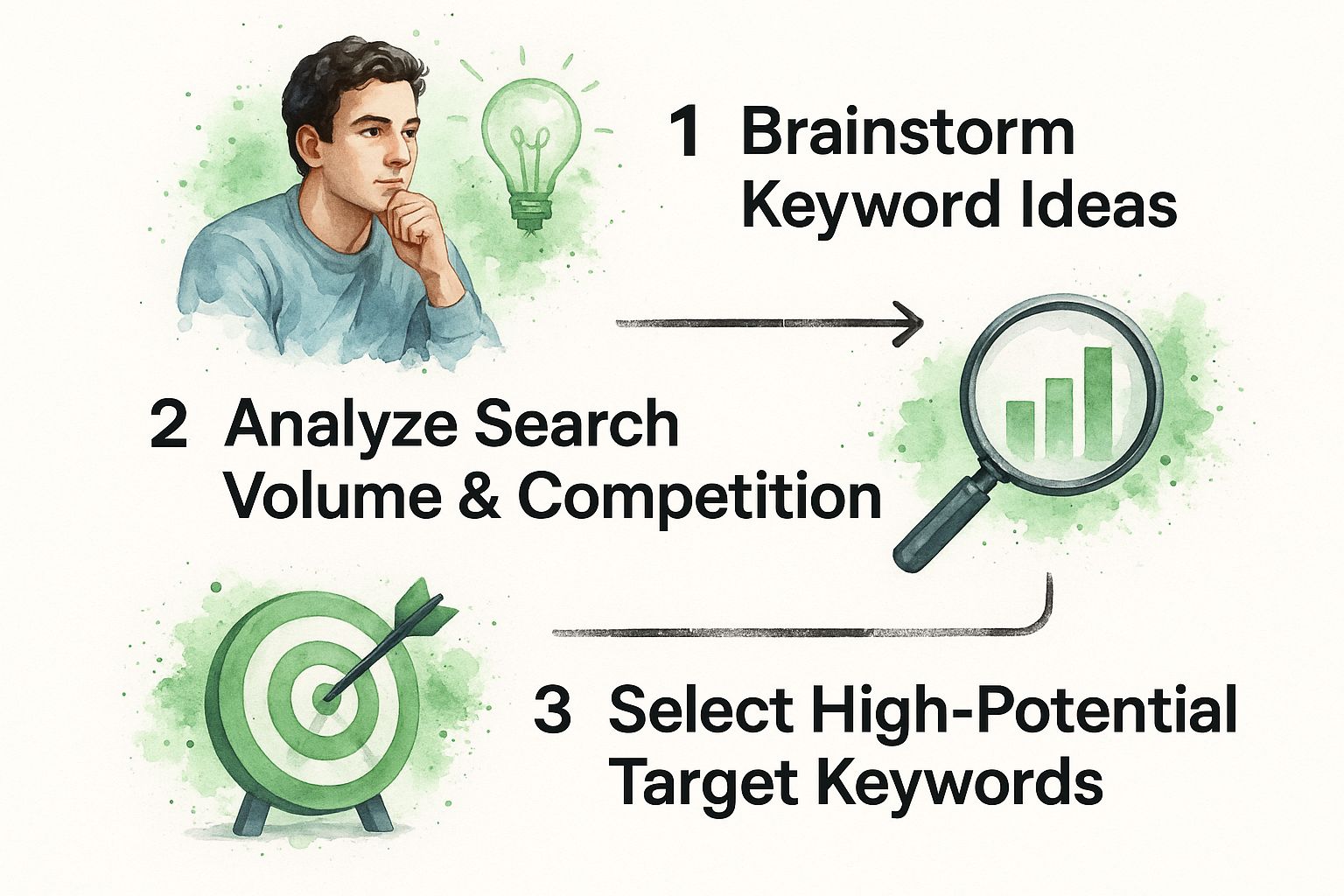
Zoals dit laat zien, is goed zoekwoordenonderzoek geen eenmalige taak. Het is een continue cyclus van ontdekken, analyseren en verfijnen om de termen te vinden die jouw bedrijf daadwerkelijk laten groeien.
Tools om Jouw Beste Zoekwoorden te Vinden
Je hebt geen enorm budget nodig om te beginnen. Een van de beste tools is volledig gratis en komt rechtstreeks van Google: de Google Keyword Planner. Het is gebouwd voor adverteerders, maar het is een absolute goudmijn voor SEO. Het helpt je nieuwe zoekwoorden te ontdekken, te zien hoeveel mensen ernaar zoeken en een gevoel te krijgen voor de concurrentie.
Wanneer je in dit soort tools duikt, let dan op een paar belangrijke statistieken:
- Zoekvolume: Hoeveel mensen zoeken elke maand naar dit zoekwoord? Hoger is niet altijd beter, vooral als de concurrentie torenhoog is.
- Concurrentie: Hoeveel andere websites vechten om deze term? De tool geeft meestal een "laag," "gemiddeld," of "hoog" oordeel. Richt je eerst op het laaghangende fruit.
- Relevantie: Hoe nauw sluit dit zoekwoord aan bij wat je daadwerkelijk verkoopt? Jaag nooit op een zoekwoord alleen vanwege het hoge volume; het moet perfect passen bij jouw bedrijf.
Door je te focussen op relevante, long-tail zoekwoorden met lage concurrentie, bouw je jouw SEO-strategie op een solide basis. Deze gerichte aanpak trekt niet alleen verkeer aan; het trekt het juiste verkeer aan. Dat betekent betere leads en uiteindelijk meer omzet. Dit is de eerste echte, praktische stap om jouw website bovenaan in Google te krijgen.
Content Creëren die Google en Klanten Vertrouwen
Oké, je hebt je zoekwoorden. Dat is de blauwdruk. Nu is het tijd om daadwerkelijk iets te bouwen: content die oprecht contact maakt met mensen en hun vertrouwen wint. Jouw website bovenaan in Google krijgen gaat niet alleen over het plaatsen van zoekwoorden op een pagina; het gaat over het bieden van onmiskenbare waarde.
Dit is waar het E-E-A-T-principe van Google jouw noordster wordt. Dit is een Engelse afkorting voor Experience, Expertise, Authoritativeness, and Trustworthiness (Ervaring, Expertise, Autoriteit en Betrouwbaarheid). Zie het als de interne kwaliteitscontrole van Google. Het wil content tonen van bronnen die in de praktijk hebben gewerkt, hun onderwerp echt kennen, als leiders in hun vakgebied worden gezien en op een veilige en betrouwbare manier opereren.
Jouw missie is om te bewijzen dat je aan al die eisen voldoet. Dit is geen truc om het algoritme te slim af te zijn. Het gaat erom jouw waarde zo duidelijk te tonen dat zowel Google als jouw toekomstige klanten jou als de enige logische keuze zien.
Ga Verder dan Zoekwoorden: Beantwoord Vragen
Mensen zoeken niet alleen met zoekwoorden; ze zoeken met vragen. De nummer één taak van jouw content moet zijn om het meest complete en nuttige antwoord te bieden dat er is. Dat is de snelste weg naar het opbouwen van autoriteit en vertrouwen.
Stel, je bent een accountant die zich richt op "boekhouder voor zzp'ers". Een potentiële klant typt dat niet zomaar in. Ze vragen eigenlijk:
- "Welke belastingaftrekposten kan een zzp'er gebruiken?"
- "Hoe factureer ik correct als freelancer?"
- "Is een aparte zakelijke bankrekening verplicht in Nederland?"
Wanneer je gedetailleerde gidsen maakt die deze specifieke pijnpunten aanpakken, doe je veel meer dan je op een zoekwoord richten. Je lost een echt probleem op, wat direct een band schept en jouw expertise toont. Het is een verschuiving van verkopen naar helpen – en dat is op de lange termijn een veel krachtigere strategie.
Structureer Jouw Content voor Mensen en Zoekmachines
De manier waarop je jouw content organiseert, is net zo cruciaal als de woorden zelf. Niemand wil een enorme muur van tekst zien. Het is intimiderend. Een goed gestructureerde pagina is echter een verademing om te lezen en voor Google heel eenvoudig te doorzoeken en te begrijpen.
Gebruik koppen en subkoppen (H2's, H3's, etc.) om een duidelijke informatiehiërarchie op te bouwen. Jouw hoofdtitel van de pagina is je H1. Jouw hoofdsecties krijgen H2's. Subonderwerpen binnen die secties krijgen H3's. Zo simpel is het. Dit creëert een logisch pad dat je lezer door de informatie leidt.
Voor dat artikel over boekhouden voor zzp'ers zou de structuur er zo uit kunnen zien:
- H1: De Ultieme Gids voor Boekhouden voor ZZP'ers in Nederland
- H2: Waarom een Nauwkeurige Boekhouding Essentieel Is
- H2: Belangrijke Belastingdeadlines die je Niet Mag Missen
- H3: De Btw-aangifte van het Eerste Kwartaal
- H3: De Jaarlijkse Aangifte Inkomstenbelasting
- H2: Praktische Tips voor een Vlekkeloze Administratie
Deze structuur maakt je content niet alleen makkelijk scanbaar voor drukke mensen, maar geeft Google ook duidelijke aanwijzingen over de inhoud van je pagina, wat de relevantie versterkt.
De Kracht van E-E-A-T in de Praktijk
Laten we praktisch worden. Hoe voeg je actief Ervaring, Expertise, Autoriteit en Betrouwbaarheid toe aan je content? Dit beheersen is onmisbaar als je serieus bent over het krijgen van jouw website bovenaan in Google.
- Toon Jouw Ervaring: Som niet alleen feiten op. Deel praktijkvoorbeelden, persoonlijke verhalen of specifieke voorbeelden uit klantprojecten. Als je een consultant bent, vertel dan over een lastig probleem dat je voor een klant hebt opgelost. Die praktijkkennis is goud waard.
- Bewijs Jouw Expertise: Ga de diepte in. Creëer uitgebreide bronnen die een onderwerp vanuit elke hoek belichten in plaats van een oppervlakkig overzicht. Onderbouw wat je zegt met data en leg complexe ideeën eenvoudig en begrijpelijk uit.
- Bouw Jouw Autoriteit: Voeg auteursbiografieën toe die kwalificaties en praktijkervaring benadrukken. Moedig actief recensies en getuigenissen van tevreden klanten aan. Wanneer andere gerespecteerde sites in jouw branche je noemen of naar je linken, is dat een enorme blijk van vertrouwen.
- Vestig Betrouwbaarheid: Maak het gemakkelijk voor mensen om contact met je op te nemen. Zorg voor een glashelder privacybeleid en servicevoorwaarden. Als je in een gereguleerde branche werkt, toon dan je certificeringen prominent. Een beveiligde site (HTTPS) is ook een enorm vertrouwenssignaal.
E-E-A-T is geen checklist die je eenmalig afwerkt. Het is de filosofie die elk stuk content dat je creëert moet sturen. Elke pagina moet proberen de meest behulpzame, geloofwaardige en ervaren bron over dat onderwerp online te zijn.
Het begrijpen van je publiek is hierbij van vitaal belang. In Nederland is de invloed van Google bijvoorbeeld immens. Alleen al het YouTube-platform bereikt naar schatting 14,8 miljoen gebruikers – dat is meer dan 81% van alle Nederlandse internetgebruikers. Dit toont aan hoe diep Nederlandse consumenten geïntegreerd zijn in het ecosysteem van Google, wat een toppositie nog crucialer maakt om dit enorme, actieve publiek aan te boren. Je kunt meer over deze trends leren in dit gedetailleerde rapport over Nederlandse digitale trends.
Je Pagina's Optimaliseren om Relevantie te Signaleren

Je hebt fantastische content gemaakt. Goed begin. Maar nu moet je ervoor zorgen dat Google het ook daadwerkelijk kan begrijpen. Dit is waar on-page SEO om de hoek komt kijken.
Zie het als het plaatsen van duidelijke, behulpzame wegwijzers op elke pagina van je site. Het gaat erom het voor zoekmachines heel eenvoudig te maken om te zien waar een pagina over gaat en waarom het een perfecte match is voor wat iemand zoekt.
Het correct toepassen van deze elementen is niet optioneel voor wie serieus is over het krijgen van zijn website bovenaan in Google. Het is de fundamentele laag die jouw geweldige content ondersteunt en ervoor zorgt dat deze de zichtbaarheid krijgt die het verdient. Het beste deel? Je hebt directe controle over deze factoren, waardoor dit enkele van de snelste winsten zijn die je kunt behalen.
Je Paginatitel: De Eerste Indruk
De metatitel van je pagina (of title tag) is misschien wel de allerbelangrijkste on-page factor. Het is die blauwe, klikbare kop die mensen in de zoekresultaten zien. Hij heeft één taak: iemand overtuigen om op jouw resultaat te klikken in plaats van op de tien andere op de pagina.
Een sterke titel moet zijn:
- Beknopt: Blijf onder de 60 tekens, zodat hij niet onhandig wordt afgekapt.
- Beschrijvend: Vertel mensen precies waar de pagina over gaat. Geen giswerk.
- Gericht op het zoekwoord: Verwerk je belangrijkste zoekwoord, bij voorkeur aan het begin.
Een vage titel als "Diensten" is bijvoorbeeld nutteloos. Een veel betere titel is "Deskundige Boekhouddiensten voor ZZP'ers | JouwBedrijf". Het is specifiek, heeft een duidelijk zoekwoord en schept de juiste verwachting.
De Meta-omschrijving: Je Verkooppraatje
Direct onder je titel in de zoekresultaten staat de meta-omschrijving. Dit is jouw korte samenvatting, meestal tot 150 tekens, die de titel verder toelicht. Hoewel het je rankings niet direct verbetert, heeft een overtuigende omschrijving een enorme impact op je klikfrequentie (CTR).
Zie het als jouw mini-advertentie op Google. Een goede meta-omschrijving moet:
- Meer context geven en voortbouwen op de titel.
- Je belangrijkste zoekwoord op een natuurlijke manier bevatten.
- Eindigen met een duidelijke call-to-action zoals "Leer meer," "Ontdek hoe," of "Begin vandaag nog."
Dit is je kans om de zoeker te overtuigen dat jouw pagina precies heeft wat ze nodig hebben.
Content Structureren met Koppen
Koppen en subkoppen maken content niet alleen makkelijker te scannen voor mensen; ze geven zoekmachines ook een duidelijke routekaart van de structuur van je pagina. Het correct gebruiken van H1, H2 en H3-tags creëert een logische hiërarchie waar Google van houdt.
De hoofdtitel van je pagina moet altijd je H1-tag zijn, en je mag er maar één per pagina hebben. Verdeel de hoofdsecties met H2-tags, en gebruik vervolgens H3-tags voor subonderwerpen binnen die secties. Deze schone structuur helpt Google de hoofd- en subonderwerpen te begrijpen, wat de relevantie van je pagina versterkt.
De Kracht van Interne Links
Interne links zijn simpelweg links van de ene pagina op jouw website naar een andere relevante pagina op dezelfde site. Het is een enorm krachtige tactiek die om de een of andere reden door veel mensen over het hoofd wordt gezien.
Strategische interne links zijn als het creëren van een web van verbindingen binnen je site. Het leidt zowel gebruikers als zoekmachinecrawlers naar je belangrijkste content, verspreidt "link equity" of autoriteit door je hele site en verbetert de gebruikerservaring.
Wanneer je tussen je pagina's linkt, gebruik dan altijd beschrijvende ankertekst. In plaats van de algemene zin "klik hier" te linken, link iets specifieks zoals "ontdek onze uitgebreide SEO zoekmachine optimalisatie diensten." Dit geeft zowel gebruikers als Google waardevolle context over de bestemmingspagina.
Je Afbeeldingen Optimaliseren
Afbeeldingen zijn fantastisch voor betrokkenheid, maar ze zijn onzichtbaar voor zoekmachines als je ze niet correct optimaliseert. Elke afbeelding op je site heeft een beschrijvende alt-tekst nodig. Dit is een korte, geschreven beschrijving van een afbeelding die wordt gelezen door schermlezers en geïndexeerd door zoekmachines.
Hier is een voorbeeld rechtstreeks uit Google's eigen SEO Starter Guide, dat laat zien hoe een eenvoudig stukje code een afbeelding begrijpelijk maakt voor zoekbots.
De belangrijkste les is simpel: het gebruik van een beschrijvende, relevante bestandsnaam en alt-tekst – zoals puppy-die-met-een-stok-speelt.jpg – is oneindig veel waardevoller dan een algemene. Het is een kleine stap die je afbeeldingen toegankelijk maakt en Google een extra aanwijzing geeft over de inhoud van je pagina.
Autoriteit Opbouwen Buiten Jouw Website
Tot nu toe hebben we alles op je website perfect afgesteld. Maar om echt de ranglijsten te beklimmen, moet Google zien dat jouw bedrijf een gerespecteerde stem is op het hele web. Dit is waar de echte kracht van off-page SEO om de hoek komt kijken, met name door linkbuilding en technische uitmuntendheid.
Zie het als het opbouwen van een reputatie in de echte wereld. Je kunt iedereen vertellen dat je een expert bent, maar je geloofwaardigheid explodeert wanneer andere gerespecteerde mensen jou beginnen aan te bevelen. In de digitale wereld zijn die aanbevelingen backlinks.
Een backlink is gewoon een link van een andere website naar die van jou. Wanneer een gerenommeerde Nederlandse brancheblog of een lokale zakenpartner naar jouw site linkt, geven ze je in wezen een blijk van vertrouwen. Google ziet deze stemmen en begint jouw site te zien als een betrouwbare bron, een enorme factor om jouw website bovenaan in Google te krijgen.
Krachtige Stemmen van Vertrouwen Verdienen
Het punt is: niet alle backlinks zijn gelijk. Een enkele link van een zeer autoritaire, relevante website is meer waard dan honderd links van spammy, irrelevante sites. Het doel is om kwaliteitslinks te verdienen die de tand des tijds doorstaan, niet alleen om aantallen te verzamelen.
Hier zijn een paar praktische manieren om die waardevolle backlinks te verdienen:
- Samenwerken met Lokale Partners: Werk je samen met andere lokale bedrijven? Probeer een evenement mede te organiseren, schrijf een gastartikel voor hun blog, of vraag gewoon om een link vanaf hun partnerpagina. Deze lokale signalen zijn ongelooflijk krachtig.
- Creëer Deelbare Content: Ontwikkel een bron die zo oprecht nuttig is dat andere websites er naar willen linken. Dit kan een diepgaande gids zijn, een origineel dataonderzoek, of een inzichtelijke infographic over jouw branche.
- Neem Deel aan Online Communities: Word actief op relevante forums of in branchegroepen waar jouw ideale klanten zich bevinden. Bied oprechte hulp en expertise, en je bouwt vanzelf een reputatie op die ertoe leidt dat anderen naar jouw content verwijzen en linken.
Een sterk backlinkprofiel is een marathon, geen sprint. Het gaat om het opbouwen van oprechte relaties en het creëren van waarde die anderen willen erkennen. Elke kwaliteitslink is een permanent bezit dat de autoriteit van je site continu verhoogt.
Dit proces kan complex zijn, maar het is een van de meest cruciale investeringen voor je online zichtbaarheid. Voor een diepere kijk op hoe wij dit aanpakken, bekijk onze strategische linkbuilding services.
De Onmisbare Technische Fundamenten
Naast links heeft Google een technische checklist waaraan elke hoogwaardige website wordt geacht te voldoen. Dit gaat niet alleen over het plezieren van zoekmachines; het gaat over het leveren van een fantastische gebruikerservaring, wat de kern is van moderne SEO. Als je site op deze punten faalt, kan al je harde werk aan content en links voor niets zijn geweest.
Deze technische essentie noemen we de Core Web Vitals. Dit zijn de officiële statistieken van Google om de daadwerkelijke ervaring van gebruikers op je site te meten.
Belangrijke Technische Pijlers voor Ranking Succes
Laten we uiteenzetten wat Google als onmisbaar beschouwt voor elke website die de top wil bereiken.
- Snelheid van de Site (Largest Contentful Paint - LCP): Dit meet hoe snel de hoofdinhoud van je pagina laadt. In een wereld van korte aandachtsspanne is een trage site een afknapper. Google wil een LCP van 2,5 seconden of minder zien.
- Responsiviteit (Interaction to Next Paint - INP): Hoe snel reageert je pagina wanneer iemand op een knop of menu-item klikt? Een trage, niet-reagerende site voelt gewoon kapot. Een goede INP-score is onder de 200 milliseconden, wat zorgt voor een soepele, vloeiende ervaring.
- Visuele Stabiliteit (Cumulative Layout Shift - CLS): Ooit geprobeerd op een knop te klikken, om vervolgens een advertentie te zien laden die alles naar beneden duwt, waardoor je misklikt? Dat is layout shift. Google meet dit om ervoor te zorgen dat je site stabiel en voorspelbaar is.
- Mobielvriendelijkheid: Aangezien de meeste zoekopdrachten nu op mobiel plaatsvinden, moet jouw website er absoluut perfect uitzien en functioneren op een smartphone. Dit is niet langer optioneel; het is een fundamentele vereiste.
- Beveiliging (HTTPS): De URL van jouw website moet beginnen met https://. Die 'S' staat voor secure (veilig), wat betekent dat gegevens die tussen jouw site en de bezoekers worden gedeeld, versleuteld zijn. Google markeert niet-HTTPS-sites als "niet veilig", wat direct het vertrouwen schaadt en de rankings schaadt.
Het beheersen van zowel de kunst van linkbuilding als de wetenschap van technische SEO creëert een krachtige combinatie. Het vertelt Google dat niet alleen je content waardevol is, maar dat je website ook een superieure, betrouwbare ervaring biedt, waardoor jij de voor de hand liggende keuze bent voor die felbegeerde toppositie.
Veelgestelde Vragen Over Bovenaan Komen in Google
Door de jaren heen hebben we talloze Nederlandse bedrijven geholpen hun online zichtbaarheid te vergroten. Wat ons opvalt, is dat veel dezelfde vragen steeds weer terugkomen. Daarom hebben we de meest gestelde vragen over hoe je je website bovenaan in Google krijgt hier voor je op een rijtje gezet.
Deze praktische inzichten maken het proces helder en scheppen realistische verwachtingen over wat er nodig is om online succes te boeken.
Hoe Lang Duurt het om Hoog in Google te Komen?
Dit is dé vraag die iedereen stelt, en het eerlijke antwoord is: dat hangt ervan af. Over het algemeen moet je rekenen op drie tot zes maanden voordat je echt serieuze resultaten ziet, zeker met een nieuwe website of nieuwe pagina's. Bestaande, gevestigde websites met een sterke autoriteit kunnen soms sneller stijgen.
Meerdere factoren spelen hier een rol:
- De concurrentie: Ranken voor "accountant Amsterdam" is een stuk lastiger en duurt langer dan voor "gespecialiseerde boekhouder voor tech startups in Haarlem".
- De autoriteit van je website: Een site met een goede reputatie en veel kwalitatieve backlinks heeft een flinke voorsprong.
- De kwaliteit van je SEO-inspanningen: Consistente, hoogwaardige content, technische optimalisatie en slimme linkbuilding versnellen het hele proces aanzienlijk.
SEO is een marathon, geen sprint. Zie het als het planten van een boom: het heeft tijd, geduld en aandacht nodig. Maar als het eenmaal staat, levert het jarenlang duurzaam resultaat op.
Moet ik een SEO-expert Inhuren?
Natuurlijk kun je de basis van SEO zelf leren en bepaalde taken oppakken. Toch kan de samenwerking met een expert je weg naar de top van Google aanzienlijk versnellen. Een expert brengt diepgaande kennis van de continu veranderende algoritmes van Google, beschikt over professionele tools en bouwt een complete strategie waar je als drukke ondernemer simpelweg geen tijd voor hebt.
Overweeg een expert als je tijd wilt besparen, veelgemaakte fouten wilt vermijden en efficiënter resultaat wilt behalen om je website bovenaan in Google te krijgen.
Kan ik Beter Inzetten op SEO of op Betaalde Advertenties?
SEO (organisch verkeer) en betaalde advertenties (SEA) zijn geen concurrenten van elkaar; ze zijn juist ijzersterke partners.
- SEO bouwt aan duurzame, lange-termijn autoriteit en vertrouwen. Zodra je eenmaal hoog staat, is het verkeer in principe "gratis", wat op de lange termijn een enorme ROI oplevert.
- Betaalde advertenties zorgen voor directe zichtbaarheid en traffic. Perfect voor het testen van zoekwoorden, het promoten van tijdelijke acties en het behalen van snelle resultaten.
Een slimme strategie combineert vaak beide. Je gebruikt dan betaalde advertenties om op korte termijn verkeer en data te verzamelen, terwijl je ondertussen bouwt aan je lange-termijn SEO-succes. Zo krijg je het beste van twee werelden en verzeker je jezelf van zowel direct als blijvend online resultaat.
Voor meer gedetailleerde antwoorden op je digital marketing vragen kun je altijd een kijkje nemen op onze helppagina met veelgestelde vragen.
Bij Digitalique geloven we in het bouwen aan de successen van morgen, vandaag. Jouw online aanwezigheid is de motor voor toekomstige groei, en wachten is geen optie.
Klaar om jouw visie om te zetten in online succes? Laten we samen bouwen aan jouw digitale toekomst. Bezoek ons op https://digitalique.nl.
Bij Digitalique hopen we dat je dit een waardevol artikel vond! Jouw mening is voor ons goud waard. Heb je nog een vraag of een gouden tip die je wilt delen? Laat het hieronder weten in een reactie. We lezen alles!
Start writing here...