
Worstel je met lage website traffic, slechte online zichtbaarheid of lage conversiepercentages? Vraag je je af hoe je de ROI van je digitale marketing kunt begrijpen en verbeteren? Het antwoord begint bij een dieper begrip van wat retail nu echt betekent. Het is meer dan een transactie; het is het complete speelveld waar klanten jouw merk ontdekken, ervaren en uiteindelijk tot aankoop overgaan.
Stel je voor dat retail het podium is waarop jouw producten de hoofdrol spelen. Zonder een goed ingericht podium – of dat nu een uitnodigende winkelpui is of een vlijmscherpe webshop – komt jouw verhaal niet over. Als ondernemer moet je de klantreis doorgronden, van de eerste zoekopdracht in Google tot het moment van aankoop.
In deze gids leer je:
- Wat de kern van moderne retail is en waarom het cruciaal is voor jouw groei.
- Welke verschillende retailmodellen er zijn en welke het beste bij jouw bedrijf past.
- Hoe de moderne klantreis eruitziet en hoe je deze kunt optimaliseren.
- Hoe je met digitale marketing, SEO en AI je zichtbaarheid en sales een boost geeft.
De Essentie van Retail: Van Winkelstraat naar Digitale Marktplaats
De wereld van retail is drastisch veranderd. We zijn geëvolueerd van een landschap gedomineerd door fysieke winkelstraten naar een complexe, geïntegreerde markt waar online en offline naadloos samensmelten. Deze verschuiving biedt enorme kansen, maar legt de lat ook hoger. Hoe val je nog op in een overvolle digitale arena?
Het geheim zit in het beheersen van de mechanismen die moderne retail aandrijven. Concreet betekent dit:
- Zichtbaarheid (SEO & GEO): Zorg dat je gevonden wordt waar jouw klanten zoeken. Dit betekent hoog scoren in Google, zowel landelijk (SEO) als lokaal (GEO-targeting).
- Klantervaring: Bied een soepele en plezierige interactie op ieder contactmoment, van de eerste klik tot de after-sales service.
- Conversie & Lead Generation: Weet hoe je bezoekers effectief omzet in loyale, betalende klanten en waardevolle leads.
De Economische Kracht van Retail in Nederland
De Nederlandse retailsector is een economische motor. Met een totaalomzet van zo'n € 975 miljard in 2022 en ongeveer 300.000 bedrijven, is de impact gigantisch. De sector is hier ruim twee keer zo groot als in buurland België, wat de concurrentie en de kansen onderstreept.
Hoewel supermarkten in 2023 een omzetgroei van circa 8% lieten zien, wordt het online aandeel steeds dominanter. Eind 2023 verkocht bijna 25% van de bedrijven online, een enorme sprong vergeleken met tien jaar geleden. Meer details over deze retailstatistieken vind je op IBISWorld.
Het doorgronden van deze dynamiek is de eerste stap naar een succesvol bedrijf. Wie de principes van moderne retail begrijpt, legt een solide fundament voor duurzame groei en een betere ROI.
Welk Retailmodel Past bij Jouw Bedrijf?
Nu je de basis kent, gaan we dieper in op het hoe. De manier waarop je jouw producten op de markt brengt, is net zo belangrijk als de producten zelf. Het kiezen van het juiste retailmodel is cruciaal om de juiste mensen te bereiken en een duurzaam bedrijf op te bouwen.
Zie het als het kiezen van een voertuig voor een reis. Een sportauto is perfect voor de snelweg, maar je hebt een 4x4 nodig voor de bergen. De retailwereld is geen 'one-size-fits-all'. Vandaag de dag opereren bedrijven via verschillende modellen, elk met eigen voordelen en uitdagingen.
Deze infographic geeft een beeld van hoe de wereldwijde retailomzet is verdeeld over de belangrijkste modellen.
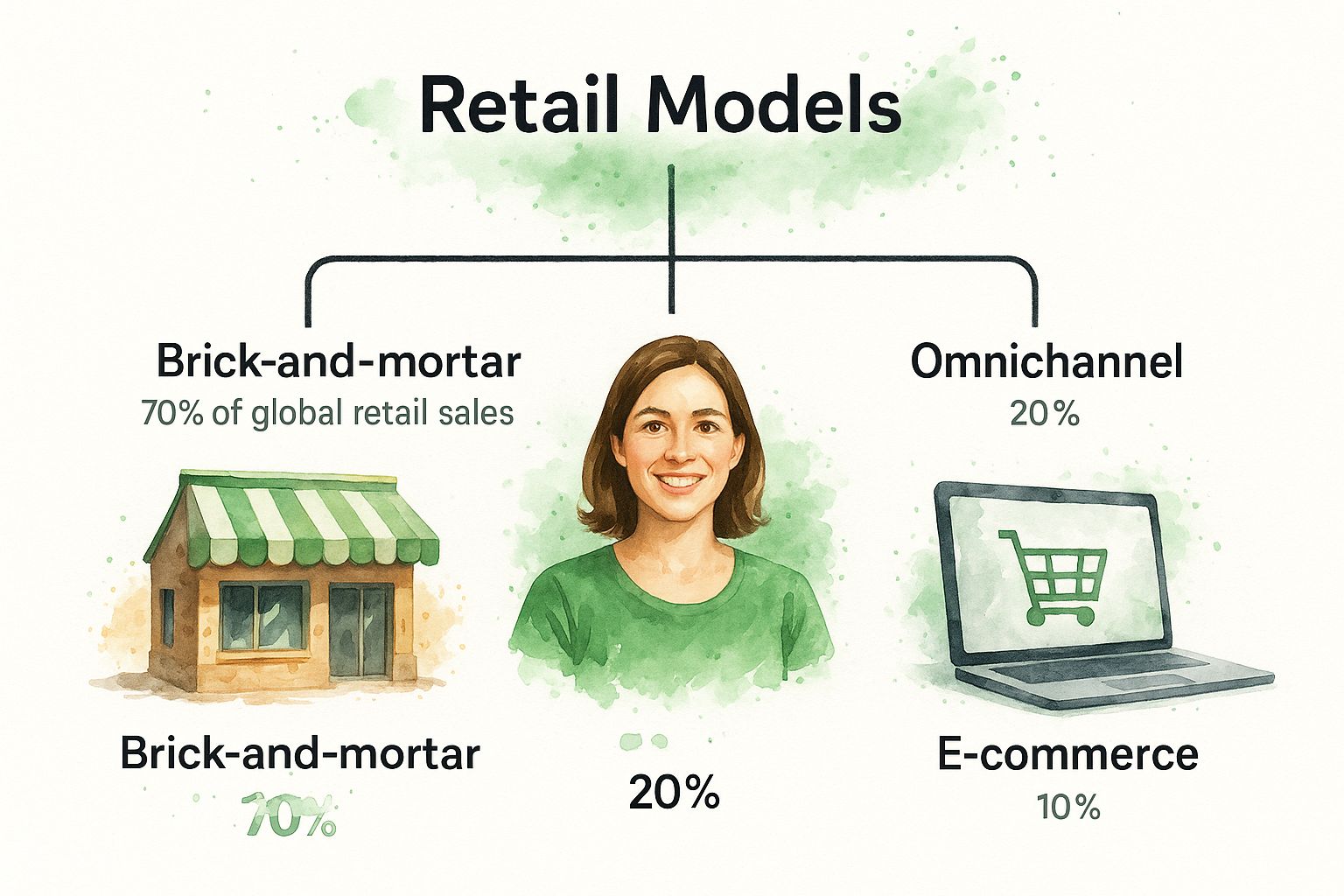
Zelfs met de explosieve groei van e-commerce, hebben fysieke winkels nog steeds een enorm aandeel. Dit toont aan dat een slimme, geïntegreerde strategie vaak de sleutel tot succes is.
Fysieke Winkel (Brick-and-Mortar): De Traditionele Krachtpatser
Dit is de klassieke winkel in de straat. Het grootste voordeel van een fysieke winkel is de tastbare ervaring. Klanten kunnen producten zien, aanraken en proberen voordat ze kopen. De persoonlijke interactie met deskundig personeel is goud waard voor het opbouwen van merkloyaliteit.
De keerzijde zijn de kosten: huur, personeel en nutsvoorzieningen. Bovendien is je klantenkring beperkt tot je geografische locatie. Daarom integreren veel traditionele winkels nu digitale tools om hun bereik te vergroten.
E-commerce: De Digitale Etalage
E-commerce betekent simpelweg je producten online verkopen via je eigen website of webshop. Geografische grenzen verdwijnen en je kunt klanten in het hele land – of zelfs wereldwijd – bereiken, 24/7. De overheadkosten zijn doorgaans veel lager en je hebt volledige controle over je merkverhaal en, cruciaal, je klantdata.
De grootste uitdaging? Opvallen. Met miljoenen andere webshops is het een constante strijd om bezoekers te trekken. Hier wordt een ijzersterke digital marketing strategy absoluut onmisbaar.
D2C (Direct-to-Consumer): De Directe Connectie
Direct-to-Consumer (D2C) is een vorm van e-commerce waarbij het merk de producten rechtstreeks aan de klant verkoopt, zonder tussenpersonen zoals groothandels. Denk aan merken als Ace & Tate of Mr Marvis. Dit model leidt tot hogere winstmarges en creëert een directe feedbackloop met je klanten, wat onbetaalbaar is voor het bouwen van een community.
De keerzijde is dat je alles zelf moet doen: marketing, verzending, klantenservice. Het vergt een serieuze investering om een merk op te bouwen dat mensen herkennen en vertrouwen zonder de goedkeuring van grote retailers.
Online Marktplaatsen: Het Digitale Winkelcentrum
Een online marktplaats is een groot platform zoals Bol.com, Amazon of Zalando, dat duizenden verkopers onder één digitaal dak huisvest. De analogie van een winkelcentrum is perfect: je huurt een plek op een locatie die al enorm veel verkeer trekt. Dit geeft je directe toegang tot een gigantische klantenbasis.
De nadelen? De concurrentie is moordend en je hebt weinig controle. Je staat naast je rivalen, moet je aan de regels van de marktplaats houden en draagt een flinke commissie af op elke verkoop. Het is ook lastig om een unieke merkidentiteit op te bouwen.
Vergelijking van Moderne Retailmodellen
Deze tabel zet de belangrijkste aspecten van elk model op een rij, zodat je in één oogopslag ziet welke aanpak het beste bij jouw bedrijfsdoelen past.
| Retailmodel | Primair Kanaal | Klantrelatie | Belangrijkste Voordeel | Grootste Uitdaging |
|---|---|---|---|---|
| Fysieke Winkel | Fysieke winkel | Direct, persoonlijk | Tastbare productervaring en persoonlijke service | Hoge overheadkosten en beperkt geografisch bereik |
| E-commerce | Eigen website | Direct, maar digitaal | Wereldwijd bereik en volledige controle over merk/data | Traffic genereren en online zichtbaarheid (SEO) |
| D2C | Eigen website | Zeer direct en persoonlijk | Hogere winstmarges en sterke community-building | Beheer van alle bedrijfsfuncties (marketing, logistiek) |
| Online Marktplaats | Platform van derden | Indirect, via platform | Directe toegang tot een enorme, bestaande klantenbasis | Intense concurrentie en gebrek aan merkcontrole |
De juiste keuze hangt af van je product, je doelgroep en je visie. Veel succesvolle merken gebruiken een hybride aanpak, waarbij ze de sterktes van meerdere modellen combineren voor een naadloze klantervaring.
Breng de Moderne Klantreis in Kaart
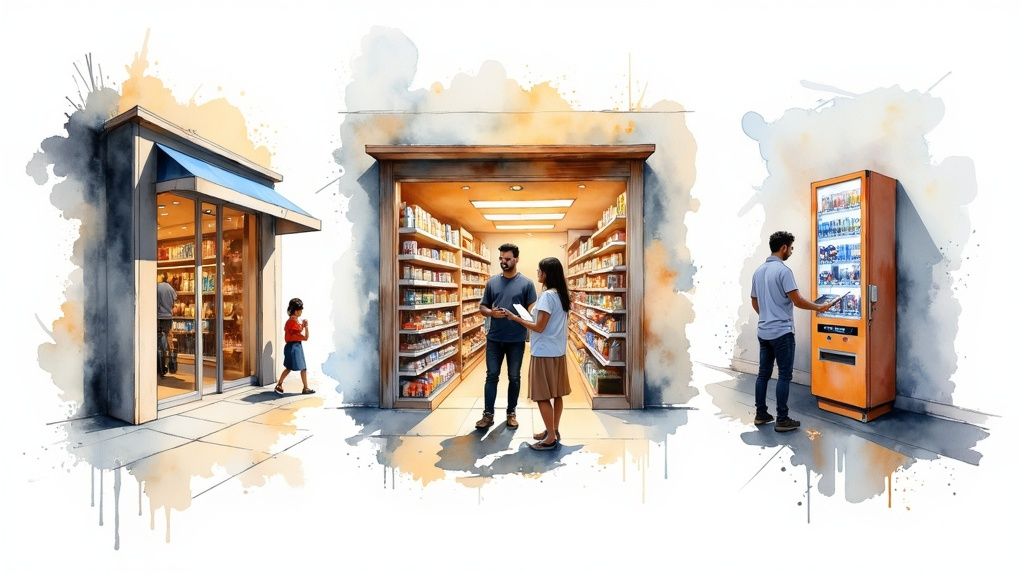
Hoe vinden klanten tegenwoordig de weg naar jouw producten? Vroeger was het simpel: je zag een advertentie, ging naar de winkel en kocht iets. Die rechtlijnige route bestaat niet meer. De moderne klantreis is een complex web van contactmomenten via online en offline kanalen.
Een klant ziet bijvoorbeeld een advertentie op Instagram, duikt in reviews op een vergelijkingssite en bekijkt het product in je fysieke winkel. De aankoop? Die doen ze misschien dagen later via de webshop. Als je niet begrijpt hoe deze reis eruitziet, is het onmogelijk om problemen als lage conversies op te lossen. Je moet weten waar en waarom klanten afhaken.
Multichannel vs. Omnichannel: Het Cruciale Verschil
Veel ondernemers denken dat ze goed bezig zijn omdat ze op meerdere kanalen actief zijn: een webshop, een Instagram-account en een fysieke winkel. Dit noemen we een multichannel aanpak. De vraag is echter: werken die kanalen ook écht samen?
Zie een multichannel-strategie als losstaande wegen die naar jouw bedrijf leiden. Elke weg brengt de klant op de bestemming, maar de paden kruisen elkaar nooit.
Omnichannel is de volgende, cruciale stap. Hier bouw je geen losse wegen, maar een geïntegreerd snelwegsysteem. Klanten wisselen moeiteloos van rijbaan zonder dat hun reis stokt. Alles is met elkaar verbonden.
Een omnichannel-ervaring betekent dat een klant een product online reserveert, het in de winkel past en de aankoop ter plekke via een app afrondt. Alle systemen – van voorraad tot klantdata – werken naadloos samen.
De Belangrijkste Contactmomenten (Touchpoints)
Om een sterke omnichannel-strategie op te bouwen, moet je de belangrijkste contactmomenten in de klantreis identificeren. Laten we de cruciale fases op een rij zetten:
- Bewustwording (Awareness): De klant realiseert zich een behoefte. Ze komen je merk tegen via een zoekopdracht in Google, een post op social media of een informatief blogartikel.
- Overweging (Consideration): De klant zoekt actief naar oplossingen en vergelijkt opties. Ze lezen productreviews en bekijken jouw aanbod naast dat van de concurrent.
- Aankoop (Purchase): De knoop wordt doorgehakt. Een soepele, frictieloze betaalervaring is hier essentieel, of dit nu online of in de winkel is.
- Service: Na de aankoop ontstaan er vragen over levering of gebruik. Snelle en makkelijk bereikbare klantenservice maakt hier het verschil.
- Loyaliteit (Loyalty): Een positieve ervaring moedigt de klant aan om terug te komen. Gepersonaliseerde e-mails en loyaliteitsprogramma's maken van een koper een trouwe fan.
De sleutel tot succes is het zorgvuldig in kaart brengen van deze reis voor jóúw klanten. Door diep te duiken in wat een retail-ervaring naadloos maakt, bouw je een systeem dat niet alleen verkoopt, maar ook duurzame klantrelaties smeedt.
Digitale Marketing als Groeimotor voor Jouw Retailbedrijf
We hebben de retailmodellen en de klantreis besproken. Maar hoe pas je die kennis toe om echte resultaten te boeken? Laten we praktisch worden. Een sterke digitale aanwezigheid is de motor die een modern retailbedrijf aandrijft en problemen als lage website traffic of een onduidelijke marketing-ROI oplost.
Veel ondernemers met wie we spreken, worstelen hiermee. Ze investeren in advertenties of social media, maar hebben geen idee wat daadwerkelijk sales oplevert. Een slimme strategie verandert marketing van een kostenpost in een voorspelbare manier om je bedrijf te laten groeien.
Onvindbaar Online? Dat is een SEO-probleem
Staat je website verloren op pagina twee of drie van Google? Als klanten je niet kunnen vinden wanneer ze zoeken naar wat jij verkoopt, ben je praktisch onzichtbaar. Dit is precies waar Search Engine Optimisation (SEO) jouw beste vriend wordt.
Zie SEO als de kunst om je website bovenaan de zoekresultaten te krijgen voor de juiste zoekwoorden. Het is alsof je jouw digitale winkel de meest prominente plek in de drukste winkelstraat van de stad geeft. Een goede SEO-strategie zorgt ervoor dat wanneer iemand zoekt naar een oplossing voor zijn probleem, jouw bedrijf het eerste en beste antwoord is. Dit trekt high-intent traffic aan: mensen die al van plan zijn om te kopen.
Verander Bezoekers in Leads met Waardevolle Content
Traffic naar je site krijgen is stap één. De echte uitdaging is om die bezoekers om te zetten in leads en klanten. Strategische content marketing maakt hier het verschil. Door nuttige blogs, handleidingen of video's te creëren, los je de problemen van je publiek op en win je hun vertrouwen.
Effectieve content pusht geen verkoop; het lost een probleem op. Wanneer je jouw merk positioneert als een behulpzame expert, bouw je een relatie op lang voordat een klant zijn portemonnee trekt.
Deze aanpak stelt je in staat om hun aandacht te trekken en ze zachtjes door het aankoopproces te leiden. Een gedetailleerde gids over het kiezen van het juiste product in jouw branche kan bijvoorbeeld waardevolle leads genereren en je reputatie als expert versterken.
Vind Jouw Ideale Klanten met AI en Social Media
Hoe zorg je ervoor dat je boodschap niet in het luchtledige verdwijnt? Moderne tools zoals AI en social media advertising maken indrukwekkend precieze targeting mogelijk. Je kunt stoppen met het werpen van een breed, duur net en je richten op specifieke groepen op basis van demografie, interesses of zelfs aankoopgedrag.
Zo werkt het:
- AI-gedreven Personalisatie: AI analyseert klantdata en voorspelt wat ze hierna willen. Dit betekent dat je ze relevante productsuggesties of gepersonaliseerde aanbiedingen kunt tonen.
- Gerichte Social Ads: Platforms als Facebook en LinkedIn laten je advertenties zien aan de mensen die het meest waarschijnlijk geïnteresseerd zijn, waardoor elke marketingeuro harder werkt.
Deze lasergerichte aanpak levert niet alleen kwalitatief beter verkeer op, maar geeft ook je conversiepercentages een serieuze boost. Je krijgt een duidelijke, meetbare return on investment.
Belangrijke Trends die de Toekomst van de Nederlandse Retail Vormen
Weten waar de retail vandaag staat is één ding, maar begrijpen waar het naartoe gaat, geeft je een voorsprong. De Nederlandse retailsector wordt voortdurend beïnvloed door nieuwe technologie en veranderende klantverwachtingen. Om een toekomstbestendig bedrijf te bouwen, moet je deze veranderingen zien aankomen.
Deze trends negeren is geen optie; je riskeert achterop te raken terwijl je concurrenten vooruit snellen. Laten we de drie grootste verschuivingen in de Nederlandse retail onder de loep nemen.
Duurzaamheid als Doorslaggevende Factor
De consument van vandaag is slim en bewust. Ze willen niet alleen een geweldig product; ze willen zich er ook goed over voelen. Duurzaamheid is geen nichevoorkeur meer, maar een kernwaarde die aankoopbeslissingen direct beïnvloedt. Dit is vooral duidelijk in de food retail, een enorm onderdeel van de Nederlandse economie.
De Nederlandse food retailmarkt, gewaardeerd op ongeveer $58 miljard in 2024, ziet een enorme vraag naar producten die duurzaam, gezond en redelijk geprijsd zijn. Dit duidt op een grote verschuiving in wat consumenten belangrijk vinden.
AI-gedreven Personalisatie op Schaal
Hoe geef je elke klant het gevoel dat hij de belangrijkste is? Het antwoord is Artificial Intelligence (AI). AI geeft bedrijven de kracht om enorme hoeveelheden klantdata te analyseren en unieke winkelervaringen te creëren.
Dit gaat verder dan een voornaam in een e-mail. AI stuurt aan op:
- Slimmere productaanbevelingen: Items voorstellen op basis van eerder kijk- en koopgedrag.
- Dynamische prijzen: Prijzen aanpassen op basis van vraag of klantgedrag.
- Gepersonaliseerde marketing: Verschillende banners of advertenties tonen aan verschillende bezoekersgroepen.
AI helpt je een sterkere band met je publiek op te bouwen, wat bewezen leidt tot hogere conversies en klantloyaliteit. Het transformeert een standaard webshop in een dynamische, persoonlijke winkelassistent.
De Opkomst van Quick Commerce en Gemak
In de huidige markt is snelheid alles. Diensten als Gorillas en Flink hebben de bezorgtijden volledig veranderd en een nieuwe standaard gezet: quick commerce (q-commerce). Klanten verwachten nu snellere, flexibelere levering voor bijna alles.
Hoewel q-commerce nog een klein deel van de markt is, groeit de invloed ervan snel. Deze trend dwingt elke retailer om kritisch naar zijn logistiek te kijken. Als je levering traag is, verlies je waarschijnlijk klanten aan iemand die het sneller kan. Efficiënte bezorgopties zijn niet langer onderhandelbaar. Onze expertise in het ontwikkelen van een high-performance webshop omvat het optimaliseren van deze vitale checkout- en fulfilmentstappen.
Klaar voor de Volgende Stap in Retail?
We hebben een diepe duik genomen in de wereld van retail: van de basisdefinitie tot digitale strategieën. Dit alles begrijpen is een enorme winst. De retailwereld staat nooit stil, maar elke uitdaging is een kans voor wie goed is voorbereid.
Onthoud vooral dit: succes draait niet langer alleen om wat je verkoopt, maar vooral om hoe je het verkoopt. Een naadloze ervaring, ondersteund door een slimme digitale aanpak, onderscheidt de bloeiende bedrijven van de achterblijvers.
Van Kennis naar Actie: Zet de Volgende Stap
Retail beheersen is een doorlopend proces. De volgende stap is om deze inzichten toe te passen op jouw unieke uitdagingen.
- Analyseer je eigen retailmodel: Benut je alle sterke punten en werk je aan de zwakke plekken?
- Breng je klantreis in kaart: Waar zitten de knelpunten waar potentiële klanten afhaken?
- Evalueer je online aanwezigheid: Ben je écht zichtbaar op de plekken waar jouw klanten zoeken (SEO)?
Door deze vragen eerlijk te beantwoorden, zie je vanzelf waar de kansen voor groei liggen. En je hoeft die weg niet alleen te bewandelen. Bij Digitalique zijn we gespecialiseerd in het omzetten van dit soort retailuitdagingen in meetbare groei en een hogere ROI.
Klaar om jouw retailstrategie om te zetten in concrete resultaten? Laten we praten over jouw doelen.
Plan een gratis strategiesessie met ons in
Jouw Belangrijkste Retailvragen Beantwoord
Zelfs met een goed begrip van de basis, blijven er vaak praktische vragen over. Laten we enkele van de meest voorkomende vragen aanpakken die we horen van ondernemers.
Wat is het allerbelangrijkste onderdeel van retail vandaag de dag?
Als je één ding moet kiezen, is het de klantervaring. In een wereld vol vergelijkbare producten, is de manier waarop je een klant laat voelen wat jou echt onderscheidt.
De hele reis, van het eerste contactmoment tot de follow-up na de aankoop, is jouw kans om te schitteren. Een soepele, persoonlijke en behulpzame ervaring bouwt loyaliteit op een manier die concurreren op prijs nooit zal doen. Dit is de kern van wat een succesvolle retailstrategie definieert.
Kan een klein bedrijf echt concurreren met de reuzen?
Ja, absoluut. Kleine bedrijven hebben een geheim wapen: je bent wendbaar en kunt echte, menselijke connecties opbouwen. Je zult een gigant als Bol.com nooit overtreffen in advertentiebudget, maar je kunt harten winnen met persoonlijkheid, niche-expertise en onvergetelijke service.
Zo pak je het aan:
- Domineer je niche: Probeer niet alles voor iedereen te zijn. Focus op een specifieke doelgroep en wordt de expert die ze vertrouwen.
- Wees menselijk: Bied een niveau van persoonlijke zorg dat een groot, gezichtsloos bedrijf niet kan schalen.
- Creëer een community: Gebruik je verhaal en waarden om een stam van loyale fans op te bouwen, niet alleen klanten.
- Beheers lokale zoekresultaten: Als je een fysieke winkel hebt, is het domineren van lokale zoekresultaten in Google een krachtige manier om mensen binnen te krijgen.
Hoeveel moet ik uitgeven aan digitale marketing?
Er is geen magische formule. Het juiste budget hangt af van je branche, je doelen en de huidige fase van je bedrijf. Stop met marketing te zien als een kostenpost en begin het te behandelen als een investering in je groei.
Vraag dus niet "hoeveel", maar "wat wil ik bereiken?" Wil je je website traffic met 20% verhogen? Of 50 gekwalificeerde leads per maand genereren?
Wanneer je duidelijke, meetbare doelen stelt, kun je een budget bouwen dat direct aan die resultaten bijdraagt. Zo weet je zeker dat elke euro hard werkt voor een echte return on investment.
We behandelen nog meer veelvoorkomende ondernemersvragen in onze eigen frequently asked questions section, dus neem gerust een kijkje.
Bij Digitalique helpen we bedrijven elke dag om deze uitdagingen te navigeren. Laten we samen jouw pad naar retail-succes uitstippelen